









Most janitorial businesses already get enquiries. The real issue is the quality of those enquiries.
Some prospects only want the lowest price. Others don’t understand scope, frequency, or what “good cleaning” actually includes. Even serious buyers often reach out unprepared, turning every first call into a lengthy explanation session.
A lead magnet, when done properly, fixes that starting point. It gives prospects something useful before they contact you, so conversations begin with context instead of confusion.
In this blog, you’ll learn what a janitorial service lead magnet should do, the formats that work best for cleaning businesses, where to place them so they get used, and how to follow up so downloads turn into real opportunities.
What Is a Lead Magnet?
A lead magnet is something useful you give a potential buyer before asking for a quote. Instead of pushing them to fill out a contact form right away, you offer a resource that helps them think through their decision. That could be a checklist, a guide, or a simple tool related to their problem.
When someone downloads it, they’re not just leaving an email. They’re telling you what they care about. By the time they reach out, they already understand your process, your expectations, and whether you’re a fit. That means the first conversation skips the basic questions and starts closer to a real opportunity.
For janitorial services, the best lead magnets introduce structure. They help buyers understand what affects cleaning quality, what should be included in the scope, what standards to expect, and what questions to ask before hiring a provider.
That way, you attract prospects who are serious about outcomes, not just price, and your first conversation becomes faster, clearer, and more productive.
How Can It Help Janitorial Services?
For janitorial businesses, a lead magnet changes how and when conversations begin.
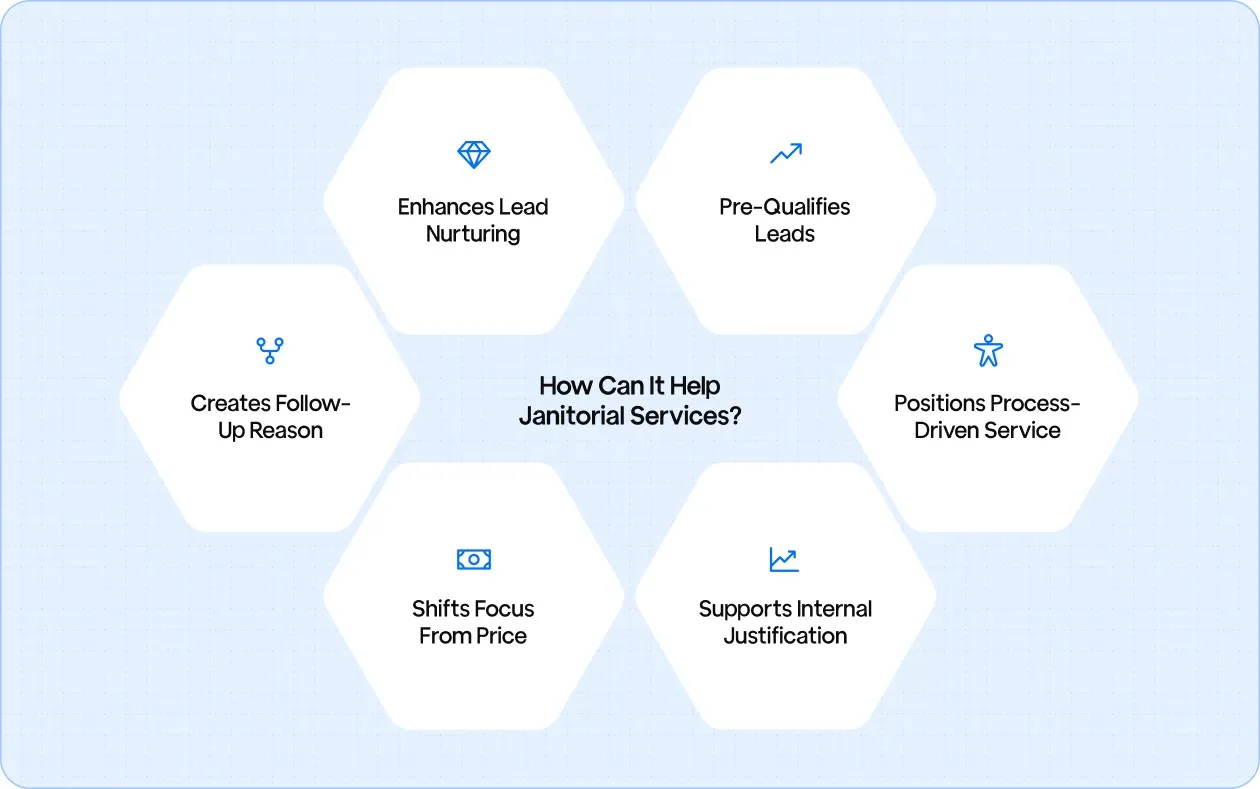
- Pre-qualifies enquiries before they reach your inbox: A well-designed lead magnet attracts people who are actively evaluating cleaning options, not just browsing. This reduces time spent on price-only or low-intent enquiries.
- Positions your service as process-driven: By explaining how cleaning scopes, frequencies, or standards actually work, the lead magnet differentiates your business from providers who rely only on price or availability.
- Supports decision-makers who need internal justification: Facility managers and office admins often need documentation to explain decisions internally. Lead magnets give them language and structure they can reuse.
- Moves conversations beyond prices: When prospects understand what affects quality and compliance, pricing discussions become more grounded and productive.
- Creates a reason to follow up without pressure: The lead magnet gives sales teams a clear context for outreach. Follow-ups feel helpful rather than intrusive.
- Improves long-term lead nurturing: Contacts who opt in through a lead magnet are more receptive to future educational content, making email follow-up more effective over time.
In janitorial services, lead magnets are about shaping better starting points for the relationships that matter.
Get More Qualified Leads
Build a system that attracts the right prospects and improves lead quality before the first conversation.


How to Create a Janitorial Service Lead Magnet Plan?
A janitorial service lead magnet should do one thing well: attract the right buyer and start the relationship on your terms. For cleaning businesses, that means offering something that helps a prospect evaluate scope, standards, risk, and cost drivers.
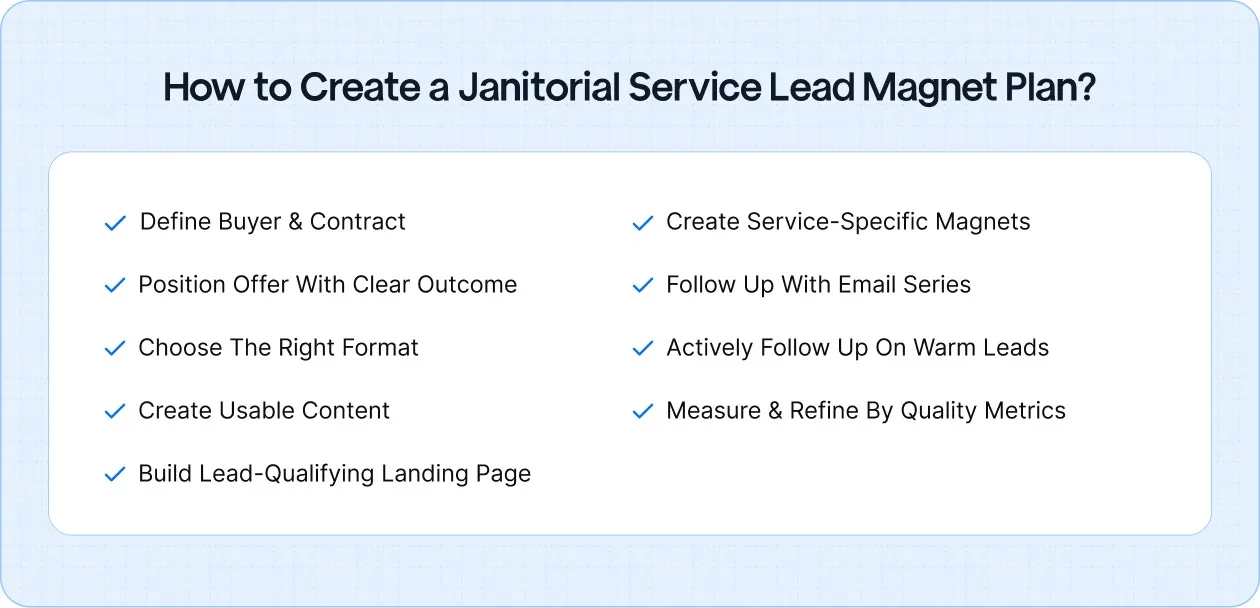
This section explains how to plan, produce, deliver, and follow up on lead magnets that attract decision-ready janitorial prospects:
Define The Buyer And Contract You Want To Attract
Before writing anything, you need clarity on who this resource is meant for and what kind of work you want it to generate. A strong lead magnet signals fit early, so the people who download it already resemble the clients you want to work with.
- Pick an industry vertical. Choose one sector and anchor the entire magnet to its operating reality. Office buildings, healthcare facilities, retail spaces, manufacturing sites, and post-construction environments all evaluate cleaning differently, so the content must reflect that context clearly.
- Name the decision role. Be explicit about who the resource is written for and use their role language throughout. Facility managers, procurement teams, property managers, and building owners respond to different concerns, and naming them directly improves relevance and trust.
- Choose service scope. Align the magnet with the specific service you want to sell next. A magnet built around recurring janitorial scope attracts a very different buyer than one focused on carpet restoration, window cleaning, or post-construction cleanup.
- Set the expected contract size. Indicate the type of facilities this resource applies to, such as square footage ranges, number of restrooms, or shift coverage. This allows smaller or misaligned prospects to self-filter without friction.
- Document the approval path. Acknowledge that many janitorial decisions require internal sign-off. When your magnet reflects that reality, your follow-up can help prospects prepare an internal justification rather than push prematurely.
Position The Offer Around A Clear Outcome
Decision-makers download lead magnets when they see immediate usefulness. The value must be obvious before the form is filled and easy to explain to others afterward.
- Write a single-line outcome headline. Lead with what the reader will be able to do after using the resource. Clear outcomes help prospects decide quickly whether the magnet is worth their time.
- Focusing on benefits over features: A common mistake is focusing solely on what the lead magnet is rather than how it benefits the customer. So instead of naming the format (“10 cleaning tips”), lead with the outcome (“a checklist that helps you reduce complaints and standardize scope in 10 minutes”). Buyers download results, not formats.
- State the deliverable in plain terms. Tell the reader exactly what they are getting and how it will be used. Ambiguity creates hesitation, especially for buyers who are accountable for operational decisions.
- List the practical benefits. Highlight two or three tangible results the resource supports, such as fewer complaints, clearer scope definition, or easier audit preparation. These benefits should feel immediately applicable.
- Set an expected time-to-value. Let the reader know how long it takes to apply the resource. Time clarity increases perceived usefulness and reduces friction.
- Be explicit about who should not download. A short exclusion line protects lead quality. It signals confidence and prevents misaligned enquiries without sounding dismissive.
Choose The Right Format For The Decision Moment
The format of the lead magnet should reflect how complex the decision is at that stage. Matching format to decision depth improves completion and downstream conversations.
- Use checklists for quick evaluation. Checklists work well when buyers want to verify coverage or spot gaps. They are easy to print, share, and use during walkthroughs.
- Use templates for internal approval. Templates support buyers who need documentation to move forward. Scope-of-work and RFP templates often travel internally long after the download.
- Use guides for vendor selection. Guides help buyers understand pricing drivers, service trade-offs, and contract considerations. They are instrumental earlier in the evaluation process.
- Offer an audit workbook for high-value prospects. Audits attract buyers who are serious about improvement or transition. They also create a natural bridge into professional assessment or walkthroughs.
- Keep file types simple and accessible. Use formats that open easily across devices and systems. Accessibility increases actual usage, which improves follow-up quality.
Create Content That Is Operational And Instantly Usable
A lead magnet should function like a tool someone could use tomorrow. Practical structure and clarity matter more than polish.
- Structure for action. Organise content so readers can apply it step by step. Clear sections, checkboxes, and short explanations improve usability.
- Include concrete standards. Measurable criteria help buyers understand what acceptable performance looks like. This reduces ambiguity and supports consistency.
- Add sample language. Provide wording buyers can reuse in scopes, reports, or internal emails. This makes the magnet more valuable and shareable.
- Keep branding minimal. Subtle branding reinforces credibility without turning the resource into marketing collateral. The content itself should do most of the work.
- Proof with a field example. One realistic example helps readers visualize the application. It grounds the content in real operations.
Turn Clarity Into Leverage
Build practical content and lead magnets that help buyers define scope, standards, and expectations before they reach out.
Build A Landing Page That Qualifies Leads Efficiently
The landing page is where your lead magnet either filters the right prospects in or lets everyone through. Its job is not just to convert, but to confirm relevance and prepare the prospect for what happens next.
- Design the page around one decision only. Remove navigation, secondary offers, and unrelated CTAs so the visitor can focus on whether this resource applies to them. A single clear path reduces hesitation and improves the quality of opt-ins.
- Use problem-aware copy before form placement. Explain the operational situation the reader is likely to be in before presenting the form. This helps prospects self-identify and increases confidence that the resource is worth downloading.
- Ask questions that support follow-up. Only request information that will influence how you respond later, such as facility type or service interest. Every field should have a clear purpose tied to sales or operations.
- Set expectations for contact clearly and early. Tell the visitor whether someone may follow up and in what context. Transparency here reduces resistance and improves response rates later.
- Include credibility cues. A short line about who uses this resource, or a brief note on experience, reassures without turning the page into a pitch.
Build Service-Specific Magnets Once The First One Proves Traction
After one strong magnet performs, expand into focused magnets that reflect specialized needs. Each new magnet should be narrow and clearly useful.
- Use performance data to guide expansion. Identify which services generate the most qualified follow-up from your first magnet. These are the strongest candidates for additional, focused assets.
- Create magnets that reflect distinct buying concerns. Post-construction cleaning, floor care, and carpet maintenance each come with different risks and evaluation criteria. Separate magnets allow you to speak directly to those concerns.
- Vary depth based on decision complexity. Some services benefit from quick checklists, others from detailed templates or planning tools. Choose formats that match how buyers decide on that service.
- Avoid overlapping use cases between magnets. Each magnet should answer a different question. Overlap confuses attribution and weakens follow-up clarity.
Deliver And Follow Up With A Short, Relevant Email Series
Email delivery is the transition from download to relationship. The goal is to help the prospect use the resource and decide on a sensible next step. Applying the 80/20 Rule in Email Nurturing. When following up via email, 80% of the content should be value-based and educational, while only 20% should focus on selling.
- Send the asset immediately with a short note. Email the download link and include one or two sentences explaining how to apply the resource in a real setting.
- Follow with 2–3 value emails over two weeks. Help the recipient apply the magnet: offer a sample filled-in page, a short checklist for next actions, and a suggested internal message they can send.
- Include one simple CTA per email. Invite the reader to ask a question, clarify the scope, or review one area together. These feel supportive rather than sales-driven.
- Adjust cadence by intent. For audit downloads, shorten the sequence and add a same-day outreach step. For general downloads, use a relaxed 3–5 day cadence.
- Log engagement in the CRM. Tag the contact with the magnet type and any actions taken.
Follow Up Actively While The Lead Is Warm
Human outreach works best when it builds directly on what the prospect has already seen. Context makes the conversation easier for both sides.
- Prioritise same-day contacts for high-value downloads. If they downloaded an audit or RFP template, assign a sales or service rep to call or email the same business day.
- Reference the magnet directly. Open outreach with a single line: “I see you downloaded the X audit — can I help you apply it to your site?”
- Use a short diagnostic question. Ask one targeted question that reveals immediate fit, for example: “How many restrooms and what cleaning frequency do you currently run?”
- Offer a low-effort next step. Propose a 15-minute call, a short site walk, or a scoped checklist review.
- Record outcome and next action immediately. Update CRM with the result and the agreed next step to avoid duplicate outreach.
Measure And Iterate The Magnet By Quality Metrics
Judge a magnet by the leads it produces. Track the right signals and refine the offer over time.
- Track how many downloads lead to real conversations. Compare opt-ins to qualified discussions or site visits. This shows whether the magnet attracts decision-ready prospects.
- Review lead profiles for alignment. Look at facility type, role, and service interest. Patterns reveal whether the magnet matches your target audience.
- Test improvements incrementally. Adjust headlines, form placement, or delivery emails one change at a time. This keeps learning clear.
- Use sales feedback as a primary signal. If sales teams find leads easier to speak with, the magnet is doing its job.
- Retire or refine magnets that stall progress. Assets that generate activity without momentum should be updated or replaced rather than left running indefinitely.
High-Performing Lead Magnet Ideas for Janitorial Services
Good lead magnets for janitorial businesses do not try to educate broadly. They help someone make one specific decision a little easier. The ideas below are simple, proven, and easy to act on:
Cleaning Scope And Expectations Resources
These work well because many buyers are unsure what their current cleaning contract actually covers.
- Office Cleaning Checklist (Daily, Weekly, Monthly)
A clear checklist showing what should be cleaned and how often across common office areas. Buyers use this to compare vendors or check gaps in their current service.
Place this on recurring janitorial service pages and office cleaning service pages. It also performs well as an inline CTA within blog posts about cleaning schedules or service scope.
- “What Your Janitorial Service Should Include” Checklist
A straightforward breakdown of tasks most businesses assume are included but often are not. This attracts prospects who feel something is off but cannot articulate it yet.
Add this to comparison-style content, vendor evaluation pages, and “why choose us” sections. It works well as an exit-intent offer on service pages.
- Restroom Cleaning Standards Checklist
Restrooms are a major complaint area. A focused checklist here pulls in decision-makers dealing with repeated issues.
Place this on pages that talk about complaints, quality issues, or high-traffic areas. It also works well as a follow-up resource shared during sales calls.
Pricing And Planning Tools
These magnets help buyers understand cost drivers without asking for a quote immediately.
- Janitorial Pricing Factors Guide
A short resource explaining what actually affects cleaning costs, such as square footage, frequency, staffing hours, and building usage.
Place this near “Request a Quote” buttons and on pricing explanation pages. It reduces hesitation and improves enquiry quality.
- Cleaning Frequency Planner
A simple planner that helps facilities decide how often different areas should be cleaned based on foot traffic and usage.
Add this to service pages and blog posts that discuss maintenance or operational planning. It works well as a mid-page CTA after explaining why frequency matters.
- Budget Planning Worksheet For Cleaning Services
A basic worksheet buyers can use to estimate cleaning needs before talking to vendors.
Place this on pages targeting facility managers and procurement roles. It also fits well in email follow-ups after initial enquiries.
Vendor Review And Change Resources
These attract prospects who are already dissatisfied and closer to switching.
- “Is It Time To Review Your Cleaning Contract?” Checklist
A list of common warning signs, such as recurring complaints, missed tasks, or staff turnover.
Place this on comparison pages, competitor comparison content, and blog posts about switching janitorial providers.
- Janitorial Vendor Comparison Checklist
A side-by-side checklist buyers can use when evaluating two or three cleaning companies.
Add this to decision-stage content, proposal pages, and follow-up emails sent after a walkthrough or estimate.
- New Janitorial Vendor Transition Checklist
A simple guide outlining what should happen in the first few weeks after changing providers.
Place this on onboarding pages and post-estimate follow-ups. It reassures prospects who are worried about disruption.
Service-Specific Lead Magnets
These work best when you want leads for a particular service, not general cleaning.
- Post-Construction Cleaning Readiness Checklist
Helps property managers and builders prepare for handover cleaning.
Place this on post-construction cleaning service pages and project handover content. It also works well for outreach to builders and property managers.
- Carpet And Floor Care Maintenance Checklist
Focused on long-term upkeep rather than one-time cleaning.
Add this to the floor care and carpet cleaning pages, especially near service descriptions that discuss long-term maintenance.
- Window Cleaning Planning Checklist
Useful for buildings that schedule this service infrequently and forget key considerations.
Place this on window cleaning service pages and seasonal content. It works well as a reminder-style CTA.
Internal Communication Helpers
These help buyers justify decisions to others.
- Cleaning Scope Approval Template
A short document that facility managers can share internally to explain the scope and expectations.
Place this in follow-up emails after a proposal or walkthrough. It supports internal sign-off and reduces delays.
- Complaint Tracking Sheet
A simple template to log cleaning issues over time, often leading to a vendor review.
Add this to quality-focused blog posts or share it during early conversations when a prospect mentions recurring issues.
Where to Avoid Placing Lead Magnets?
- Do not place high-intent lead magnets on generic homepage banners without context.
- Avoid stacking multiple lead magnets on the same page. One strong offer per page works best.
- Do not hide lead magnets behind aggressive popups on low-intent content.
Conclusion
A strong lead magnet tries to help.
For janitorial services, that help usually looks like clarity. Clear scope. Clear expectations. Clear next steps.
If your lead magnet makes someone’s job easier before they ever speak to you, it has already done its work. Everything that comes after becomes simpler.
Ready to Improve Lead Quality
Build a system that attracts informed prospects and makes sales conversations simpler from the start.


.webp)





.webp)


.svg)


