









If you work in agricultural manufacturing or supply, you already know the challenge isn’t making a good product. It’s making sure the right buyers ever see it.
The market is packed with long-standing brands, regional dealers, emerging tech, and copycat competitors who all promise the same things: durability, efficiency and better yield. In this environment, even strong products get buried if your online presence doesn’t signal authority from the start.
That’s where B2B SEO becomes a real advantage. Instead of hoping they discover you, SEO helps you show up where their research actually happens.
In this blog, you’ll learn how B2B SEO works for agricultural suppliers, the strategies that attract qualified manufacturing and distribution leads, and the best practices that help your brand rise above competitors in a crowded, fast-evolving industry.
A Complete B2B SEO Framework for Agricultural Suppliers and Manufacturers
A good SEO strategy helps you get discovered early in their research process, answer the questions they care about and position your company as a trustworthy, proven solution.
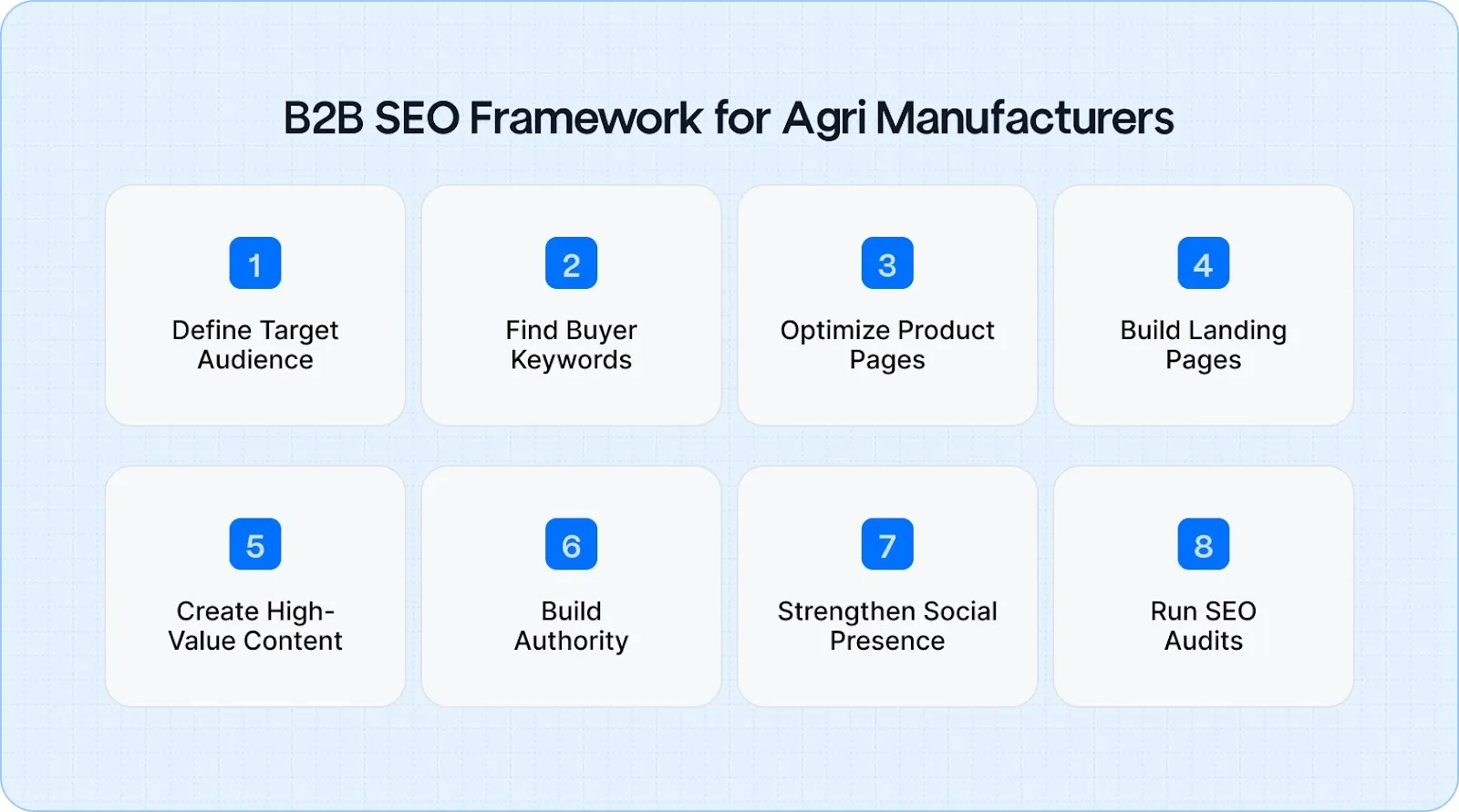
The steps below break down what today’s most effective agricultural manufacturers are doing to grow high-quality traffic and leads online:
Step 1: Know Who You Want to Attract (Target Audience Research)
This is the foundation of every successful B2B agricultural marketing strategy. If you don’t clearly understand who you want to reach, your SEO won’t match the right search intent and you’ll attract the wrong buyers.
What to clarify:
- Understand Your Product Fit: Identify which companies benefit the most from your equipment, parts, inputs or technology.
- Define Target Companies: These may include OEMs, dealers, large farms, food processors, distributors, agritech startups or government buyers.
- Filter by Demographics: Industry type, operation size, acreage, revenue, geography, fleet size and level of mechanization all influence whether a company is a viable buyer.
- Create Buyer Personas: Agricultural purchases involve several people. Build clear profiles for each:
- Decision maker: C-suite, plant managers, directors of operations. They approve the final spend.
- Influencer: Managers who will run or integrate your product. They care about reliability, efficiency and downtime.
- Researcher: The person comparing specs, pricing and vendors. Often techs, engineers or admin staff.
Start with 3–5 personas so your content and keywords have real direction.
Step 2: Identify the Keywords Your Buyers Actually Use
Agricultural buyers search based on the problem they want solved, the machine they operate or the technical feature they need.
Breaking your keyword research into buyer-journey stages makes everything more accurate:
Awareness Stage
Buyers focus on understanding a problem or finding general guidance. Use broad pain points and helpful educational topics rather than product-heavy terms.
Target, pain-point keywords like “reduce feed waste,” and “automated grain handling,” or how-to searches like “how to automate fertilizer application,” and “how grain dryers work.”
Interest Stage
They shift toward exploring possible solution types. Highlight features, benefits, and categories so they can compare approaches without diving into brand specifics yet.
For example, “precision ag software benefits” and “automated sprayer systems.”
Consideration Stage
Buyers start shortlisting vendors. Focus on comparison content, proof points, and search terms that show a clear intent to evaluate suppliers.
For example, comparison terms like best grain auger supplier,” “top fertilizer pump manufacturers,” or vendor-intent keywords like “bulk order agricultural sprayers,” “OEM tractor attachments supplier.”
Target the Right Buyers
Build a search strategy that speaks to the customers who matter most.


Step 3: Build and Optimize Product and Service Pages
Product pages are where real B2B purchasing decisions happen. Buyers care about specs, performance data, ROI, safety, compatibility and supporting documentation.
Best practices:
Target Bottom-of-Funnel Keywords
These reflect high buying intent: model numbers, equipment features, capacity, application type.
How to get the best results
- Add BOF terms naturally to product titles, first paragraphs, and spec tables.
- Include common variations buyers use.
- Add your industry application because buyers often search this way.
Broader Keywords Strategy
Some agricultural machinery keywords are too broad to rank a single product page. These phrases belong on your homepage, which acts as your main brand positioning page.
How to get the best results
- Optimize your homepage for broad terms.
- Create feature pages or solution pages for narrower terms.
- Support these with blog content targeting use cases, comparisons, and productivity benefits.
On-Page SEO Essentials
This is about helping both search engines and buyers clearly understand what each page is about. If the details are missing or unclear, Google won’t rank the page and buyers won’t convert.
Below is how to optimize each element cleanly and accurately:
- H1 Tags: Your H1 should clearly describe what the page covers. Avoid vague titles.
- Title Tag & Meta Description: These appear in Google search results, so they strongly influence click-through rates.
- Image Names & Alt Text: Search engines cannot “see” images. Rename images before uploading. Write alt text that explains the image in plain language.
- Body Copy: This is where you explain the equipment in simple, useful terms. Use short sentences and bullet points so busy buyers can skim quickly.
- Download Buttons or CTAs: Buyers often want spec sheets, brochures, performance data or pricing conversations. Make sure downloads include your most updated specs; outdated PDFs kill trust fast.
Improve Your Search Ranking
Make sure the right buyers find you before they find a competitor.
Your product pages must answer every question a buyer might ask before speaking with sales.
Step 4: Build High-Converting Landing Pages
Landing pages convert traffic into actual leads. The more aligned they are with your call-to-action, the higher your conversion rate.
Types of landing pages:
- Demo requests: A demo page lets buyers request a live or virtual demonstration of your equipment.
- Quote requests: This page gives buyers a simple form to ask for pricing based on their farm size, needs or equipment configuration.
- Distributor applications: This page helps potential dealers apply to carry your products.
- Whitepapers and technical guides: This page offers downloadable resources, such as engineering summaries, performance tests or comparison reports, in exchange for contact information.
- Case studies: This page showcases real results from other farms or agribusinesses.
- Free trials (for tools or products): If your product includes digital tools, integrations or monitoring systems, a free trial landing page lets users test them before committing.
Agricultural buyers often share landing page content across departments. A precise, clear landing page reduces confusion and speeds up the internal approval process.
Step 5: Start Producing High-Value Content
Content is the engine of B2B agricultural SEO. Buyers do a lot of research before reaching out, especially for expensive machinery or high-volume supply contracts.
Below are the types of content that work best and how to use each one effectively.
Educational Blogging
Educational blogs explain problems, solutions and everyday challenges in simple language. These posts attract buyers who are researching long before they reach out.
Tips to get the best results
- Write about the issues your customers ask about in real life.
- Keep posts practical, not promotional. Focus on helping, not selling.
Technical Explainers
Technical explainers break down the engineering, features or performance benefits behind your products. These help buyers understand why your equipment works the way it does.
Tips to get the best results
- Use short diagrams or bullet points instead of dense paragraphs.
- Highlight the real-world impact: less downtime, better yield, lower fuel use.
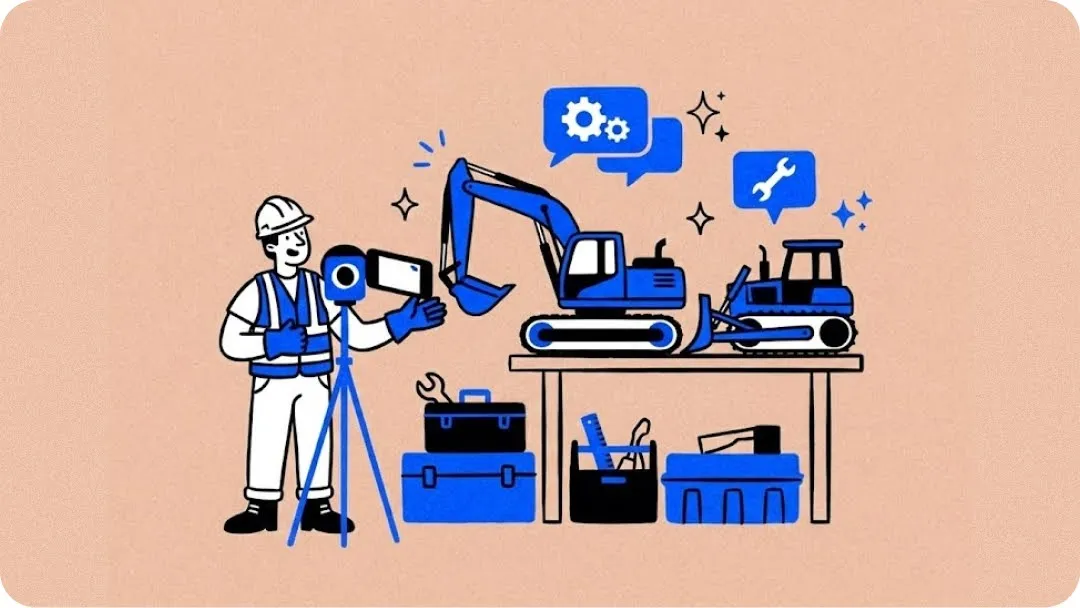
Video Content
Videos, like field demos, comparison tests and operator walk-throughs, help buyers see your product in action. This makes complex machinery easier to evaluate.
Tips to get the best results
- Keep videos short and focused on one point at a time.
- Include clips showing operation, safety, maintenance and performance.
Repurposing Content
Repurposing means taking one piece of content and turning it into multiple formats. This lets you get more reach without creating everything from scratch.
Tips to get the best results
- Turn strong blog posts into short videos or diagrams.
- Convert videos into step-by-step guides for your website or newsletters.
These are the ways the right SEO strategy supports food and agricultural businesses.
Publish Content Buyers Rely On
Show expertise with resources that support their research and decisions.
Avoid talking only about yourself. Your audience searches for solutions and expertise, not promotions.
Step 6: Build Online Authority Through Backlinks and Partnerships
Content alone won’t rank. You need authority signals. How to build authority:
- Backlinks: From agriculture publications, associations, universities, industry blogs and partners.
- Promotion: Share your best content everywhere your buyers spend time.
- Guest Features: Podcasts, industry sites and event panels.
- Partner Linking: Dealers, distributors, OEMs and suppliers can cross-link resources.
Step 7: Create a Strategic Social Media Presence
A steady presence helps you stay visible during long buying cycles.
Below is what matters most and how each part supports your marketing.
- Active social profiles signal that your business is engaged and legitimate. Regular updates and product info help build trust.
- Strong posts can drive traffic to your site and increase the engagement signals that support SEO.
- Content distribution on social reaches everyone involved in agricultural purchases, including operators, managers, finance teams and dealers.
- LinkedIn, YouTube and Facebook are the most effective platforms because they reach decision-makers, researchers and frontline operators.
LinkedIn, YouTube and Facebook remain the best platforms for agricultural audiences.
Step 8: Conduct Regular B2B SEO Audits
A fast, error-free, technically solid website ranks better and converts better.
Areas to audit:
- Mobile performance
- Page load speed (Core Web Vitals)
- Broken links and redirect errors
- Duplicate content
- eta tags & keyword alignment
- Internal linking
- Security and indexing issues
Review monthly in the first six months, then quarterly.
Checking your site’s performance is easy. Put your URL into our AI Analyzer and get straightforward suggestions that help you win more jobs.
How to Choose the Right B2B SEO Partner for Agricultural Suppliers
Agricultural SEO requires technical product knowledge and industry context.
What to look for in your SEO partner agency:
- Understanding of ag-equipment buyers
- Strong local SEO and dealer-network expertise
- Proven technical SEO and content frameworks
- Ability to produce educational content
- Competence with mobile-first optimization
- Review and reputation management skills
The right partner will know how to speak to buyers in a way that creates trust and action.
Challenges in Agricultural Machinery Marketing and How to Solve Them
Below are the most common challenges, with simple solutions:
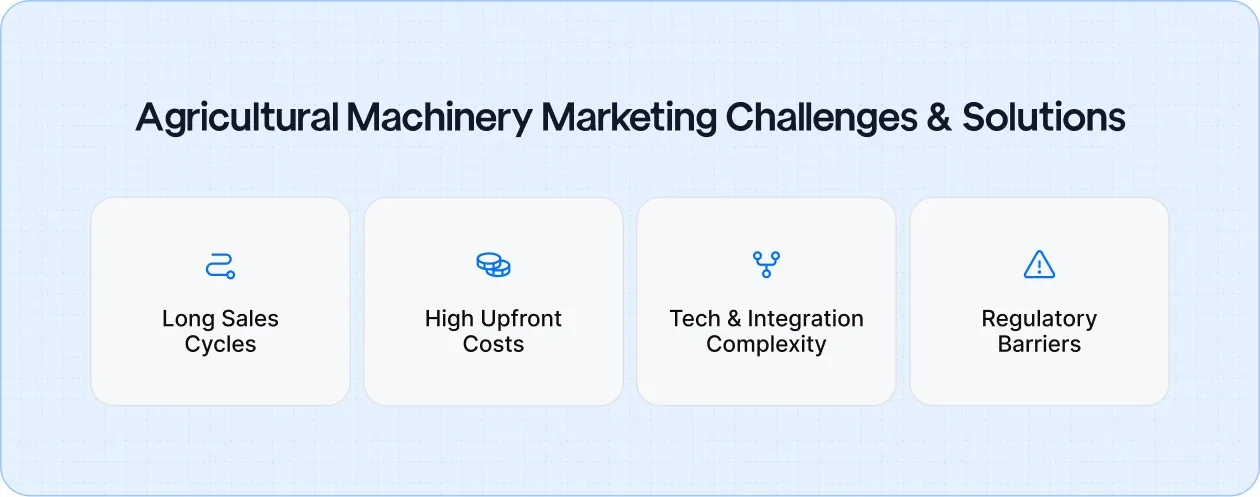
Long Sales Cycles
Agricultural machinery purchases rarely happen fast. Buyers compare brands, debate options internally and wait for the right season or budget cycle. This means you must stay visible and helpful throughout the entire decision process.
How to solve it
- Use nurturing sequences: Send helpful emails that answer questions buyers normally ask over months, not days.
- Run retargeting ads: Stay in front of people who visited your pages but didn’t convert yet.
- Publish educational content: Guides, comparisons and demos help buyers feel prepared and confident.
High Upfront Costs
Big-ticket machinery creates hesitation, even when buyers see the value. Many simply want help understanding how the investment pays off in the long run.
How to solve it
- Use cost-of-ownership messaging: Break down fuel savings, durability benefits and reduced downtime.
- Offer financing options: Clear monthly payment examples make decision-making easier.
- Provide simple calculators: ROI tools let buyers estimate savings or payback periods themselves.
Technology and Integration Complexity
Modern agricultural equipment often includes software, sensors, telematics or automation features. Buyers worry about learning curves, compatibility and usability.
How to solve it
- Offer training and onboarding support: Clear walkthroughs reduce hesitation.
- Create transparent documentation: Simple manuals, comparison sheets and troubleshooting steps remove confusion.
- Show real-world implementation examples: Case studies prove that similar farms or buyers succeeded with your tech.
Regulatory and Trade Barriers
Different regions have unique safety rules, emissions standards, warranty expectations and import/export restrictions. This slows purchasing and confuses buyers.
How to solve it
- Create region-specific compliance resources: Provide simple summaries so buyers know exactly what applies to them.
- Use clear, direct messaging: Highlight certifications or standards your products already meet.
- Keep dealers updated: Make sure your distributor network always has the latest compliance info.
What Other Marketing Works for Agricultural Manufacturers Beyond SEO?
SEO is only one part of how agricultural buyers discover and evaluate suppliers. That means your marketing needs more than rankings. It requires a presence everywhere your buyers spend time learning, comparing and validating.
Below are the most effective marketing channels agricultural manufacturers use today, and why each one still matters:
Digital Channels That Support SEO and Lead Generation
Digital marketing plays a major role because buyers start their research online long before speaking to sales. These channels help you stay visible early in the buying cycle.
- Content Marketing: Teach buyers what matters so your brand becomes the trusted expert.
- Video Marketing: Show machinery in action to simplify complex decisions fast.
- Webinars & Virtual Demos: Explain advanced tech clearly without requiring on-site visits.
- PPC and Paid Media: Reach specific buyers and support launches while SEO builds momentum.
- AI & Data Outreach: Identify high-value accounts and speed up buyer targeting.
Digital channels feed awareness and education, helping you get noticed before your competitors do.
Dealer and Distributor Marketing Partnerships
Agricultural equipment is often sold through dealer networks, so strong partnerships amplify your reach.
- Co-Branded Kits: Ready-to-use brochures, videos and product sheets dealers can share instantly.
- Dealer Portals: Central access to updated specs, pricing, manuals and marketing assets.
- Co-Op Advertising: Shared ad campaigns that expand local reach without heavy spend.
- Territory Lead Sharing: A clear handoff system that routes the right buyer to the right dealer.
Dealers are often the closest to the buyer. Supporting them strengthens your visibility and sales pipeline across multiple regions.
Traditional Channels That Still Work in Agriculture
Despite digital growth, agriculture remains a relationship-driven industry. Face-to-face trust still matters a lot.
- Trade Shows & Exhibitions: Still top lead sources because buyers want to see equipment in person and talk directly with experts.
- Printed Catalogs & Product Sheets: Buyers keep printed guides on hand, making them one of the few print tools that still convert well.
- Farm Visits & On-Site Demos: Real-world demonstrations build trust fast and show true performance.
- Ag Associations & Industry Networks: Memberships and sponsorships keep your brand in front of serious buyers consistently.
Traditional channels create the personal credibility and confidence that digital marketing alone cannot match.
Conclusion
Strong B2B SEO doesn’t replace your dealer network, trade shows or long-term relationships. It strengthens all of them. It brings in better-fit prospects, shortens conversations and positions your company as the supplier that understands the industry and its challenges.
Build your presence now, and you’ll stay ahead of competitors. In agricultural manufacturing, trust is currency and visibility is leverage. SEO gives you both.
Ready To Turn Visibility Into Real Leads?
Let’s build a clear, reliable marketing system that brings in better drain cleaning jobs consistently.


.webp)






.webp)


.svg)


