










When people search for furniture, they often start online, looking for everything from the perfect sofa and a stylish chair to a cozy bed, a sleek dining table, or a practical storage solution. To make sure your store catches their attention, your website needs to stand out in those search results.
Furniture SEO helps your store appear when potential customers are looking for the products you offer. By optimizing your website with the right details, you can make it easier for search engines to recognize your products and for shoppers to find exactly what they need.
With a few simple strategies, your store can be right there when customers are ready to make a choice.
What is Search Intent and Why Does It Matter for Furniture SEO?
Before someone walks into a showroom or shortlists a product, they go through a quiet decision process online. Understanding why they search helps you show the right content at the right moment.
Furniture buying rarely happens in one step. Some people are still exploring ideas. Others want store details. A few are close to choosing a product.
Search intent helps you recognize these stages so your content matches what the shopper expects to see, instead of pushing information too early or too late.
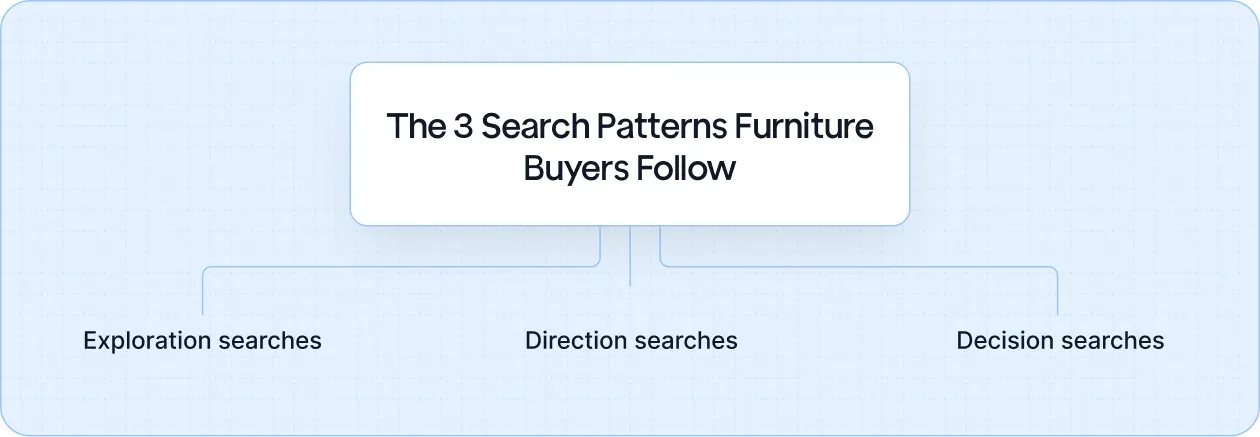
The 3 Search Patterns Furniture Buyers Follow
- Exploration searches: People looking for ideas, comparisons, or inspiration are common in early sofa and chair searches.
- Direction searches: People trying to find a specific store, brand, or location, often tied to local SEO.
- Decision searches: People check sizes, materials, prices, or availability before choosing.
Each pattern needs a different type of page. Treating them the same is where many furniture websites lose attention.
Shape Content Around Buyer Intent
Good furniture SEO places the right content in front of the shopper’s current mindset.
- Guides and blog posts support exploration.
- Store and category pages support direction.
- Product pages support decision-making.
When intent and content match, shoppers stay longer, understand faster, and feel more confident moving forward, without forcing anything.
Still unsure what your customers expect to see when they search?
Clear intent-based content helps furniture brands show up with the right message at the right moment, without sounding salesy.


1. Structure Your Website So Shoppers Never Feel Lost
A furniture website should feel like a well-laid-out showroom. When visitors can move smoothly from one section to another, they explore more, understand faster, and trust the store. Site structure plays that role online.
a) Design Pages Around How Furniture Is Browsed
People don’t browse furniture randomly. They move by room, purpose, and size. Sofa website optimization and chair website optimization work best when categories follow natural shopping paths, not internal business logic.
For example, shoppers expect:
- Seating is grouped clearly, not scattered across multiple menus
- Dining items are separated from the living room furniture
- Office and bedroom furniture is easy to spot without digging
When structure matches browsing behavior, fewer clicks are needed to reach the right product.
b) Build Categories That Support Real Exploration
Strong furniture categories act like clear aisles in a store. Each category should answer one simple question: “What will I find here?”
Good structure keeps:
- Sofas grouped by type, not mixed with unrelated items
- Chairs separated by use
- Dining furniture easy to scan without overlap
This clarity helps both visitors and search systems understand the purpose of each section without confusion.
c) Why Simple URLs Work Better Than Fancy Ones?
URLs act like labels on shelves. Short, readable paths show exactly where a page sits within your store.
Clean URLs:
- Reflect the category hierarchy clearly
- Avoid unnecessary words or symbols
- Make it easier to move between sections
When every page has a clear place, search systems move through your site more smoothly and index pages with fewer misses. If your showroom sales depend on local visibility, this companion guide helps.
2. Build Product Pages That Answer Questions Before They’re Asked
A product page replaces the in-store experience. Shoppers can’t touch, sit, or test the furniture, so every detail on the page has to reduce hesitation and remove doubt. Strong furniture SEO starts when a product page feels complete, clear, and trustworthy at a glance.
a) Write Product Copy That Feels Human, Not Catalog-Like
Effective sofa SEO writing and furniture SEO writing sound less like a spec sheet and more like a calm walkthrough. Instead of listing features blindly, guide the shopper through what matters first.
Good product copy:
- Explains what the product is used for before listing details
- Highlights comfort, size, and fit in simple language
- Avoids repeating the same phrases across similar products
Each product should feel individually explained, even when items are similar.
b) Structure Titles and Descriptions for Easy Scanning
Most shoppers skim before they read. Product titles and descriptions should help them decide quickly if the item fits their needs.
A strong structure:
- Puts the product type and key detail first
- Keeps descriptions broken into short, readable sections
- Uses consistent patterns across sofas, chairs, and tables
When information is easy to scan, people stay longer and understand faster.
c) Show the Product Clearly Through Images and Video
Furniture is visual by nature. One flat image rarely answers all questions. High-quality photos and furniture video SEO help show scale, texture, and real-world use.
Effective visuals include:
- Multiple angles and close-ups
- One lifestyle image to show placement
- Short videos showing size, seating depth, or movement
These elements reduce uncertainty and keep shoppers engaged on the page.
d) Help Search Systems Read Your Product Pages Better
Search systems rely on clear signals to understand what a product page represents. Product schema markup adds structure to that understanding by clearly labeling details like price, availability, and reviews.
When product data is clearly defined:
- Pages are easier to interpret
- Listings appear more complete
- Product information stays consistent across platforms
This helps your product pages stand out without adding extra text.
Product pages shouldn’t leave shoppers guessing.
Clear structure, sharp copy, and the right visuals can turn everyday product pages into pages people trust and act on.
3. Make Your Store Easy to Find Nearby
Furniture shopping often starts close to home. People want to know where a store is, what it carries, and if it’s worth the visit. Local SEO helps your store appear with the right details at the exact moment someone nearby is searching.
a) Set Up Your Local Store Presence the Right Way
Your local listings act like a digital storefront window. Google Business Profile and Apple Business Connect help shoppers quickly understand who you are, where you are, and what to expect before they visit.
A strong setup includes:
- Accurate store details that match everywhere
- Clear photos of your showroom and products
- Updated hours, directions, and contact options
When this information is consistent and complete, local shoppers feel more confident choosing your store.
b) Connect Regional Searches to the Right Furniture Pages
Sofa local SEO and chair local SEO work best when regional searches lead to relevant pages. Shoppers searching by area expect to see furniture that’s available nearby, along with practical details like pickup options or delivery coverage.
Local relevance improves when:
- Categories mention service areas naturally
- Product availability reflects regional demand
- Store information supports nearby searches without sounding forced
This alignment helps local searches feel useful instead of generic.
c) Create Pages That Support Store Visits
Location-specific pages act as a bridge between online research and in-store visits. These pages give shoppers clarity before they step out.
Effective location pages include:
- Store address and nearby landmarks
- What types of furniture are available at that location
- Parking, delivery, or assembly details
When shoppers know what to expect, visits feel intentional rather than uncertain.
Local searches should lead people straight to your store.
Clear local pages and accurate listings help nearby shoppers find the right place without confusion.
4. Build Authority Through Content People Actually Save and Revisit
Furniture buying takes time. People return to the same guides, compare notes, and revisit ideas before deciding. Advanced content strategies focus on creating pieces that stay useful long after they’re published, so your brand becomes a reference point, not a one-time read.
a) Create Deep Content That Helps Buyers Decide
Long-form content works when it answers real questions in one place. Buying guides, comparison pieces, and room-based inspiration give readers clarity without pushing them toward a choice too early.
Strong furniture blog post optimization starts with:
- Guides that explain trade-offs clearly
- Style content that shows how pieces work together
- Practical advice that applies to real homes, not trends
When a guide feels complete, readers don’t need to search again.
b) Use Blogs to Support Product Discovery Naturally
Blog content should quietly support product discovery without turning into a sales page. Sofa blog post optimization works best when articles link ideas to real examples, helping readers move from learning to shortlisting at their own pace.
This approach works when:
- Blog posts reference product types, not product pushes
- Examples match common living spaces and needs
- Articles stay focused on helping, not persuading
The result feels informative, not promotional.
c) Add Regional Context Without Diluting Value
Localized content doesn’t mean repeating city names. It means addressing region-specific needs, preferences, or living styles naturally. Integrating sofa local SEO into content works best when location adds context, not clutter.
Examples include:
- Guides written for apartment living vs suburban homes
- Climate-aware care tips
- Region-specific delivery or sizing considerations
This keeps content relevant across locations without rewriting everything.
Your content should earn attention.
Well-researched guides and thoughtful articles help furniture brands become trusted sources people return to.
5. Make Your Website Feel Fast, Stable, and Trustworthy
Once a shopper lands on your site, small technical issues can quietly push them away. Pages that load slowly, layouts that jump, or buttons that don’t respond properly create friction. Technical SEO focuses on removing these silent blockers so browsing feels smooth and predictable.
a) Why Mobile Experience Shapes How Long Visitors Stay?
Most furniture browsing happens on phones, even if purchases happen later. Sofa website optimization on mobile ensures pages feel usable without zooming, pinching, or waiting.
Strong mobile setups:
- Keep text readable without adjustments
- Ensure images resize cleanly
- Make menus and filters easy to tap
When mobile pages behave well, people explore more without frustration.
b) Speed, Security, and Stability Shape User Trust
Furniture pages are image-heavy by nature. Without control, they slow everything down. Improving speed means making sure pages load in a steady, reliable way across devices.
Key improvements include:
- Compressing large images without losing detail
- Reducing unnecessary scripts
- Using secure connections so visitors feel safe browsing
These steps support sofa SEO tracking and furniture SEO tracking by ensuring pages load consistently when measured and reviewed.
c) Help Search Systems Read Your Site Without Confusion
Structured data and schema markup help label your pages clearly. Instead of guessing, search systems can identify products, prices, availability, and reviews with accuracy.
At the same time, fixing site errors prevents dead ends:
- Broken links disrupt navigation
- Missing pages weaken site reliability
- Incorrect redirects confuse page relationships
A technically clean site allows every strong page you’ve built to be fully understood and retained.
Must Read: 15 Smart Marketing Moves to Drive Growth for Your Home Services Business
6. Earn Mentions That Signal Real-World Credibility
When other trusted sites mention your furniture brand, it sends a clear signal that your business exists beyond its own website. Backlinks work best when they come from genuine relationships and useful collaborations.
a) Why Furniture Mentions Signal Real Credibility?
Furniture link building works differently from other industries. A few relevant mentions from the right places often carry more weight than dozens of generic links.
Strong signals usually come from:
- Design-focused websites
- Home improvement platforms
- Retail partners and suppliers
These mentions help search systems understand where your brand fits within the furniture space.
b) Partner with Local Designers and Creators
Local designers, architects, and home stylists often share recommendations online. Building real relationships with them supports sofa local SEO in a natural way.
This works best when:
- Your furniture appears in real projects
- Collaborators credit your brand clearly
- Mentions link back to relevant category or product pages
These links feel earned because they reflect real usage, not promotion.
c) Use Thoughtful Contributions to Earn Editorial Links
Guest articles and content syndication create visibility through expertise rather than selling. Writing for furniture, home, or lifestyle platforms allows your brand to be referenced as a source, not an advertiser.
Effective contributions:
- Share practical insights, not product pitches
- Link back only where context fits naturally
- Appear on sites that already speak to your audience
Over time, these editorial links build a steady foundation of credibility.
7. Track What’s Working So You Know What to Adjust Next
SEO improves in small, steady steps. Tracking helps you understand which pages earn attention, which ones get ignored, and where small changes can make a real difference. The goal is learning what your website is quietly telling you.
a) Choose Signals That Actually Mean Something
Furniture SEO tracking works best when you focus on signals tied to real actions, not vanity numbers. These signals show interest, clarity, and intent.
Useful things to track include:
- Which product and category pages do people land on first
- Pages that keep visitors engaged longer
- Pages people leave quickly, signaling confusion or a mismatch
These patterns highlight where your site feels helpful, and where it doesn’t.
b) Use Search Console to Understand Visibility and Reach
Google Search Console acts like a diagnostic panel for your website. It shows how pages appear in searches and how often people choose them.
For sofa SEO tracking and chair-related pages, Search Console helps you:
- See which queries bring attention to specific products
- Spot pages that appear often but get ignored
- Identify location-based visibility changes over time
This insight helps refine pages without guessing what needs improvement.
c) Set Direction and Review Progress Over Time
Tracking works best when tied to clear goals. Instead of chasing quick changes, review patterns monthly to see what’s improving and what’s stalled.
A steady review process helps you:
- Compare older pages against newer ones
- Spot which content formats perform better
- Decide where updates are more valuable than new pages
Over time, this keeps your SEO strategy focused, measured, and grounded in reality.
8. Use Paid Ads to Support What SEO Builds Over Time
SEO creates a steady foundation, but furniture buying doesn’t always follow a straight line. Some shoppers need reminders. Others need visual confirmation. Paid ads work best when they reinforce pages and products that already exist, instead of pushing new messages from scratch.
a) How Paid Ads Strengthen Global Visibility
Sofa global SEO and furniture global SEO benefit when paid ads highlight pages that are already clear, detailed, and helpful. Ads help surface these pages to people who are still comparing options or returning after their first visit.
This approach works well when:
- Ads point to strong category or product pages
- Messaging matches what the page already explains
- Ads focus on availability, styles, or use cases
Paid visibility becomes an extension of your organic presence, not a separate effort.
b) Bring Back Interested Shoppers Thoughtfully
Many furniture buyers don’t decide in one visit. Retargeting helps keep your store visible to people who have already explored your site.
Effective retargeting:
- Shows the same products or categories viewed earlier
- Uses simple visuals instead of long messages
- Reminds without overwhelming
This keeps your brand familiar while shoppers take time to decide.
c) Use Product-Focused Ads to Show What You Actually Sell
Furniture shopping is visual. Product-based ads allow people to see styles, pricing ranges, and options upfront before clicking.
These ads work best when:
- Product details are accurate and updated
- Images match what appears on the website
- Listings reflect real availability
When ads and product pages stay aligned, shoppers feel continuity rather than friction.
How Furniture SEO Fits Into Your Long-Term Growth
Furniture SEO works when every part of your site supports the same goal. Clear structure makes browsing easy. Product pages reduce uncertainty. Local signals help nearby shoppers find you. Content builds familiarity. A solid technical base keeps everything running smoothly. Each piece strengthens the next.
Progress comes from consistency, not big changes. Small, deliberate improvements across pages and listings add up over time. Regularly reviewing what feels clear and fixing what doesn’t helps your site stay useful as buying habits change.
The next step is simple: improve one area fully, then move on. That steady rhythm is what keeps a furniture website relevant long after it goes live.
Strong SEO comes from doing the right things consistently.
Gushwork helps furniture brands build clarity-led SEO and content systems that grow steadily without guesswork or noise.


.webp)








.webp)



.svg)


