









Most buyers start their journey online. They search for models, compare prices, check inventory, and read reviews, often from their phones. For dealerships, that means being findable in the exact moments buyers are looking, and making each vehicle listing clear, useful, and trust-worthy.
SEO for the automotive industry is a marketing effort that makes your inventory, service pages, and dealership visible and impactful across search and map results. It’s the mix of local visibility, structured inventory data, strong on-page content, and technical hygiene that turns searches into showroom visits and phone calls.
In this blog, you’ll get hands-on steps for dealership SEO: what matters, how to structure it and the everyday checks that keep your leads steady and qualified.
What is SEO for Automotive Industry?
SEO for automotive industry means optimizing everything a buyer might encounter online: your website, vehicle listings, Google Business Profile, and third-party inventory channels. This is important, so that people searching for vehicles, parts, or services find your dealership and trust your offer.
For dealers, strong SEO breaks down into three practical goals:
- Be found for local searches.
- Present inventory clearly so searchers can judge value fast (price, mileage, condition).
- Convert interest into actions: calls, chat leads, showroom appointments, or Vehicle Description Pages to finance pre-approvals.
Why Automotive SEO Matters Right Now
Most buyers start on Google. They search for known keywords like “used Honda Civic near me” or “best truck deals in Dallas,” and expect to see real vehicles, with real prices, from nearby dealerships. That’s exactly what modern automotive SEO supports.
Here’s what makes it especially important today:
1. Google now connects buyers directly to your live inventory
Google’s vehicle ads and inventory listings let shoppers see your cars, make, model, price, mileage, right inside search results. But this only works if your inventory feed is accurate and up to date. The cleaner your data, the more often your vehicles appear in those high-intent searches.
2. Structured data helps search engines understand your vehicles
Adding “Vehicle schema” (a small code that labels your vehicle details for Google) helps search engines read your listings properly. That means your vehicles can show up with richer info, like price, availability, and photos.
3. Local visibility drives real showroom visits
Your Google Business Profile and local landing pages are what push your dealership into the map section of results. That’s where buyers click for directions, reviews, and calls. A strong local presence means you’re visible to people already ready to test-drive or buy.
Turn Online Searches Into Showroom Visits
Get a clean, optimized SEO setup that helps buyers find your dealership first, not your competitors.


These three realities make dealership SEO measurable.
8 SEO Strategies That Help Automotive Dealerships Grow
With the right SEO strategies, your dealership can show up where serious buyers are searching and convert clicks into customers. These proven approaches focus on visibility, trust, and consistent lead flow:
1. Local SEO
Local SEO is foundational for dealerships since most buyers are looking for nearby options. By optimizing your local presence, you increase the chances of getting in front of customers who are ready to buy. Here’s how to optimize your local SEO:
Key Focus Areas:
- Google Business Profile (GBP): Claim and verify your GBP listing. Add detailed information, including your business name, address, phone number, business hours, and website. Upload real photos of your dealership and vehicles to increase trust.
- Apple Business Connect: Don’t forget Apple users! Many consumers use Apple Maps to search for services. Optimize your Apple listing by adding contact information, business hours, and photos.
- Local Keywords: Use geo-targeted keywords like “used cars in [city]” or “car dealerships near me” throughout your site and metadata.
- Reviews and Citations: Encourage customers to leave reviews on platforms like Google and Yelp. Respond to each review promptly, whether positive or negative. Ensure your NAP (Name, Address, Phone number) information is consistent across all directories (Yelp, BBB, DealerRater).
Pro Tip: Keep your GBP updated regularly, post new photos, and engage with customers to signal to Google that your business is active and trustworthy.
Ready to Rank Higher in Local Searches?
Get found by in-market buyers through smarter SEO, better Google listings, and consistent local visibility.
2. On-Page SEO
On-page SEO ensures that your website provides clear, concise information while also ranking well in search engines. By improving content quality, keyword optimization, and site structure, you can significantly enhance your visibility and user experience.
Key Elements to Optimize:
- Keyword Research: Use real-world keywords buyers would use when looking for cars, such as “used SUV under $30,000” or “certified pre-owned Toyota Camry.” Tools like Google Keyword Planner or Ubersuggest can help.
- Meta Titles and Descriptions: Craft unique meta titles and descriptions for each page that include relevant keywords and provide a compelling reason to click. For example:
- Title: “Used Toyota Camry for Sale | Affordable Certified Vehicles in Austin”
- Description: “Find certified pre-owned Toyota Camrys in Austin with easy financing options. Schedule a test drive today!”
- Headings (H1, H2, H3): Organize your content using clear, structured headings. Your H1 should focus on the main page topic (e.g., “Certified Pre-Owned Cars in Austin”), with H2s and H3s breaking down further details (e.g., “Why Choose Certified Vehicles?”).
- Internal Linking: Ensure pages are connected through relevant internal links (e.g., linking from a car page to finance options). This enhances site navigation and helps search engines understand the structure of your website.
- Image Optimization: Use descriptive filenames and alt texts for vehicle images, ensuring that search engines understand the content of your images while improving site accessibility.
Pro Tip: Your Vehicle Description Pages (VDPs) should act as product pages—make sure they are optimized with keywords, vehicle specs, and clear CTAs like “Book a Test Drive.”
3. Technical SEO
Your website’s technical health directly impacts your rankings and user experience. If your site is slow, difficult to navigate, or has broken links, it can significantly hurt your ability to attract and retain visitors. Here's how to address key technical SEO factors:
Key Areas to Optimize:
- Page Speed: Aim for a page load time under 3 seconds. Use tools like Google PageSpeed Insights or GTmetrix to assess and optimize speed. Compress images, enable browser caching, and minimize JavaScript to improve loading times.
- Mobile-Friendly Design: With over 70% of users browsing on mobile devices, ensure your site is fully responsive. Mobile-friendly sites tend to rank higher and provide a better experience for potential customers.
- SSL Security: A secure connection (HTTPS) builds trust and is essential for Google rankings. Ensure your site has an SSL certificate to protect user data.
- Sitemap and Robots.txt: Create and submit an XML sitemap through Google Search Console to ensure your pages are indexed efficiently. Check your robots.txt file to make sure search engines aren’t blocked from crawling important pages.
- Canonical Tags: Prevent issues with duplicate content, especially for product listings with multiple variations (e.g., colors or trims), by implementing canonical tags.
Pro Tip: Regularly monitor and optimize your site’s technical aspects. Small improvements in speed and mobile usability can lead to significant increases in both rankings and conversions.
Build a Dealership Website That Drives Real Leads
We’ll create a fast, professional site from scratch, built to showcase your inventory, attract buyers, and turn every visit into a sales opportunity.
4. Using Structured Data
Structured data is essential for helping search engines understand your website’s content, and it plays a significant role in SEO. For automotive dealerships, implementing Vehicle schema and LocalBusiness schema can enhance visibility in Google's Rich Results, such as carousels, knowledge panels, and other rich snippets.
How to Implement Schema Markup:
- Vehicle Schema: This schema helps Google display key vehicle details such as make, model, year, price, and mileage directly in search results. It provides structured data that makes your inventory more accessible to users.
Steps to Implement:
- Identify Key Vehicle Pages: These should be the primary inventory pages or vehicle detail pages.
- Add Structured Data: Use the Vehicle schema from schema.org and ensure your pages are enriched with data like the vehicle’s make, model, price, mileage, condition, etc.
- Test Your Schema: Use Google’s Structured Data Testing Tool to confirm that the markup is correctly implemented.
- Monitor Rich Results: Check your website’s performance using Google Search Console to see how rich snippets are impacting traffic.
- LocalBusiness Schema: This schema enables search engines to understand key business details like location, hours of operation, and customer reviews, which can boost local visibility and improve your Google Maps ranking.
Pro Tip: Use Google’s Structured Data Markup Helper to implement schema for your inventory pages. Regularly test schema with Google’s Structured Data Testing Tool to ensure correct implementation.
5. Content SEO
Content marketing helps your dealership engage with potential customers while improving SEO. By answering common questions and providing helpful information, you can position your dealership as a trusted authority in the automotive industry.
Content Ideas:
- Guides and Comparisons: Create buyer’s guides or comparison articles such as “Best Used Cars for Families Under $20,000” or “Certified vs. Non-Certified: What’s the Difference?”
- Local Content: Write blog posts targeting local driving conditions or needs, like “Best SUVs for Winter Driving in [City]” or “Top Cars for Family Road Trips in [Region].”
- FAQs: Address common customer questions like “What do I need to get pre-approved for financing?” or “What is the trade-in process?”
Videos are a great way to engage potential customers:
- Walkthroughs of Vehicles: Create videos showcasing vehicle features, both inside and outside, to engage customers and improve visibility.
- Customer Testimonials: Videos from happy customers can add authenticity to your dealership’s reputation.
- Social Media Posts: Post engaging content on platforms like Facebook and Instagram, such as behind-the-scenes footage or time-lapse videos of vehicle reconditioning.
For any dealership, trust is key. Google’s E-E-A-T principles have become essential for SEO, particularly in industries where buying decisions are heavily reliant on trust (like automotive). Here’s how to improve your E-E-A-T:
- Expertise: Provide educational content about vehicles, financing, and the buying process.
- Authoritativeness: Gain backlinks from respected automotive blogs, industry publications, and local websites.
- Trustworthiness: Encourage customers to leave positive reviews and display certifications, such as “Google Guaranteed” badges, prominently on your website.
Pro Tip: Be consistent with content updates. Aim to publish one to two blog posts per month, focusing on providing value and answering customer questions.
6. Off-Page SEO
Off-page SEO refers to actions taken outside of your website to build credibility and increase visibility. This includes reviews, social mentions, and building relationships with other businesses.
Off-Page SEO Strategies:
- Customer Reviews: Ask customers for reviews on platforms like Google, Yelp, and DealerRater. Positive reviews are crucial for building trust and improving rankings.
- Social Media Engagement: Encourage users to share photos of their new cars on social media, tagging your dealership. Social proof is valuable for SEO and brand recognition.
Backlinks are essential for boosting your website’s authority and search rankings. Here’s how to build quality links:
- Guest Blogging: Write posts for trusted automotive blogs or local business directories that link back to your site.
- Local Sponsorships: Partner with local events or charities to get mentions and backlinks from their websites.
- Influencer Marketing: Collaborate with automotive influencers to gain authoritative backlinks that drive both traffic and trust.
7. Combining SEO with Paid Media (PPC)
Combining SEO and PPC (Pay-Per-Click) strategies can maximize your dealership’s visibility and lead generation. PPC can drive immediate leads, while SEO builds long-term organic traffic.
How to Combine SEO and PPC:
- Google Vehicle Ads: These ads can be paired with organic search strategies to enhance visibility, particularly for high-intent searches such as “used cars in [city]” or “certified pre-owned [make/model].”
- PPC for Immediate Results: Use Google Ads to target high-intent keywords and drive immediate traffic to your site.
- SEO for Long-Term Gains: As you run PPC campaigns, use the data to inform your SEO strategy (e.g., adding top-converting PPC keywords to your website content).
Pro Tip: Combining SEO and PPC ensures that your dealership dominates both organic search results and paid ads, increasing visibility at every stage of the customer journey.
8. Analytics & Tracking
To optimize your SEO strategy continuously, track relevant metrics:
- Google Analytics: Monitor key performance indicators like traffic, bounce rates, conversions, and page engagement.
- Google Search Console: Use this tool to track rankings, crawl errors, and discover which search queries are driving traffic to your site.
- Conversion Tracking: Set up call tracking and form submission tracking to measure the effectiveness of your calls-to-action (CTAs).
Competitor Monitoring: Constantly track your competitors’ performance using SEO tools like Ahrefs and SEMrush to stay ahead of industry trends and keyword opportunities.
Regular SEO Audits: Conduct regular SEO audits to identify areas of improvement. This ensures that your site continues to align with Google’s algorithm updates and provides a better user experience.
In short:
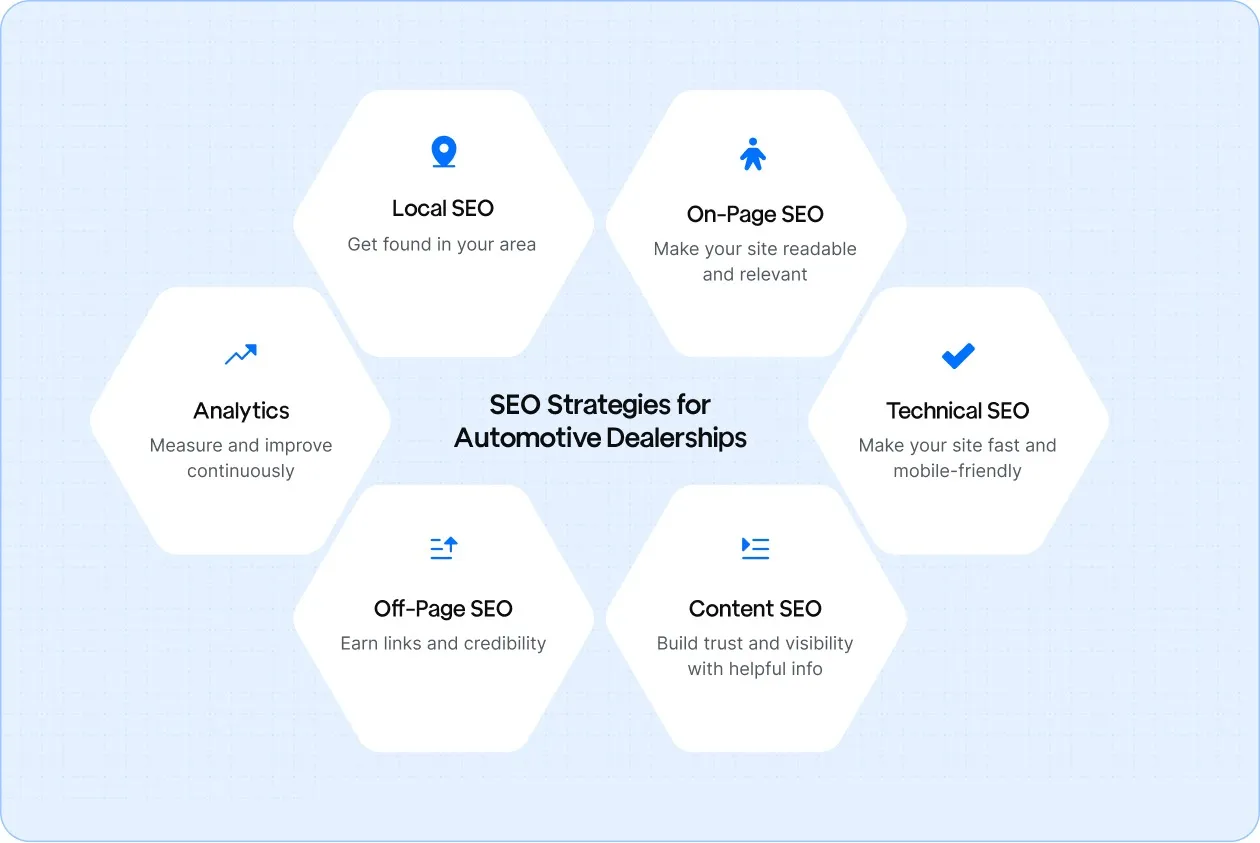
These pieces work together like a sales funnel: visibility → trust → visits → leads.
Building Visibility That Brings Buyers In
When your website, listings, and local search results work together, you earn trust before the buyer even arrives. Small, steady improvements to these details create big shifts in how often buyers find and choose you.
If your dealership is serious about growth, your SEO should work as hard as your sales team. Optimize it once, maintain it consistently, and let it keep doing what it’s built for, bringing the right people straight to your lot.
Make Your Dealership the First Choice Online
Gushwork helps automotive businesses build search-ready websites, optimize inventory pages, and stay visible where real buyers are looking.


.webp)






.webp)



.svg)


