









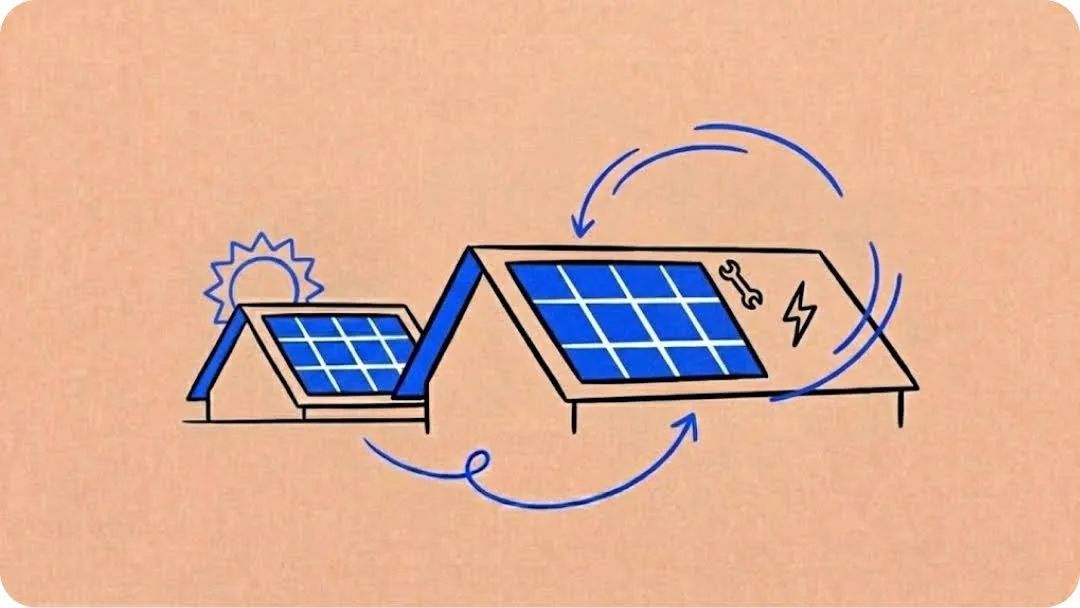
Selling solar is a long-term bet: lower bills, cleaner energy, and the confidence that a complicated investment will actually pay off. That makes solar marketing part financial education, part technical proof, and part human reassurance, all rolled into one.
That makes solar marketing less about persuasion and more about clarity. Winning businesses are the ones that clearly explain the investment, demonstrate their expertise early, and reduce uncertainty at every step of the decision-making process.
Digital marketing for solar panels is about guiding that decision journey.
In this blog, you’ll learn how digital marketing works specifically for solar panel companies, which channels matter most, how to align them with buyer behavior, and how to build a system that turns attention into installs.
Understanding Digital Marketing In The Solar Panel Industry
Digital marketing in the solar industry doesn’t work like typical “home services” marketing. Solar purchases involve high cost, long commitment, heavy regulation, and emotional hesitation. Most buyers don’t convert after one ad, one search, or one conversation.
Instead, they move through research, skepticism, comparison, and financial justification before agreeing to anything. A strong digital strategy acknowledges this behavior and supports buyers through each step.
How Solar Buyers Actually Research And Decide?
Understanding that journey is the foundation of effective solar marketing:
Residential Vs Commercial Solar Decision Paths
Residential buyers care about bills, savings, reliability, and home value. Commercial buyers focus on ROI, compliance, stability, and financial justification. Home decisions are quicker; commercial decisions take months. Residential marketing needs reassurance. Commercial marketing needs proof.
Research Mode Vs Buying Mode
Most prospects start in learning mode, searching:
- Is solar worth it?
- What does it cost?
- How much will I save?
Once confident, they move to comparison mode, evaluating companies, systems, warranties, and financing. Marketing must guide them from curiosity → clarity → contact.
Role Of Education And Validation
Solar buyers are cautious, and for good reason. Education helps them understand costs, savings, and trade-offs, while validation reassures them that your claims are real.
Years of aggressive telemarketing, misleading “free solar” offers, and poor installations have made buyers skeptical. Today, solar companies earn trust by being clear about pricing, realistic about outcomes, and transparent about how projects actually work.
Put simply, in solar energy marketing, the company that explains the process best and backs it up with proof usually wins the sale.
Be the Safer Choice
Clarify what makes your solar company credible, transparent, and reliable in a skeptical market.


Core Digital Marketing Channels For Solar Panel Companies
Solar marketing works best when every channel plays a specific role: some attract attention, some build trust, and some close the deal.

Below are the core digital channels that actually move homeowners from curiosity to consultation in today’s market:
Website As A Conversion And Education Engine
Your website is the core of your solar marketing. Before calling any brand, people want to understand cost, savings, credibility, and risk. If your site explains these well, you win trust. If it doesn’t, they hit back and go to your competitor.
A strong solar website should:
- Prioritize mobile-first design, because homeowners research solar on their phones while talking to family or scrolling through options.
- Ensure fast loading so visitors don’t drop.
- Make CTAs visible instantly.
- Keep reading effortless with short, structured sections.
- Explain systems, pricing expectations, and process clearly, so decision-making feels simpler instead of overwhelming.
- Share typical cost ranges with realistic context like rebates, incentives, and financing.
- Explain installation steps, inspection timelines, warranties, and maintenance expectations.
- Answer fear-based questions like roof damage, reliability, and service support.
- Use focused landing pages built to convert interest into action, instead of dumping users on generic pages.
- Dedicated pages for quotes, consultations, solar calculators, financing pages, and savings estimates.
- Position short forms with simple requested details strategically.
- Clear “What happens next” explanation after form submission.
- Show visible trust signals professional buyers look for, because credibility matters in high-ticket decisions. Some great examples are:
- Certifications, accreditations, brand partnerships.
- Warranty statements and guarantees.
- Authentic testimonials, case studies, and installed project photos.
- Clear local service coverage areas.
Your website should turn curiosity into confidence and confidence into real leads.
Turn Research Into Confidence
Build a solar website that explains costs, savings, and next steps clearly enough for buyers to move forward.
Search Engine Optimization (SEO) For Solar Panel Companies
SEO is your long-term, lowest-cost lead engine when built correctly. SEO keeps generating traffic and inquiries even when budgets slow down. But for solar, SEO only works when it targets how real people search and think about solar.
What effective solar SEO looks like:
- Ranking for high-intent solar keywords.
- Focus on “near me,” “cost,” “best installers,” “quotes,” and “savings” phrasing.
- Include intent-focused modifiers like “for my home,” “worth it,” “2026 incentives,” etc.
- Prioritize keywords that bring homeowners ready to decide, not just researchers.
- Strengthening local SEO for installers and service regions, because most solar buyers want nearby installers. You can create:
- Dedicated service area pages.
- Location-specific content.
- Structured address and local trust relevance signals.
- Balancing educational SEO content with sales pages, so you attract both early interest and ready buyers.
- Educational guides: “Is solar worth it?”, “How much do panels save?”, “How solar incentives work.”
- Decision-stage content: financing, comparisons, installation breakdowns.
- Service pages built for conversion.
- Treating SEO as a compounding investment.
- SEO builds authority month after month.
- Organic leads cost less over time.
- Visibility increases even when paid competitors burn budget.
Done right, SEO positions your solar company as the trusted expert.
Show Up Early in the Decision
Strengthen SEO so your solar business appears when buyers research cost, savings, and local installers.
Google Business Profile And Local Trust Signals
For local solar installers, Google Business Profile acts like your digital storefront. It influences how often you appear in maps, how frequently customers call, and whether people trust you before ever visiting your website.
To make it work as a true growth tool:
- Use reviews as a primary credibility driver. You must:
- Aim for consistent review growth, not random spikes.
- Encourage reviews that mention savings, professionalism, communication, and installation experience.
- Reply to reviews so your profile looks active and real.
- Continuously update your profile, so Google sees an engaged, operational business.
- Add fresh installation photos.
- Update service offerings and coverage.
- Post helpful updates during peak solar seasons.
- Strengthen relevance signals, because proximity alone is not enough.
- Choose correct categories.
- Use solar-focused descriptions, not generic contractor wording.
- Answer customer Q&A thoughtfully.
Google decides trust visually and your profile needs to make you look like the company homeowners can confidently call.
Paid Advertising For Solar Lead Generation
Paid ads can drive a lot of solar leads, but without filters you end up with curious clickers instead of serious buyers. The goal is not “more form fills,” it is qualified homeowners who can actually go solar.
Use each ad platform for a specific job
- Run Google Search Ads for high-intent phrases like “solar installer near me” or “home solar quote [city],” because these users already want to talk to someone.
- Use YouTube and Display for education and remarketing, so people who visited your site keep seeing your brand while they research.
- Use Facebook and Instagram to reach homeowners by area, demographic, and home-ownership signals, then send them to clean, focused landing pages.
Filter out people who will never buy
- Exclude renters and apartments where roof control is unlikely, so sales teams don’t waste time on impossible deals.
- Ask simple qualifying questions in your forms like “Do you own your home?” or “Average monthly power bill?” to screen interest.
- Use negative keywords for terms like “DIY,” “job,” or “free panels” if you’re not offering those options at all.
Protect your budget with tight targeting
- Limit your geo targeting to areas where crews can install profitably.
- Set ad schedules so your ads only run when someone can answer calls or respond quickly.
- Review search term reports weekly, then trim out irrelevant queries that keep draining spend.
Send paid traffic to pages built for solar decisions
- Send ads to a solar-specific landing page, not your homepage, so users see exactly what they searched for.
- Keep the page simple: one main offer, clear benefits, social proof, and a short form with name, contact details, and ZIP code.
- Test different offers such as “bill review,” “free roof and shade check,” or “solar savings estimate” to see what attracts the best buyers.
Organic And Paid Social Media Marketing
Solar decisions build slowly, and social media keeps you in the picture while people think, research, and talk to family. The aim is to stay familiar.
Focus on teaching concepts
- Break down confusing topics like tax credits, net metering, and battery storage using plain language and simple visuals.
- Post short explainers answering common questions such as “What happens on installation day?” or “Can solar work on older roofs?”
- Share honest pros and cons so people see you as a guide or expert.
Show real projects and real outcomes
- Post before-and-after roof shots with brief notes on system size and location.
- Share actual bill reduction examples, even if savings are moderate and not dramatic.
- Capture short customer clips talking about why they went solar and what changed.
Use paid social to support your funnel
- Promote your best educational posts and videos to lookalike audiences of existing customers.
- Run lead forms only when you can follow up fast, since delayed responses kill interest.
- Retarget website visitors with soft offers such as “Download the 5-step solar homeowner checklist” instead of “Book now” in every ad.
Stay present during long buying cycles
- Post on a predictable schedule, even if it is just a few times a week, so your brand always feels active.
- Tie content to local context such as energy rate changes, heatwaves, or grid issues, which make solar more relevant.
- Keep the visual style consistent, so your posts feel like they come from one clear, trustworthy company.
Email Marketing And Lead Nurturing For Solar Companies
Most solar leads do not sign a contract on the first call. Email helps you stay in touch while people collect quotes, compare systems, and get comfortable with the investment.
Map emails to the stages of the decision
- Start with welcome emails that confirm the inquiry, set expectations, and share a simple overview of your process.
- Follow up with educational emails that explain savings, financing, and roof requirements without pressure.
- Send late-stage content like installation day checklists and comparison guides once prospects show serious interest.
Share value and expertise
- Share clear examples of payback period and savings for typical homes in your service area.
- Explain how incentives, rebates, and tax credits work in simple steps instead of long policy text.
- Use short stories from real customers to show what life looks like after installation.
Personalize based on what you already know
- Segment emails by stage (new lead, quote sent, pending decision, installed customer) instead of blasting everyone with the same content.
- Adjust messages based on roof type, system size interest, or financing preferences where you can.
- Send reminder emails tailored to actions taken, such as “You started a savings estimate but didn’t finish it.”
Automate follow-up without losing the human feel
- Use automated sequences for standard steps, like quote follow-up or post-visit thank you, so no one falls through the cracks.
- Keep tone conversational and signed by a real person, not just “The Solar Team,” to build trust.
- Review and refresh sequences every few months, so messages stay accurate as offers and incentives change.
Content Marketing That Builds Trust In Solar Sales
Content is where you answer the hard questions people do not always want to ask a salesperson. Done right, it reduces fear, cuts down on objections, and makes your consultations easier.
Explain the money side clearly
- Publish simple ROI and payback guides using real numbers, assuming conservative savings rather than extreme cases.
- Break down a typical solar quote into parts, so homeowners see what they are paying for and why.
- Compare solar payments to average electric bills over time to make the decision more concrete.
Clarify technical details
- Create guides that explain panel types, inverters, and batteries with diagrams and everyday analogies.
- Write short posts about topics like roof orientation, shading, and structural checks in plain language.
- Use FAQs to answer quick questions such as “What happens during a power outage?” or “How long do panels last?”
Use stories to make solar feel real
- Turn past installs into case studies that show the starting problem, the solution, and the outcome.
- Highlight different customer types such as young families, retirees, or rural homeowners, so readers see themselves.
- Capture quotes that address common fears, such as “We were nervous about roof damage, but here’s how the team handled it.”
Mix formats to meet people where they are
- Turn written guides into short videos or slide posts for social and email.
- Use simple calculators or quizzes on your site, such as “Is your roof ready for solar?” to drive engagement.
- Update older content when regulations, rates, or incentives shift, so you do not send mixed signals.
Educate Before You Sell
Create content that answers real solar questions and reduces hesitation long before a sales call happens.
Conversion Rate Optimization (CRO) For Solar Websites
Traffic alone does not grow a solar business. CRO makes sure more of those visitors turn into booked calls, site visits, and signed contracts.
Clear paths for every type of visitor
- Give ready buyers a fast action, such as “Call now” or “Book a consultation,” visible on every page.
- Provide softer options for early-stage visitors such as “Download a savings guide” or “Estimate your bill reduction.”
- Keep forms short and framed around value, not just “Contact us,” so people see why they should share details.
Reduce friction and doubt on key pages
- Add short process diagrams that explain discovery call, site survey, design, permit, and install steps.
- Use reviews, certifications, and warranty statements near forms and buttons, not buried on separate pages.
- Remove distractions like unrelated links or long menus on landing pages where you want a single action.
Test small changes instead of redesigning everything
- Run A/B tests on headlines, CTAs, and hero images to see what improves form submissions or calls.
- Track how many visitors scroll, click, or abandon key pages so you can fix weak sections.
- Repeat winning patterns across other pages, so your whole site benefits from improvements.
Marketing Automation Basics For Solar Companies
Automation keeps follow-up consistent as lead volume grows. It helps your team handle more opportunities without letting inquiries sit untouched for days.
Automate the first responses
- Trigger instant confirmation emails and texts when someone fills out a form or requests a quote.
- Include basic next steps, such as expected response time and a link to a short video or guide.
- Route new leads to the right salesperson or coordinator based on ZIP code or source.
Build simple, stage-based workflows
- Create different sequences for new leads, quoted prospects, and past customers due for check-ins.
- Use time-based triggers like day two, day five, and day ten follow-ups instead of manual reminders.
- Pause or shift automation when someone books a call, so they do not keep receiving “Are you still interested?” emails.
Keep the system clean and realistic
- Regularly remove or cool off leads that never open or reply, so your list stays healthy.
- Tag leads by interest level, location, or system type to support more targeted campaigns later.
- Document your workflows so new team members can understand how leads move from first contact to closed deal.
Measuring Performance In Solar Digital Marketing
Solar marketing must prove that it brings profitable customers. Clear measurement gives you the confidence to invest more in what works.
Track beyond clicks and impressions
- Watch how many qualified leads each channel produces, not just total leads.
- Monitor cost per qualified lead and cost per acquisition, so you see the real price of each new customer.
- Compare closing rates by source, since some channels may bring fewer leads but better buyers.
Use the right tools correctly
- Set up goals and conversion tracking inside Google Analytics for forms, calls, and booked visits.
- Use Google Search Console to monitor search queries, click-through rates, and pages that gain or lose visibility.
- Supplement with an SEO tool and a simple CRM, so you can connect traffic sources with revenue and system size.
Review performance on a predictable rhythm
- Hold monthly reviews to see which campaigns, pages, or offers pulled in the best leads.
- Adjust budgets quarterly, shifting spend toward channels that consistently produce profitable jobs.
- Keep one or two tests running at all times so you are always learning and improving rather than guessing.
Advanced Digital Strategies Solar Companies Use To Scale
Once the basics of web presence, SEO, and ads are in place, real growth comes from systems that deepen trust, keep prospects engaged over long buying cycles, and ensure no qualified lead slips away:
Retargeting And Remarketing Across Platforms
Retargeting exists because most homeowners do not convert on their first visit. Smart remarketing keeps your brand visible during that research phase without feeling pushy or repetitive.
How strong solar companies approach remarketing:
- Retarget visitors who viewed quote pages, savings tools, or system details, and build separate remarketing for people who watched your videos or engaged with social posts.
- Rotate ads that educate instead of repeating “Get a Quote.” Highlight financing clarity, real install examples, FAQs, and short explainer clips to build trust.
- Use different remarketing layers: educational content for early researchers, offer-driven ads for quote viewers, and testimonial-based ads for price-comparing prospects.
- Run remarketing across Google Display, YouTube, Facebook, Instagram, and even Performance Max, so prospects keep seeing you in natural digital environments.
- After a consultation or quote presentation, remarketing reinforces the conversation so your salesperson isn’t competing alone against other bids.
Video Marketing And Youtube As A Long-Term Asset
Video marketing is one of the most powerful tools in solar because it removes confusion, humanizes your company, and provides visual proof of results.
How leading solar companies use video effectively:
- Build evergreen videos explaining installation timelines, payback periods, maintenance, warranties, and local incentives, so homeowners feel informed and safe.
- Record walkarounds of real installs, breakdowns of panel layouts, shading discussions, inverter setups, and battery storage integration so prospects see competence.
- Feature real team members answering questions calmly and clearly. Familiarity reduces hesitation when prospects later speak with that same person.
- Embed videos on landing pages, email nurturing, proposals, remarketing ads, and FAQs to increase comprehension, reduce objections, and shorten decision cycles.
CRM and Follow-Up Systems
Strong automation and CRM systems keep your pipeline organized, communication consistent, and team focused on the right opportunities.
How scalable solar brands structure their systems:
- Use a CRM built for solar or service industries to track every inquiry, stage, quote, and follow-up instead of spreadsheets or inboxes.
- Build workflows that trigger instant confirmations, appointment reminders, quote follow-ups, and educational drip email sequences automatically.
- Use friendly language, real names, and clear expectations in automated messages so communication feels personal.
- Separate homeowners who are just curious, seriously evaluating, or ready for installation, then adjust communication tone, content, and timing accordingly.
- Support replies via text, call, or email, because fast response options dramatically improve close rates, especially when prospects compare multiple installers.
Conclusion
The solar market will continue to grow, but growth alone does not guarantee visibility.
Digital marketing gives solar businesses that advantage when it’s done with structure and intent.
If your goal is consistent demand, stronger trust, and long-term growth, digital marketing isn’t an add-on anymore. It’s the foundation that everything else builds on.
Ready to Build Demand the Right Way
Get a structured digital marketing system that supports long buying cycles and real installs.


.webp)







.webp)


.svg)


