









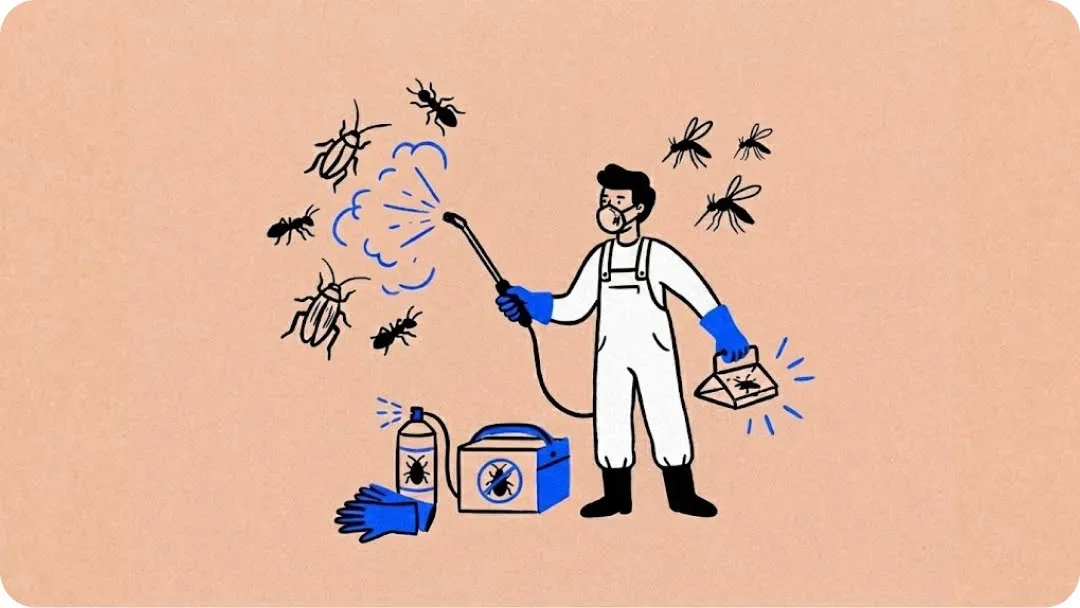
When you're running a small pest control business, the flood of leads can be both exciting and overwhelming. The trick is figuring out which of these potential customers are actually looking for your help right now, and which ones might not be the right fit.
Pest control service lead scoring helps you sort through this mix by assigning a score to each lead based on its potential to convert into a paying customer.
By focusing on leads that are most likely to need your services, you can save time, energy, and resources, ensuring you’re reaching the right opportunities.
What Is Lead Scoring and Why Is It Essential for Pest Control?
Lead scoring is a system used to evaluate potential customers based on how likely they are to book your services. It assigns a score to each lead, helping you prioritize the most promising prospects.
Lead scoring works best when paired with optimized lead generation forms. These forms capture the critical details needed to assess a lead’s value, such as the type of pest, urgency, and location. By integrating these forms with your lead scoring system, you ensure the most relevant data is used to prioritize prospects."
Why Lead Scoring is Crucial for Pest Control?
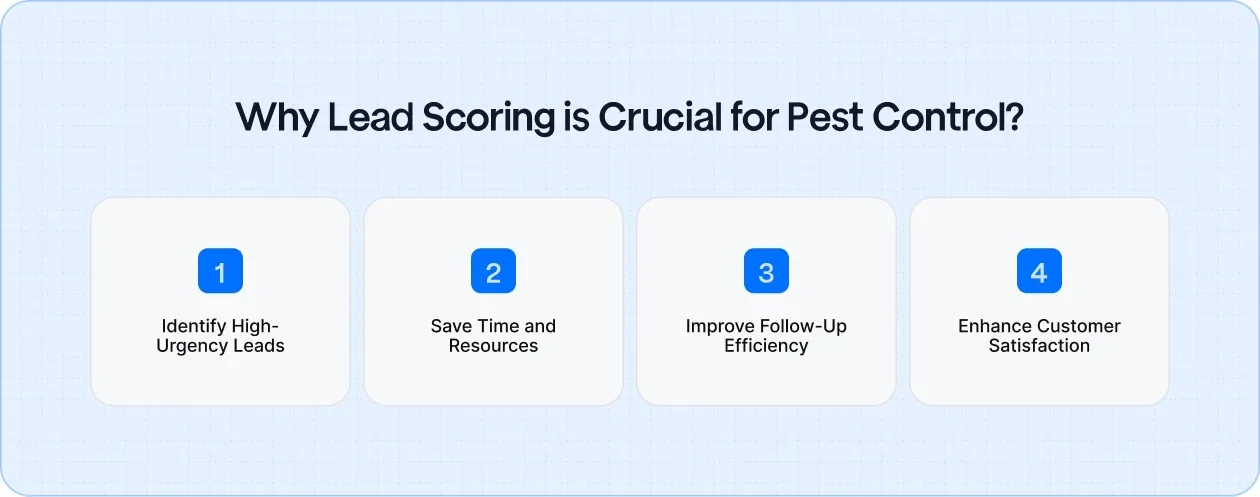
In pest control, time is often critical. Many customers face urgent pest problems that need immediate attention. Lead scoring allows you to:
- Identify High-Urgency Leads: Quickly prioritize leads with urgent pest issues, ensuring faster response times.
- Save Time and Resources: Focus on the leads most likely to convert, avoiding time spent on less promising prospects.
- Improve Follow-Up Efficiency: Develop targeted strategies for different lead types (e.g., immediate calls for urgent cases and emails for lower-priority leads).
- Enhance Customer Satisfaction: Faster responses to urgent needs lead to better customer experiences, increasing the chance of repeat business and positive reviews.
Optimizing your lead generation forms is a great way to support your lead scoring efforts. Well-designed forms ensure you gather accurate information that allows for more effective scoring, helping you to act on the most urgent leads first.
For example, if a lead’s form response indicates a termite infestation, you can score that lead higher due to its urgency.
Top 3 Factors That Determine Lead Quality in Pest Control
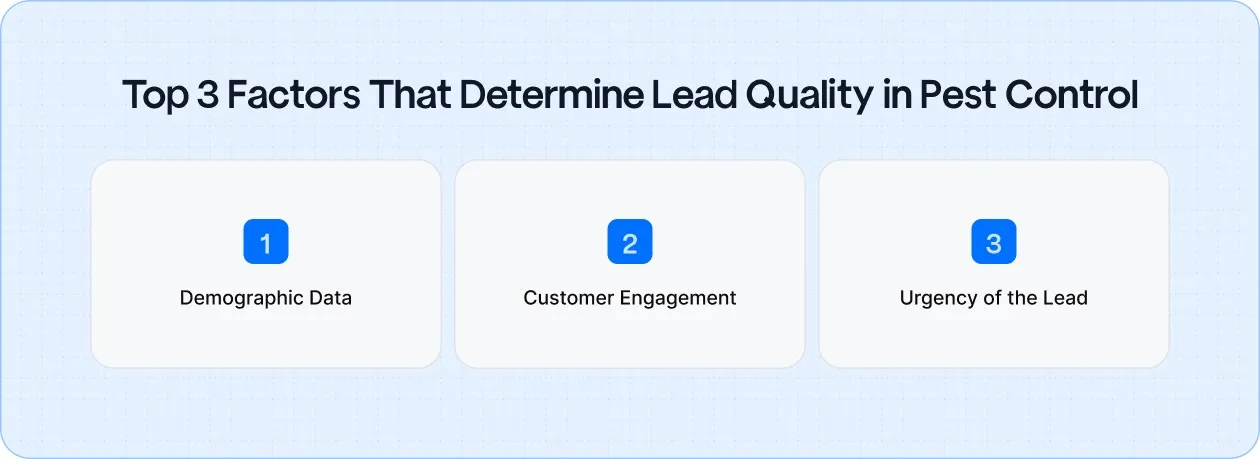
To make the most out of your pest control leads, it’s essential to understand the factors that determine their quality. Here’s a breakdown of the key elements to watch for when evaluating leads:
1. Demographic Data
Understanding your lead’s background can tell you how likely they are to convert. Key factors include:
- Location: Leads within your service area have a higher likelihood of conversion. It's easier and more cost-effective to service nearby customers.
- Pest Type: Leads in need of urgent pest control (e.g., termites, rodents) are more likely to convert. These pests require fast action, making these leads high-priority.
2. Customer Engagement
How a lead interacts with your website and content can indicate how serious they are. Consider:
- Website Activity: Leads actively browsing your website, filling out forms, or requesting quotes are showing high interest. Their engagement is a good indicator of intent.
- Behavioral Insights: Monitoring their specific actions, like the pages they visit or how long they stay, can give you a clearer picture of their needs. A lead interested in emergency services is more likely to convert quickly than someone browsing for general information.
3. Urgency of the Lead
The quicker the issue, the higher the chance of a sale. Key points to evaluate:
Urgency-Based Scoring: Emergency pest issues should be prioritized over routine services.
For example, a rat infestation requires immediate attention, making these leads more likely to convert rapidly compared to non-urgent inquiries, like scheduled inspections.
The data captured in your lead generation forms directly ties into each of these factors. For instance, form fields asking for pest type, urgency, and location enable you to categorize leads accurately and assign appropriate scores based on their likelihood to convert. These forms act as a key input in determining the quality of the lead.
Must Read: 11 Proven SEO Strategies for Home Services to Increase Calls and Leads
How to Set Up Lead Scoring: A Step-by-Step Guide
Setting up lead scoring for your pest control business can streamline your sales process and help you focus on the leads most likely to convert. Here’s a simple step-by-step guide to getting started:
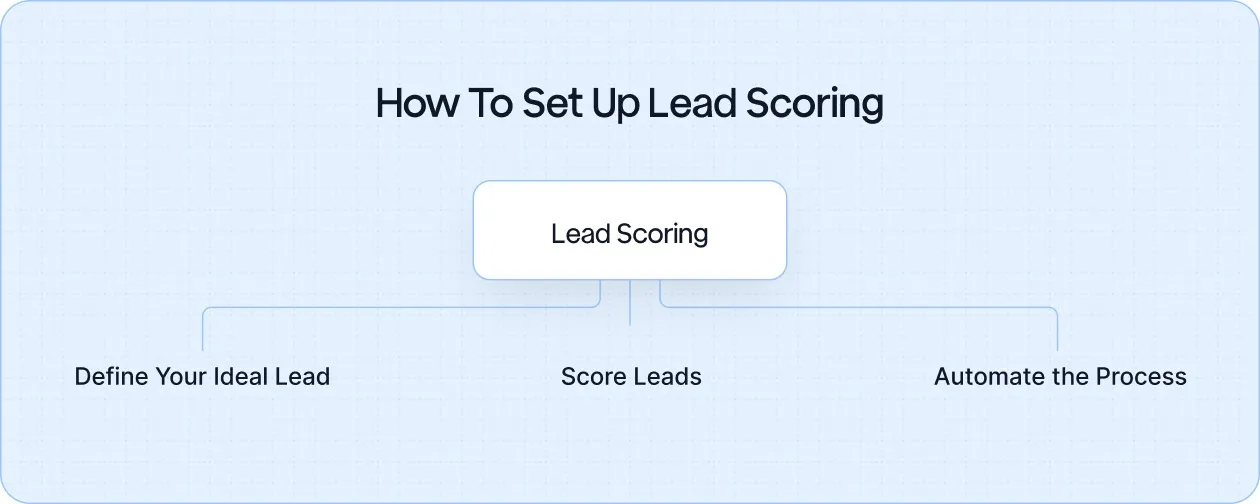
Step 1: Define Your Ideal Lead
Understanding who your best customers are is the foundation of lead scoring. Start by creating buyer personas that outline the key characteristics of these high-value leads. Consider:
- Type of Customer: Are you dealing with homeowners, businesses, or property managers?
- Pest Issues: What specific problems are they facing (termites, rodents, ants, etc.)?
- Demographics: Age group, income level, and geographic location can all impact a lead’s value.
As part of defining your ideal lead, focus on how your lead generation forms capture key data. Consider creating custom fields that capture the urgency of the pest issue and location, ensuring your forms directly contribute to the lead scoring process.
Step 2: Assign Lead Scores Based on Key Indicators
Once you know what makes a lead valuable, it’s time to set the rules. Your lead scoring system should be based on factors that indicate how likely the lead is to convert:
- Urgency: Immediate pest problems, such as infestations or structural damage, should get a higher score than non-urgent inquiries.
- Engagement Level: Leads who interact with your website or submit forms are showing a higher interest. These actions should add points to their score.
- Pest Type: Certain pests (e.g., termites or rodents) usually signal a more urgent need for service.
- Location: Leads within your service area should have a higher priority, as they are easier to service quickly.
When assigning scores, make sure to integrate data from your lead generation forms, e.g., a lead with a form indicating a serious rodent problem should automatically get a higher score than one requesting routine pest control.
Step 3: Automate the Process
Automating the form submission process ensures data is captured and fed directly into your lead scoring system. This not only saves time but also ensures accuracy in scoring, making sure high-priority leads are prioritized instantly
This automation means you don’t have to waste time manually sorting through leads; your system does it for you as soon as they come in.
Ever wondered how a personalized content strategy can amplify your lead generation?
Using lead scoring insights, you can create content that resonates with high-value prospects and drives better results.


How Technology Helps SMB Pest Control Businesses with Lead Scoring
For small and medium-sized pest control businesses, technology is a powerful ally in optimizing lead scoring. With the right tools, businesses can automate processes, predict outcomes, and improve efficiency, all while saving time and resources.
Here's how technology is transforming lead scoring for SMB pest control companies.
AI-Driven Lead Scoring
AI and machine learning can significantly enhance the accuracy of lead scoring. By analyzing historical data, AI predicts which leads are most likely to convert, ensuring your team focuses on the highest-value prospects. This predictive analytics model helps SMBs to:
- Increase accuracy by identifying patterns that indicate high conversion potential.
- Streamline decision-making by automating the process of sorting and prioritizing leads.
- Save time by reducing manual guesswork and focusing efforts on leads most likely to convert.
With AI, pest control companies can make smarter decisions faster, improving overall sales efficiency.
CRM Integration
Integrating lead scoring with a CRM like Zoho or HubSpot ensures seamless communication between your sales and marketing teams. These tools allow businesses to:
- Automate follow-ups: Automatically assign follow-up tasks based on lead scores, ensuring timely responses.
- Align sales and marketing efforts: Share lead data in real time, so everyone is on the same page about which leads need attention.
- Track interactions: Monitor how leads engage with your website, emails, and other content, further refining the lead scoring process.
CRM tools simplify lead management, making it easier for SMB pest control businesses to stay organized and responsive without manual tracking.
Cost-Effective Automation
For SMBs with limited resources, cost-effective automation is key. Many CRM platforms offer affordable solutions that allow businesses to implement lead scoring without needing a large team. These benefits include:
- Scalable solutions: As your business grows, you can scale your lead scoring efforts without increasing overhead.
- No need for extra staff: Automate the tedious parts of lead management, freeing up your team to focus on closing deals.
- Affordable pricing: Many CRMs offer low-cost plans specifically designed for SMBs, allowing you to access powerful lead scoring features at a fraction of the cost of larger systems.
Technology-driven solutions like CRMs integrate seamlessly with your lead generation forms. By automating data capture and scoring based on form submissions, you can instantly assign lead scores, which helps in streamlining decision-making and increasing your conversion rates.
Looking for more efficient ways to turn leads into customers?
Connecting lead scoring with high-quality, SEO-driven content can directly impact your conversion rates.
Best Practices for Optimizing Your Lead Scoring System
To make the most out of your lead scoring system, it’s essential to implement practices that ensure its effectiveness over time. Without proper setup and ongoing refinement, lead scoring can miss valuable opportunities.
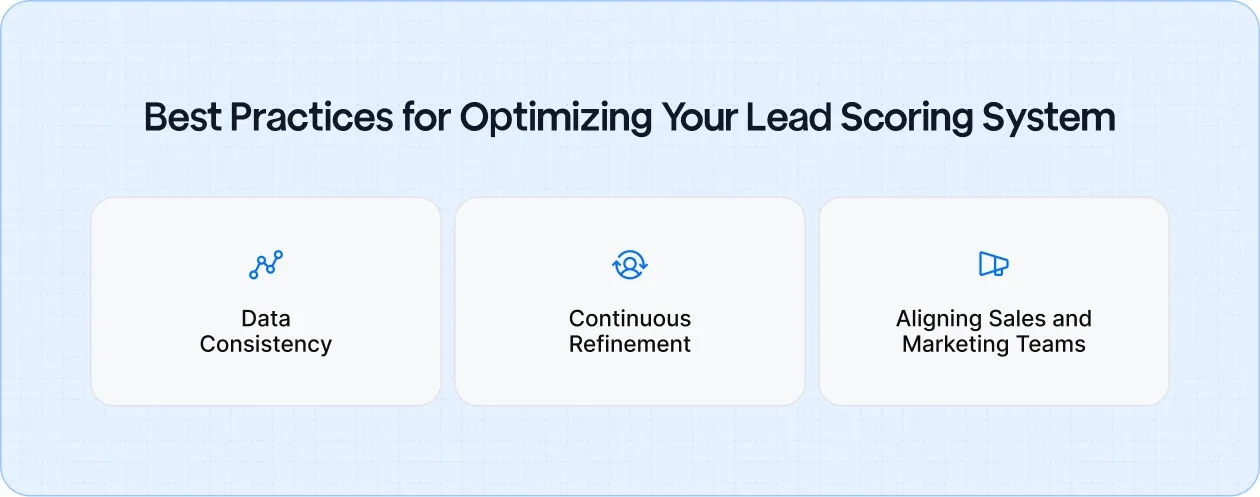
Here are the best practices for creating a robust and efficient lead scoring system:
1. Data Consistency
The foundation of effective lead scoring lies in the quality of the data you collect. Consistency is key when gathering data across all customer touchpoints. If a lead interacts with your website, calls in for an inquiry, or fills out a form, make sure you track and organize all actions.
Each lead’s journey should be seamlessly recorded to ensure that no key information is overlooked.
- Tracking all touchpoints: From website visits and social media engagement to phone calls and email responses, ensure you're capturing every action.
- Centralized data collection: Use a CRM or similar tool to centralize lead data, making it easier to analyze and score effectively.
Ensure that your lead generation forms are consistent across all customer touchpoints. Whether a lead comes through your website, social media, or a phone call, the form responses should be uniform, helping to streamline data collection and improve scoring consistency.
2. Continuous Refinement
Lead scoring requires constant refinement. As your business grows and evolves, so should your lead scoring system. Regularly assess how well your lead scoring is performing by reviewing the outcomes of past leads and adjusting your criteria. What worked for one batch of leads may not work as effectively for the next.
- Analyze and adapt: Look at the conversion rates and behaviors of past leads to spot trends. Did a certain lead behavior correlate with faster sales? Refine your scoring to reflect these insights.
- A/B testing: Continuously experiment with different criteria for lead scoring and see which tweaks lead to better results.
Regularly assess your lead generation forms to ensure they are collecting the right data. For example, if your current forms don’t capture urgency effectively, refining them to include a checkbox for ‘immediate service needed’ will help prioritize urgent leads.
3. Aligning Sales and Marketing Teams
Effective lead scoring ensures that your sales and marketing teams are working in sync. If these teams aren’t aligned on what defines a high-quality lead, the system will falter. Both teams should use the same criteria to evaluate leads, ensuring seamless handoff and follow-up.
- Shared criteria: Make sure both teams understand the lead scoring system and agree on the characteristics of high-value leads.
- Collaboration between teams: Build communication between sales and marketing to continuously refine lead scoring based on feedback from both sides.
Ensure both teams use the same set of lead generation forms with clearly defined fields that are aligned with your lead scoring model. This will create seamless handoffs from marketing to sales, ensuring high-value leads get immediate attention.
Must Read: 15 Smart Marketing Moves to Drive Growth for Your Home Services Business
Measuring the Success of Your Lead Scoring System
Track how your lead generation forms are performing in terms of capturing high-quality data. By analyzing form submission patterns, you can identify which fields most accurately predict conversions, allowing you to refine your lead scoring model and focus on the right prospects.
Here’s how to effectively evaluate the success of your lead scoring system:
Key Metrics to Track
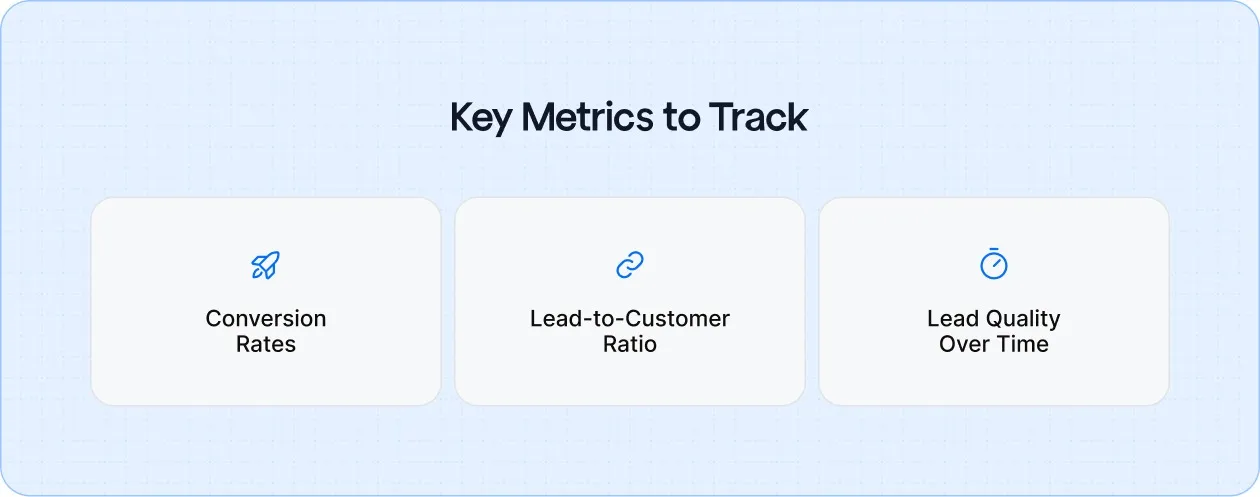
- Conversion Rates: Track how many leads with higher scores are converting into actual customers. A strong lead scoring system should improve your ability to predict which leads are most likely to convert, making this metric essential.
If the leads with the highest scores consistently convert, it’s a sign that your scoring system is on track.
- Lead-to-Customer Ratio: This ratio compares the number of leads you generate to the number of customers who make a purchase or book a service. A healthy lead-to-customer ratio indicates that you’re successfully attracting high-quality leads that turn into business.
If this ratio is skewed towards low-quality leads, it may be time to adjust your lead scoring criteria.
- Lead Quality Over Time: Track the evolution of lead quality by measuring the characteristics of leads that convert and those that don’t.
This will help you refine your criteria, ensuring that your system adapts as market conditions or customer behaviors change.
Data-Driven Optimization
A successful lead scoring system is built on continuous improvement. To ensure you're making the most of your efforts:
- Regularly Review Performance: Constantly assess how your lead scoring system is performing. Analyze the data to identify trends and patterns, then refine your scoring model based on what's working and what's not.
If certain lead behaviors predict higher conversion rates, adjust your system to prioritize these actions.
- Refine Scoring Criteria: As you gather more data, update your scoring model to reflect the latest insights. For example, if you notice that engagement with certain types of content correlates with higher conversion rates, tweak your system to give more weight to those interactions.
- A/B Testing: Experiment with different scoring methods to see which ones lead to the best results. Testing different criteria and making adjustments based on outcomes will help you keep your system optimized for success.
Review and refine your content to align with your lead scoring efforts.
SEO-driven content targeting high-value leads ensures you get the most from your marketing budget.
Optimize Your Lead Management to Drive Growth
Lead scoring is a powerful tool for SMB pest control businesses, enabling them to focus on high-value leads and improve conversion rates while using minimal resources. By prioritizing the right prospects, you can make your sales process more efficient and drive growth without needing a large team.
To maximize the effectiveness of your lead management, pair lead scoring with optimized lead generation forms. By capturing detailed data and automatically scoring leads, you ensure your team is focusing on the most promising prospects, streamlining your sales process and accelerating business growth.
Tired of managing overwhelming customer inquiries?
Focus on the most promising prospects and simplify your process with a targeted content strategy. Gushwork will help you drive real results.


.webp)





.webp)



.svg)


