










A garage door never breaks at a convenient time. A car gets stuck inside. A spring snaps late in the evening. The door refuses to close before work the next morning.
In moments like these, people don’t browse. They search, skim, and call the first business that feels local, clear, and reliable. That’s where garage door repair PPC plays a role, placing your service in front of homeowners right when the problem shows up.
This article explains how garage door repair PPC works in real repair situations, the types of ads that matter, how search intent shapes decisions, and why clear service pages affect results once ads are running.
What Garage Door Repair PPC Includes?
Garage door repair PPC is made up of a few paid placements that show up at different moments in a homeowner’s search for help. Each channel has a clear role. Problems start when all of them are treated the same or expected to do the same job.
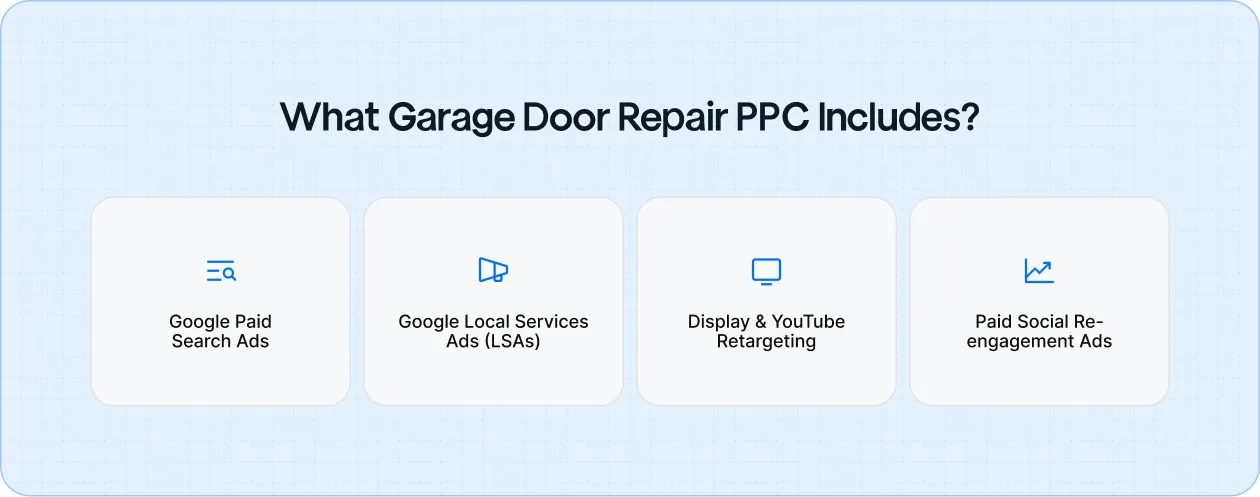
Main paid channels used by garage door companies are:
1. Garage door repair paid search ads on Google
These ads appear when someone types a specific repair problem into Google. The intent here is direct and time-sensitive. People searching for issues like a broken spring or a door that won’t close usually want help now.
Paid search ads work best when they quickly confirm relevance and make it easy to place a call without distractions.
2. Google Local Services Ads (LSAs)
LSAs appear above standard search ads and focus heavily on location and trust. Homeowners often look for nearby providers they can contact right away. These ads rely less on messaging and more on visibility, proximity, and responsiveness.
Clear SEO-optimized service content and complete business profiles strongly support LSA performance by reducing hesitation before contact.
3. Garage door repair retargeting campaigns using Display and YouTube
Some visitors leave without calling. Retargeting campaigns exist for those short gaps between the first visit and the final decision. These ads show up later and serve as reminders rather than explanations.
The goal is simple: Stay visible to people who already shown interest until they are ready to act.
4. Paid social ads for re-engagement
Paid social is usually used to re-engage people who already visited a site or interacted with a repair page. It is not meant to capture first-time repair searches. Instead, it helps maintain familiarity and reinforce trust during follow-up periods or seasonal demand.
What are these ads expected to produce?
While these channels appear in different places and serve different moments, their purpose is the same. Garage door repair PPC exists to support real service work.
- Phone calls from homeowners who need repair help
- Service requests through simple forms
- Booked estimates tied to specific issues
- Scheduled repair work within the service area
Suggested Read: Manufacturers Who Fail In PPC Are Wasting 90% Of Their Budget. Here’s How You Can Fix It
How Repair Intent Shapes a Strong Garage Door Repair Campaign
Not all garage door searches mean the same thing. Some signal urgency. Some signal comparison. Others signal trust checks before making contact. A strong garage door repair campaign starts by recognizing these differences instead of treating every search as equal.
The 4 types of searches that matter
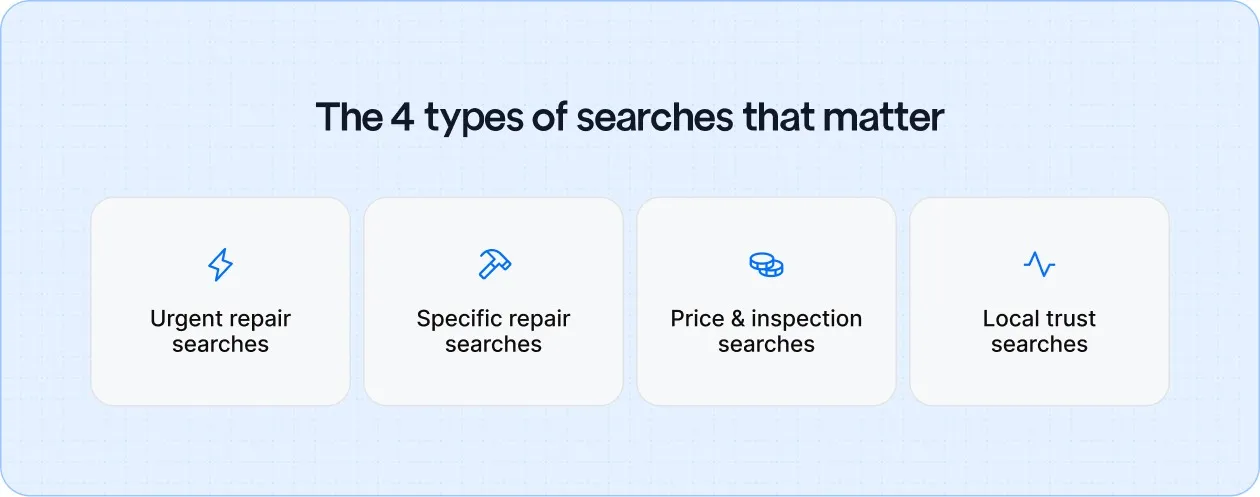
Each search type reflects a different mindset. Understanding this helps align the campaign with how people think during a repair situation.
1. Urgent repair searches
These searches appear when a problem stops normal use of the garage door and needs attention right away. Common examples include:
- Door stuck
- Broken spring
- Door not closing
- Emergency repair
In these moments, people are looking for fast confirmation that help is available. They are not researching options. They are trying to resolve a problem that disrupts their day.
2. Specific repair searches
These searches come from homeowners who already recognize the issue and want someone who handles that exact repair. Examples include:
- Spring repair
- Opener repair
- Off-track door
- Cable or roller problems
These searches signal clarity. The person knows what is wrong and wants reassurance that the service provider understands the issue and fixes it regularly.
3. Price and inspection searches
Some searches focus on cost or availability before any contact is made. Common examples:
- Service call cost
- Repair pricing
- Availability
These searches reflect caution, not delay. People want to understand expectations before reaching out, especially when the repair may not feel urgent yet.
4. Local trust searches
For many homeowners, trust checks don’t stop at the ad. Google Business Profile and Apple Business Connect listings often act as the final confirmation step. Clear service details, accurate locations, and recent reviews reinforce that the business behind the ad is real, nearby, and reachable.
People check who feels dependable and close enough to respond.
Why does intent affect every decision?
Repair intent influences how a campaign behaves at every step. It determines:
- Which words are used to match real problems
- What the ad emphasizes to confirm relevance
- Which page does the search lead to for clarity
- The next step points people toward a call or a service request
When intent is ignored, ads may still appear, but hesitation increases. When intent is respected, people move forward with more confidence.
Your ads can match intent. Your content should too.
Service page content written around real repair searches helps people trust what they see and feel confident calling without second-guessing.


Keyword Planning for Garage Door Repair Paid Search Ads
Keyword planning for garage door repair paid search ads is about setting clear boundaries. The goal is to make sure each search connects to the right repair problem and does not pull in people looking for something else. When keyword planning is loose, ads still show, but results become unpredictable.
Strong keyword planning starts by treating each repair issue as its own category, not as part of a general list.
a) Organizing keywords by repair type
Garage door repairs are problem-specific. Searches reflect that. Keyword groups should mirror how homeowners describe what is wrong. Common repair-based groups include:
- Spring repair
- Opener repair
- Off-track doors
- Cable and roller issues
- Panel damage
Each group represents a single repair problem. Keeping these separate allows searches to stay closely aligned with what the homeowner needs fixed. It also prevents one repair type from absorbing attention meant for another.
Avoid mixing multiple repair types in one group. When different repairs are bundled together, it becomes harder to respond clearly to the search. Separation keeps relevance intact and expectations clear.
b) Choosing match types carefully
Match types control how closely a search must resemble the repair being offered. This choice directly affects how focused the campaign remains.
- Exact and phrase match work best for clear repair problems. These match searches closely reflect real issues people are trying to solve and help maintain consistency.
- Limited broad use can be tested cautiously. Broad terms may reveal useful variations, but they require close review to ensure searches remain repair-focused and local in nature.
The objective is to capture genuine repair searches without opening the door to unrelated queries.
c) Preventing wasted clicks with exclusions
Exclusions are a protective layer. They prevent the campaign from showing up for searches that signal a different intent entirely.
Common exclusions to apply early include:
- DIY, parts, manuals, tools
- Jobs, careers, training
- Wholesale suppliers, used doors, non-service brands
These searches indicate research, employment, or purchasing materials, not repair help. Filtering them out keeps attention on people looking for service.
Why does keyword planning support consistency over time?
Keyword planning is not finished after launch. New search patterns appear, exclusions grow, and repair terms shift with seasons and usage. Clean keyword organization makes ongoing garage door repair campaign tracking more reliable by keeping signals clear and easy to interpret.
When keywords stay organized, it becomes easier to see which repair problems bring meaningful calls and which areas need refinement, without confusion or overlap.
How to Structure Garage Door Repair Ad Campaigns
A garage door repair ad account works best when different types of demand are separated, not blended. Structure determines which searches trigger which campaigns, how calls are handled, and how clearly performance can be understood later.
A clean structure does not add complexity. It removes confusion.
Recommended campaign layout
Each campaign should represent a distinct reason someone is searching.
a) Emergency repair campaign (call-focused)
This campaign is built for situations where the door has failed, and help is needed immediately. It should prioritize phone calls over form fills and keep the path to contact as short as possible. Emergency demand behaves differently from routine repairs and deserves its own space.
b) Repair-specific campaigns
Separate campaigns for common repair categories such as springs, openers, off-track doors, or cable issues. This keeps messaging, landing pages, and call expectations aligned with the exact problem being searched. Repair-specific campaigns help avoid one issue overpowering another.
c) Brand campaign
Brand campaigns capture searches from people who already know the business name. These searches usually come from referrals, repeat customers, or people double-checking details before calling. Keeping brand traffic separate prevents it from distorting the performance of repair campaigns.
d) Optional competitor campaign
Some businesses choose to appear when people search for other local providers. This campaign should remain optional and tightly controlled. It is best treated as a separate effort so it does not interfere with core repair demand.
e) Garage door repair retargeting campaign
Retargeting campaigns exist outside immediate search demand. Their role is to stay visible to people who already interacted with a repair page or ad but did not reach out. Keeping retargeting separate avoids mixing follow-up visibility with first-time search intent.
Service area control
Structure also defines where ads are allowed to show.
- Use tight location targeting that reflects actual service coverage
- Clearly exclude areas that are not served
- Maintain separate setups for single-location and multi-location businesses
- Target people physically located in the service area, not those showing general interest from elsewhere
Accurate service area control reduces misdirected calls and sets expectations correctly before contact.
Ad timing and call handling
The campaign structure should match when calls can realistically be handled.
- Run ads during hours when phones are answered
- Extend coverage to evenings or weekends only if intake is available
- Avoid sending calls to voicemail during emergency-heavy periods
Proper timing ensures that paid demand connects to a real response, not a missed opportunity.
Why does structure matter here?
Campaign structure determines where demand flows, not how ads are written or how performance is reviewed. When the structure is clear, later adjustments become easier and cleaner. When the structure is messy, even strong demand becomes hard to manage.
Paid Ad Formats That Work Best for Garage Door Repair
Paid ad formats work best when each one plays a specific role. In garage door repair, different formats support different moments in a homeowner’s decision, and mixing those roles creates confusion.
a) Search Ads
Search ads appear when someone is actively looking for help with a garage door issue.
They work well because:
- They match real repair problems as they happen
- They show up during high-urgency moments
- They support direct next steps, like calling
Search ads handle the first contact when the problem needs attention.
b) Local Services Ads (LSAs)
Local Services Ads sit above standard search ads and focus on reassurance. Their role is to:
- Confirm the business is local and available
- Reduce hesitation during comparison
- Support fast decisions with visible trust signals
c) Retargeting Ads
Some visitors leave without calling. Retargeting ads exist for that pause. They are used to:
- Remind people who already shown interest
- Maintain familiarity without pressure
- Support follow-up decisions
d) Social Retargeting
Social retargeting appears during everyday browsing, not repair searches. It helps by:
- Reinforcing recognition through reviews or reminders
- Keeping the business top-of-mind
- Supporting delayed or seasonal repair decisions
How these formats work together
Each format serves a clear purpose:
- Search ads address immediate needs
- LSAs confirm trust and location
- Retargeting maintains visibility
- Social retargeting reinforces familiarity
Together, they form a focused garage door repair paid media setup where each format supports the others.
Landing Pages That Turn Searches Into Service Requests
When someone clicks a garage door repair ad, the page they see decides what happens next. A good landing page confirms they’re in the right place and shows a clear next step. A weak one sends them back to search.
This page is not meant to explain everything. It is meant to resolve one repair problem.
What must appear immediately?
Within seconds, visitors should see:
- A repair-specific headline that matches the issue searched
- A click-to-call option that’s easy to find on mobile
- Service area confirmation to remove location doubt
- Reviews and ratings to establish trust
- License, insurance, and warranty proof to signal credibility
These elements work by being visible, not verbose.
Why dedicated repair pages matter?
Homepages describe a business. Repair pages address a problem.
A homepage covers many services and messages at once. A repair page stays focused on one issue and one next step. This focus reduces hesitation and keeps attention on action.
Paid ads perform best when the page reflects the exact repair being searched. These same pages continue working beyond ads by answering common repair questions people search for over time.
Matching pages to repair intent
Each repair search should land on a page built for that issue.
- Spring repair ads → spring repair pages
- Opener repair ads → opener repair pages
Sending all traffic to the homepage forces visitors to figure things out themselves. Many won’t.
Remove barriers to action
Even interested visitors leave when small obstacles appear. Common barriers to remove:
- Slow load times
- Long or unclear forms
- Unclear next steps
A strong repair page makes the next action obvious without distraction.
Most repair pages explain too much and answer too little.
Search-aligned service content helps people understand the problem and decide to call without confusion or extra steps.
Garage Door Repair Campaign Tracking That Reflects Real Work
Once ads are running and pages are aligned, the next question is simple: Are real repair conversations happening, or just activity?
Campaign tracking for garage door repair should focus on what actually leads to service, not surface signals that look busy but say very little.
What should be observed?
Tracking should follow the path of a real homeowner reaching out for help. Pay attention to:
- Calls coming directly from ads
- Calls coming after someone viewed a repair page
- Service request forms tied to specific repair issues
- Scheduled repair work, when that information is available
Each of these reflects increasing intent. Search patterns from ads often reveal gaps in service content, showing which repair explanations need to be clearer on the site.
How to judge call quality
Not every call carries the same weight. Quality comes from context, not volume.
Helpful signals include:
- Call length is long enough to discuss the issue
- Repair problem discussed, not general questions
- Service area match, confirming the caller can actually be served
- Whether the call led to a booking, even if scheduled later
These details show whether ads are attracting people who need help—or people who are only browsing.
Why does this approach matter?
Good garage door repair campaign tracking follows real repair conversations from first contact to next step. It avoids focusing on numbers that look impressive but do not reflect actual service demand.
When tracking mirrors how repair work happens in real life, decisions become clearer, and adjustments stay grounded.
Writing Ads That Encourage Calls
Garage door repair ads do not need to be clever. They need to be clear, reassuring, and specific enough that a homeowner feels comfortable picking up the phone.
At this stage, people are not comparing features. They are checking for fit.
a) Messages that resonate with homeowners
Effective ad messages answer unspoken questions quickly.
They tend to highlight:
- Same-day repair availability, when applicable
- Experienced technicians, not generic service claims
- Clear communication, so people know what to expect
- Warranty coverage, when it applies
- Local reviews, which signal real-world trust
These details reduce uncertainty. They do not persuade with hype; they reassure through familiarity.
b) Using the service and location language
Relevance matters over wording style. Ads work better when they:
- Match the specific repair type being searched
- Include the city or service area directly in the text
This helps people immediately confirm:
- “This service fits my problem.”
- “They serve my area.”
That quick confirmation lowers hesitation before calling.
c) Helpful ad additions that support action
Small additions often make the difference between reading and calling. Useful elements include:
- Call buttons that allow immediate contact
- Location details that confirm proximity
- Links to specific repair services for clarity
These additions guide attention without overwhelming it.
Ongoing Review and Improvement of Garage Door Repair Ad Campaigns
Once a garage door repair ad campaign is live, the work shifts from setup to observation. The goal is not constant change, but steady alignment with how people actually search, call, and decide.
Good review habits keep campaigns useful without overreacting to short-term noise.
a) Weekly checks
Weekly reviews focus on spotting early signals and removing friction. Key areas to watch:
- Search terms triggering ads, to confirm they still reflect real repair needs
- Location performance, ensuring attention stays within service areas
- Mobile call experience, since most repair searches happen on phones
- Simple message testing, adjusting wording only when clarity can be improved
These checks prevent small issues from turning into long-term drift.
b) Monthly checks
Monthly reviews are about direction, not fixes. This is where patterns become clearer:
- Shift attention toward repair types that consistently result in scheduled work
- Strengthen service content tied to searches that show clear repair intent
- Expand on search terms that repeatedly surface real conversations
- Review overlap between search ads and LSAs to keep roles distinct
Monthly reviews guide where effort deepens, not where it spreads.
A short example of search visibility supporting paid ads
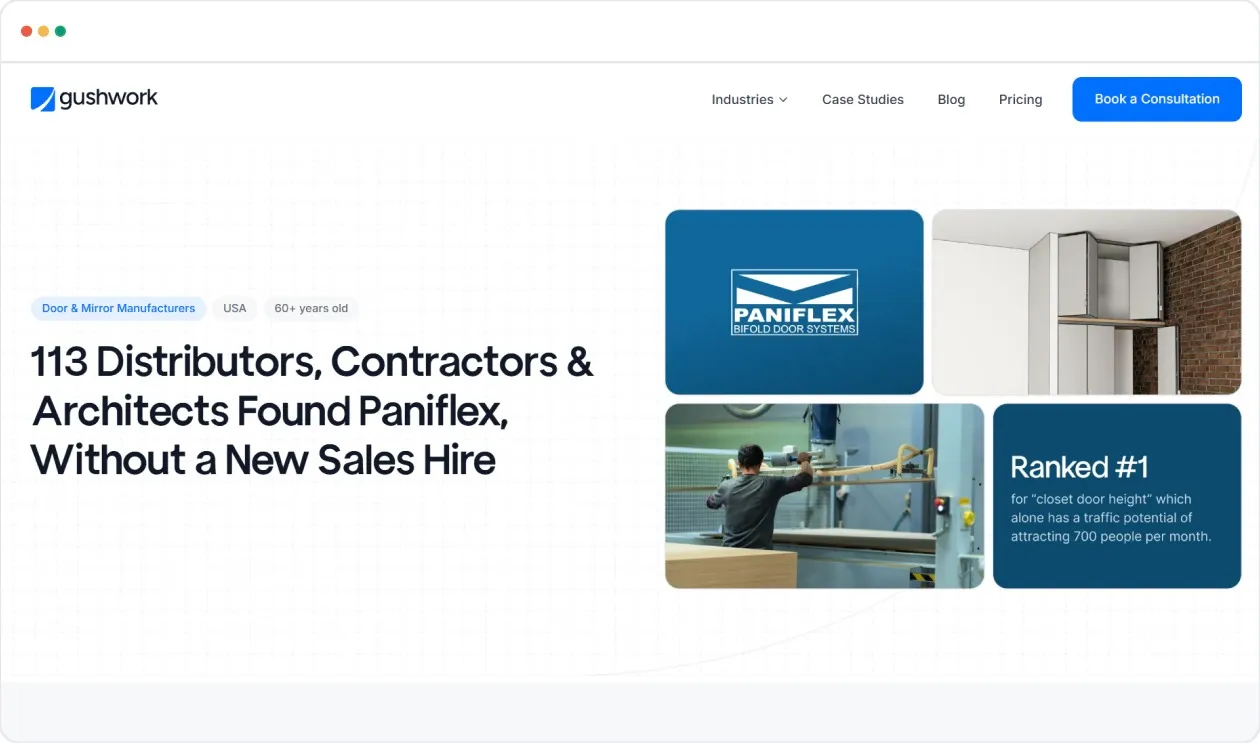
A U.S.-based door manufacturer, Paniflex, faced a common issue: people searched for their products, but competitors appeared first.
After aligning their pages with how buyers actually searched, a few things changed:
- Paniflex began appearing for 2,700+ relevant buyer searches tied to real project needs.
- They gained visibility across 25+ high-intent product and specification queries.
- Pages structured around how buyers actually searched helped convert that visibility into 113 qualified buyer conversations within 6 months.
Paid ads helped surface demand quickly. Search-aligned pages helped carry that interest forward, giving buyers the clarity and confidence to follow through beyond the first interaction.
Why does this matter for garage door repair PPC?
Paid ads surface demand. Ongoing review ensures that demand leads somewhere meaningful.
When campaigns are reviewed with intent in mind and supported by clear service content, garage door repair PPC stays relevant, trusted, and effective beyond the first click. Learn more—>
Where Garage Door Repair PPC Delivers Real Outcomes
Garage door repair PPC works when ads align with real repair searches, campaigns are clearly structured, and service pages explain problems without friction. Paid ads surface demand quickly, and search-aligned SEO content keeps that demand working long after the click.
As campaigns grow, clarity matters over complexity. Full ownership of ad accounts, clear review routines, and visibility into scheduled repair work keep decisions grounded.
Avoiding lead marketplaces that resell the same request helps protect trust from the first interaction.
Ads bring people in. Clear pages get the call.
Gushwork helps garage door businesses strengthen SEO and service-focused content so paid search efforts are supported by clear, search-aligned pages.


.webp)







.webp)


.svg)


