


.webp)






Content marketing for manufacturers is the practice of publishing technical, application-level, and buying-related information so industrial buyers can find, evaluate, and shortlist your company before reaching out.
In the U.S., over 60% of B2B buyers now research suppliers online before speaking to sales. For manufacturing companies, this means buyers often review your content before they review your capabilities deck.
As trade shows become more costly and cold outreach yields fewer conversions, content marketing offers manufacturers a repeatable way to generate online inquiries.
In 2026, winning manufacturers aren’t louder than their competitors. They’re just clearer, more helpful, and easier to trust during the 60–70% of the buying journey that happens before sales ever get involved. Let’s get started with some market insights!
How Content Influences Manufacturing Growth in 2026
Today, 98% of manufacturers generate sales-qualified leads through digital marketing, and 88% of industrial SEO and marketers use content marketing to build brand awareness.
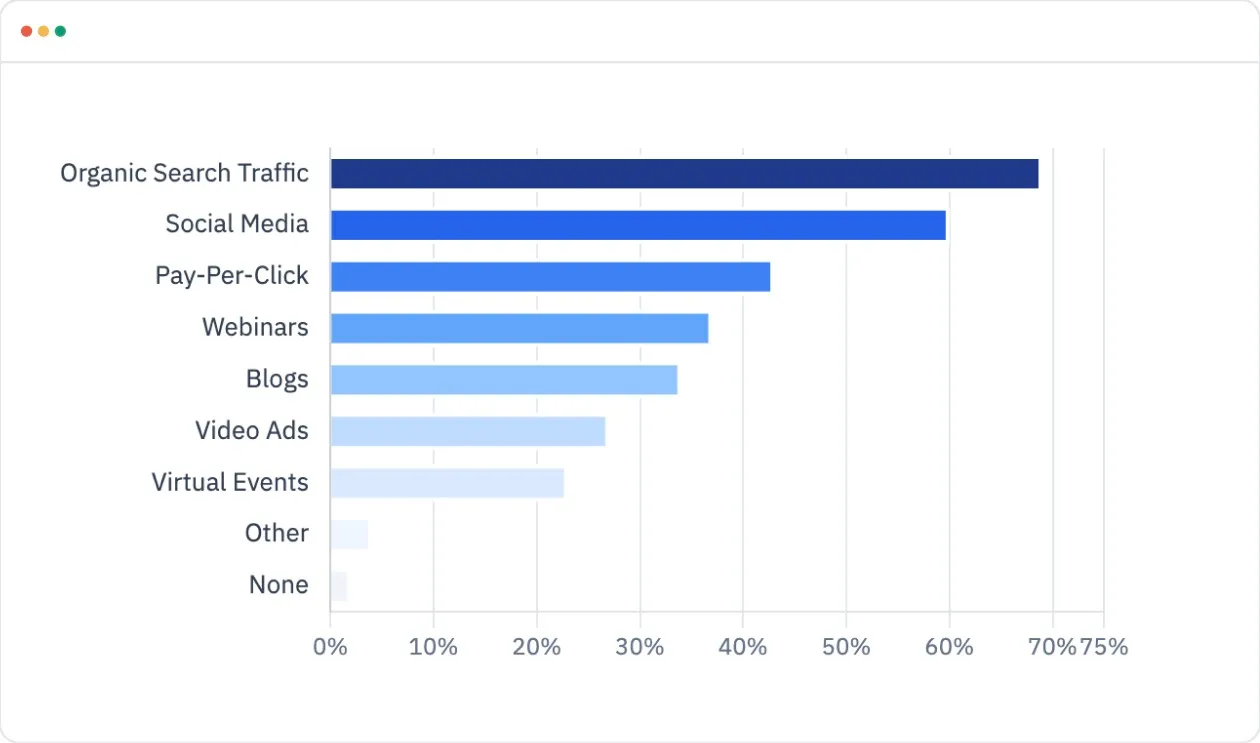
Content-focused manufacturing marketing is one of the top strategies, as B2B industrial buyers now complete 60-70% of their research before contacting sales.
Your content shapes their decisions during this critical period—educating them on solutions, building trust through case studies and technical documentation, and pre-qualifying leads. Hence, your sales team focuses on serious prospects.
Unlike traditional channels such as trade shows or cold outreach, content marketing for industrial companies provides consistent visibility and lead flow while addressing repetitive questions at scale.
This approach directly improves sales efficiency, lead quality, and sustainable revenue growth for manufacturers.
You Can Create 6 Months of SEO Content in Weeks!
AI agents in the market can now produce technical industrial content faster than any traditional SEO agency.


Remember, content doesn’t influence growth all at once.
It works by supporting buyers throughout their decision-making process—long before a quote is requested.
How Manufacturing Content Marketing Guides Buyers Through 3 Critical Stages
Your prospects don't wake up ready to buy. They move through three distinct stages before making any purchase decision.
This journey is often referred to as the marketing funnel, with each stage representing the number of prospects remaining as they move closer to purchase.
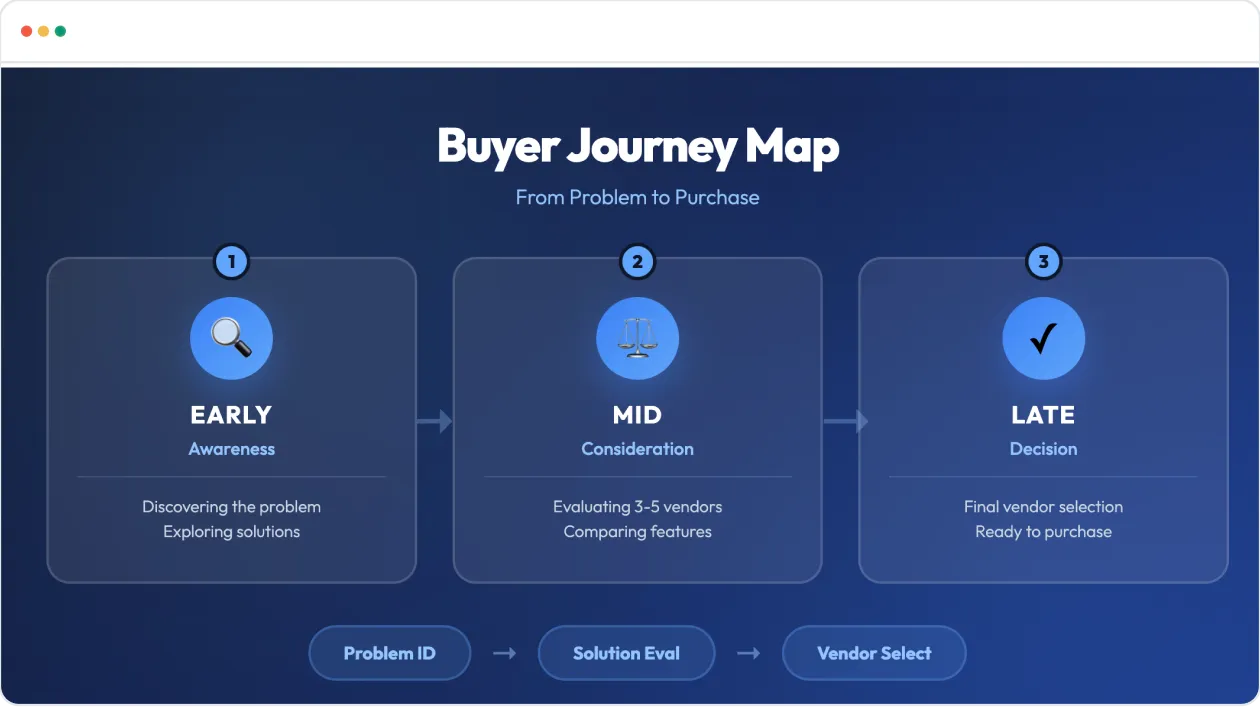
Here's what's happening at each stage and what they need from you:
1. Awareness (Top of Funnel)
The funnel stage: This is where your funnel is widest—you're reaching the largest audience of potential buyers who are just beginning to recognize they have a problem.
Your prospect just realized they have a challenge— production inefficiency, quality issues, or compliance needs. They're researching and educating themselves, but aren't ready to speak with vendors yet.
They're asking: "Why is this happening? What solutions exist? Who else has this problem?"
What they need: Educational content that helps them understand their problem and potential solutions—blog posts, how-to guides, videos, and industry insights.
Your role: Be a helpful educator, an industry expert, not a salesperson.
2. Consideration (Middle of Funnel)
The funnel stage: Your audience narrows here—fewer prospects, but they're more qualified and actively evaluating solutions.
They've defined a problem and are now comparing 3-5 potential vendors. Multiple stakeholders are involved—engineers, procurement, operations—and they're digging into details.
They're asking: "Which product (or a service) fits my specific needs? What's the ROI? Can I trust this vendor?"
What they need: Proof—comparison blogs, case studies, product demos, comparison sheets, customer testimonials, and technical deep-dives.
Your role: Prove your value with evidence and data.
3. Decision (Bottom of Funnel)
The funnel stage: This is the narrowest point—only serious, qualified buyers who are ready to purchase remain.
You're on their shortlist of 1-2 final vendors. They need final reassurance before signing and are negotiating terms while seeking executive approval.
They're seeking answers: "Will this really work for us? Are these the best terms? What do other customers say?"
What they need: Hands-on experience—product in action, pricing info, product PDFs, free trials, personalized consultations, video testimonials, custom proposals, and detailed specifications.
Your role: Remove all barriers to purchase.
Here are some of the proven content types that have worked for many manufacturing companies to grow their revenue.
Spotlight: Top 10 Types of Content for Manufacturing Growth
Manufacturing companies using a strategic mix of these content types saw an average of $1.4 million in new revenue with 856% ROI over 3 years.
The key is to choose the right formats for each stage of your buyer's journey and execute consistently.
1. Educational Blog Posts
Written articles that address specific industry challenges and provide valuable solutions without being overly sales-focused. These posts educate your audience on topics they're actively searching for.
How to start: Identify your audience's top 5-10 pain points through customer interviews or sales team feedback. Create a content calendar targeting one pain point per week. Use keyword research tools to find what your prospects are searching for. Write 800-1,200-word posts that provide actionable advice. Post it on your social media, website, or communities to increase visibility.
2. Video Tutorials
Visual demonstrations that show how products work, explain complex processes, or solve common problems. Highly engaging format that reduces confusion.
How to start: Identify your most frequently asked "how does it work?" questions. Use screen recording software or a smartphone camera. Keep tutorials to 2-5 minutes. Upload to YouTube and embed on your website. Add captions for accessibility.
3. Product Demos (Video)
Recorded or live video walkthroughs showing your product in action, highlighting key features and real-world applications. Helps prospects visualize the solution.
How to start: Create a demo script highlighting the top 5-7 features. Show the product solving actual customer problems. Keep it 5-10 minutes. Use screen recording for software or high-quality video for physical products. Offer live demos for qualified leads.
4. Email Newsletters
Regular email communications (weekly, bi-weekly, monthly) delivering curated content, industry news, product updates, and exclusive insights to subscribers.
How to start: Choose an email platform (Mailchimp, HubSpot, ActiveCampaign). Segment your list by industry, interest, or buyer stage. Create a consistent template and schedule. Mix content types (blog posts, case studies, tips, news). Track open and click rates to optimize.
5. How-To Guides
Step-by-step instructional content that walks readers through a specific process or task. These guides demonstrate your expertise while helping prospects solve immediate problems.
How to start: List the most common questions your sales team receives. Choose processes that prospects struggle with before purchasing. Create detailed guides with numbered steps, screenshots, and downloadable checklists. Gate premium guides to capture leads.
6. SEO-Optimized Articles
Long-form articles, such as blog posts, categories, products, and service pages, are written to rank for targeted keywords in search engines. Drives organic traffic from prospects actively searching for solutions.
How to start: Use tools like SEMrush, Ahrefs, or Google Keyword Planner to find relevant long-tail keywords. Target keywords with decent search volume but lower competition. Write comprehensive 1,500-2,500-word articles. Include proper headers, internal links, and optimize meta descriptions.
Read more: SEO For Manufacturers: A comprehensive guide
7. Whitepapers on Industry Insights
Research-driven, authoritative documents (8-15 pages) exploring industry trends, challenges, or emerging technologies. Establishes deep expertise and thought leadership.
How to start: Choose a timely, complex topic your audience cares about. Conduct original research, surveys, or compile industry data. Structure with executive summary, introduction, body sections, conclusions, and next steps. Design professionally and gate for lead capture.
8. Case Studies
Detailed success stories showing how your product/service solved a specific customer's problem with measurable results. Follows a problem-solution-results format with hard data.
How to start: Identify 3-5 customers with impressive, quantifiable results. Talk to them about their challenge, decision process, implementation, and outcomes.
Use a template: Challenge, Solution, Results (with specific metrics like "20% efficiency increase"). Include customer quotes and visuals.
9. Customer Testimonials (Video)
Recorded video interviews with satisfied customers sharing their experiences, results, and recommendations. More authentic and emotionally compelling than written testimonials.
How to start: Reach out to enthusiastic customers who are willing to be on camera. Prepare 5-7 interview questions focusing on challenges, decision factors, and results. Film professionally or use a high-quality smartphone video. Keep videos 60-90 seconds. Add captions and your branding.
10. Social Media Posts
Regular content shared on platforms like LinkedIn, Instagram, and Twitter to build community, share insights, and humanize your brand. Mix educational content with behind-the-scenes glimpses.
How to start: Choose 1-2 primary platforms where your audience is active (LinkedIn for B2B manufacturing). Create a posting schedule (3-5x per week). Share industry news, quick tips, team highlights, and company culture. Use a mix of text, images, and video.
Beyond core formats, manufacturers that scale faster use additional content types to reinforce trust, accelerate decisions, and reduce friction throughout the buying process.
15+ Additional Manufacturing Content Types That You Can Try
- Infographics pages: Simplify complex manufacturing data into shareable visuals that position your brand as an industry resource and drive social engagement.
- Webinars on Industry Trends: Host live sessions on emerging technologies to capture early-stage leads and establish thought leadership in your market.
- Podcasts with Industry Experts: Build long-term brand authority through audio content that reaches prospects during commutes and establishes you as an industry voice.
- Interactive Quizzes: Automatically qualify and segment leads while delivering value, improving conversion rates by 40-50% compared to static forms.
- FAQs: Address objections on platforms such as Reddit, AnswerMyPublic, and LinkedIn communities before prospects reach sales, reducing the sales cycle by 20-30% and improving win rates.
- Comparison Sheets: Accelerate decision-making by clearly showing your advantages, shortening the evaluation phase, and increasing close rates. Share this in PDF format on your website or social media.
- Podcasts: Engage engineering decision-makers with deep technical knowledge in a conversation.
- ROI Calculators: Quantify value immediately for prospects, helping them build internal business cases and increasing average deal size.
- Free Trials: Remove purchase risk by letting prospects experience value firsthand, converting 15-25% of trial users into paying customers.
- Personalized Consultations - Build relationships with high-value prospects through 1-on-1 attention, increasing close rates for enterprise deals.
- Third-party Reviews: Third-party validation on platforms like G2 or Capterra that influences 70-80% of B2B buyers' final decisions.
- eBooks: Capture contact information from high-intent buyers while providing decision-making resources, generating 3- 5x more qualified leads.
- Live Q&A Sessions - Build transparency and trust in real time, address final objections.
- Custom Proposals: Demonstrate commitment to solving unique challenges with tailored solutions, winning competitive deals at 2x the rate of generic proposals.
Content only works when it’s intentional. Random publishing rarely produces results in manufacturing—strategy does. Try the following method to get started.
How to Create a Manufacturing Content Strategy in 6 Simple Steps
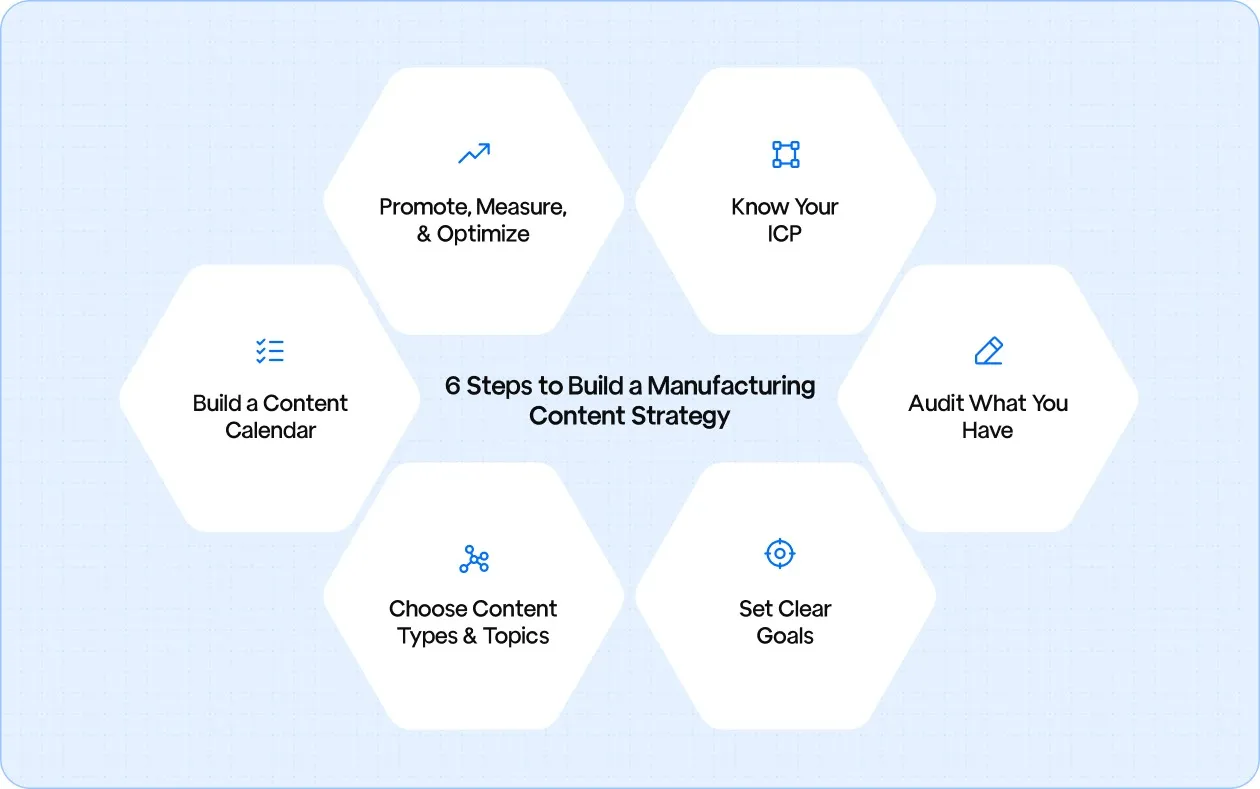
Creating a content marketing strategy for the manufacturing industry doesn't require a large team or budget. Follow these six actionable steps to build a strategy that drives qualified leads and supports your sales team.
Step 1: Know Your Buyer Inside Out
What to do: Define exactly who you're creating content for and what challenges keep them up at night.
Why it matters: You can't create relevant industrial content marketing if you don't understand your audience's specific pain points, how they search for solutions, and what influences their decisions.
Action items:
- Identify 2-3 key buyer personas (e.g., Plant Manager, Procurement Director, Operations VP)
- Interview your sales team about the top 10 questions prospects ask
- Talk to 5-10 existing customers about their biggest challenges before they found you
- Document how they typically discover, evaluate, and purchase solutions
Time needed: 1-2 weeks
Deliverable: One-page buyer persona document for each key audience
Step 2: Audit What You Already Have
What to do: Take inventory of all existing content and identify gaps in your coverage across the buyer journey.
Why it matters: Most manufacturers have more content than they realize—product sheets, technical specs, presentations. Don't start from scratch when you can repurpose and optimize what exists.
Action items:
- List all existing content (website pages, blog posts, videos, case studies, datasheets, presentations)
- Tag each piece as Awareness, Consideration, or Decision stage
- Use Google Analytics to identify your top-performing content by traffic and conversions
- Identify which buyer stages have little or no content
Time needed: 1 week
Deliverable: Content inventory spreadsheet mapped to buyer stages with performance data
Get a free website gap analysis in minutes.
After mapping your existing content, you can clearly see what’s missing—and that clarity enables goal-setting.
Step 3: Set Clear, Measurable Goals
What to do: Define what success looks like with specific metrics you can track.
Why it matters: Without clear goals, you can't measure ROI or prove that your industrial manufacturing marketing strategy is working. Goals keep your team focused and accountable.
Action items:
- Align content goals with business objectives (e.g., "Generate 100 qualified leads per quarter")
- Choose 3-5 key metrics to track:
- Traffic: Organic website visitors, page views
- Engagement: Time on page, content downloads
- Lead generation: Form submissions, gated content downloads
- Conversion: Marketing qualified leads (MQLs) to sales qualified leads (SQLs)
- Revenue: Pipeline value from content-driven leads
- Document current performance and set realistic 6-month targets (e.g., "Increase organic traffic by 30%")
Time needed: 2-3 days
Deliverable: Goals dashboard showing baseline metrics and 6-month targets
Step 4: Choose Your Content Types & Topics
What to do: Select which content formats you'll create and the specific topics you'll cover based on your resources and audience needs.
Why it matters: Not all content types work for every manufacturer. Focus on formats you can produce consistently rather than trying everything at once.
Action items:
- Start with 3-5 core content types you can realistically produce (e.g., blog posts, case studies, video tutorials)
- Ensure you have at least 2 content types per buyer stage (Awareness, Consideration, Decision)
- Use keyword research tools (SEMrush, Ahrefs, Google Keyword Planner) to find what your audience searches for
- Create a topic bank with 50-100 content ideas organized by:
- Pain points your solution solves
- Product features and use cases
- Industry trends and best practices
- Educational how-tos and technical guides
Time needed: 1-2 weeks
Deliverable: Prioritized list of content types and a topic bank with 50+ ideas
Get 100+ Ready-to-Publish Topics for Your Manufacturing Business
AI-generated topic bank and content calendar tailored to your niche.
Step 5: Build Your Content Calendar & Workflow
What to do: Create a realistic production schedule and define clear roles and responsibilities for your team.
Why it matters: Consistency beats perfection in content marketing for manufacturing companies. A calendar keeps you on track and ensures regular content publication, which is critical for SEO and audience engagement.
Action items:
- Choose publishing frequency: Start realistic (e.g., 2 blog posts/month, 1 case study/quarter, 1 video/month)
- Create a 90-day rolling calendar: Use Google Sheets, Asana, or CoSchedule to schedule content 3 months ahead
- Assign clear roles:
- Content strategist: Plans topics, maintains calendar
- Writers: Create blog posts, whitepapers, case studies
- Subject matter experts: Provide technical input and review
- Designer: Produce visuals and infographics
- Editor: Reviews and ensures quality
- Publisher: Schedules and publishes content
- Define your production workflow:
- Week 1: Topic research and outline
- Week 2: First draft
- Week 3: Review, edit, design
- Week 4: Publish and promote
- Build reusable templates: Blog post structure, case study layout, email newsletter format
Time needed: 1 week to set up, then ongoing maintenance
Deliverable: 90-day content calendar with assigned owners and deadlines
Step 6: Promote, Measure & Optimize
What to do: Amplify your content's reach through multiple channels, track performance religiously, and continuously improve based on data.
- Promote Your Content:
- Email marketing: Send to segmented lists (customers, prospects, newsletter subscribers)
- Social media: Post 3-5x per week on LinkedIn, share in industry groups
- Paid promotion: Boost top-performing content with LinkedIn ads or PPC for manufacturers
- Sales enablement: Equip your sales team with content for each buyer stage
- Repurpose content: Turn one blog post into an infographic, social posts, and an email series
- Measure Performance:
- Set up Google Analytics and marketing automation dashboards
- Monitor weekly: Traffic, engagement, conversions for recent content
- Track monthly: Progress against your goals from Step 3
- Key metrics to watch:
- Organic traffic growth
- Lead generation (downloads, form fills)
- Time on page and bounce rate
- MQL to SQL conversion rates
- Revenue influenced by content
- Optimize Continuously:
- Double down on winners: Create more content on topics that perform well
- Update underperformers: Refresh old content with new data, better SEO, improved formatting
- A/B test: Headlines, calls-to-action, content formats, distribution channels
- Gather feedback: Survey your audience about content preferences
- Quarterly strategy review: Assess what's working, adjust your approach, update calendar
Time needed: 4-6 hours per month for analysis and optimization
Deliverable: Monthly performance reports and quarterly strategy adjustments
Publishing content is only half the job. What determines success is how well that content is distributed, measured, and improved over time.
To make this more tangible, here’s what a realistic manufacturing content rollout looks like over the first few weeks.
A Quick Content Marketing Strategies Timeline
- Weeks 1-2: Complete Step 1 (Buyer research) and Step 2 (Content audit)
- Week 3: Complete Step 3 (Set goals)
- Weeks 4-5: Complete Step 4 (Choose content types and topics)
- Week 6: Complete Step 5 (Build calendar and workflow)
- Week 7+: Execute content creation and implement Step 6 (Promote, measure, optimize)
Some manufacturing SEO Companies are already doing this for many small- to medium-sized manufacturers in the US. Check out the agencies here.
Is Content Marketing Right for Your Manufacturing Company?
If you’re trying to understand how to market a manufacturing company in 2026, the answer begins with educating buyers—not persuading them.
Some manufacturing marketing agencies deliver measurable business outcomes, but they also require commitment and strategic execution to achieve the best results. Here's what to expect:
The Reality: Benefits Outweigh Challenges
While marketing for manufacturing companies presents real challenges, the benefits are substantial and lasting. Manufacturers who commit to a 6-12 month timeline, involve technical experts, and maintain consistency see measurable improvements in lead quality, sales efficiency, and revenue growth.
The manufacturers struggling most are those still relying solely on trade shows and referrals, while their competitors capture buyer attention through online marketing during the critical 60-70% of the research phase that occurs before sales contact.
Internet marketing for manufacturers using content isn't easy, but in 2026, it's essential for sustainable growth.
When you step back, the pattern becomes clear.
Wrapping Up
Content marketing for manufacturers isn't optional in 2026—it's how industrial buyers discover, evaluate, and select suppliers. With 60-70% of purchase decisions happening before sales contact, your content shapes buying decisions, whether you're actively creating it or not.
Modern manufacturer marketing happens quietly, as buyers research processes, compare capabilities, and reduce risk long before they speak to a supplier
Start with the fundamentals: understand your buyers, audit existing content, set measurable goals, and choose 3-5 core content types you can produce consistently. Focus on the top of funnel awareness content, mid-funnel proof, and bottom-funnel conversion materials.
Results take 3-6 months, but manufacturers who commit see sustained lead generation, shorter sales cycles, and measurable revenue growth.
How AI-Powered SEO Works for Manufacturing Companies
Top manufacturers in the US are using AI to scale content production and generate consistent leads without traditional agency timelines.


.webp)







.webp)


.svg)


