


Home

Resources
Blogs
Blog
Get insights on AI, productivity, and the future of work.


Thank you! Your submission has been received!
Oops! Something went wrong while submitting the form.
.webp)
Future of Search
Jun 20, 2025
5 mins
AI Search Grader: Boost Your Rankings with a Free Tool
Batul Beawarwala
TL;DR
- AI Search Grader is a free tool that shows how your brand appears in AI search results like Google SGE, ChatGPT, and Perplexity.
- It simulates AI search behavior to evaluate your content’s clarity, structure, and relevance, then gives you a score out of 100.
- It helps you identify visibility gaps, improve AI readability, and strengthen your brand’s entity signals.
- The tool boosts your chances of showing up in AI-generated answers and dominating zero-click search environments.
- Ideal for marketers, SEO pros, content writers, and growth teams.
Search has changed. People now turn to AI tools like ChatGPT, Perplexity, and Gemini for instant, personalized answers, leaving traditional Google results behind.
And if your brand isn’t showing up in those AI-generated responses, you’re handing over traffic, clicks, and customers to your competitors.
The numbers say it all:
- AI search usage is up 37%
- Traditional search traffic is down 11%.
The shift is happening fast, and your brand needs to show up where people are actually searching. But visibility today isn’t just about keywords or backlinks. It’s about being relevant, credible, and AI-ready.
So, how do you know if AI tools are actually picking up your brand?
That’s exactly what AI Search Grader helps you do. It's a free and simple tool. And it tells you exactly how visible your brand is in AI-powered search.
Here, we’ll show you why AI Search Grader is a must-have tool in your SEO toolkit to stay visible and ahead.
What is an AI Search Grader?
AI Search Grader is a free AI tool that shows how well your brand shows up in AI search results—the kind generated by tools like ChatGPT, Google’s SGE, Perplexity, and Claude.
Unlike traditional SEO tools that focus on keywords or backlinks, AI Search Grader goes deeper. It reveals how large language models (LLMs) actually see, understand, and rank your brand, just like a real user asking a question.
- Traditional SEO shows you what’s ranking.
- AI Search Grader shows you what AI sees—and how it uses that information in its answers.
How AI Search Grader Works
Think of it as a real-time AI simulation. The tool runs actual prompts your audience might ask, and then observes how AI tools respond. Here’s what it does:
- Simulates real user queries (e.g., “Best CRM for startups”) to test how your brand performs in AI-generated answers.
- Checks for mentions, citations, and links to see if your brand is being recognized and recommended.
- Analyzes relevance and topical authority to assess how trustworthy and useful your content appears to AI systems.
- Assigns a Visibility Score (0–100) along with actionable recommendations to improve your AI search presence.
What You’ll See
AI Search Grader gives you a data-backed view of how visible your brand is in the AI-first search world. Here's what you get:
Now, let’s talk about why it could be one of the smartest tools you use this year.
Why Should You Use an AI Search Grader?

As AI becomes a bigger part of how people search online, your SEO strategy needs to evolve too. Here’s why AI Search Grader is a must-have:
- Boost Your AI Visibility: Find out if your brand appears in AI-generated answers, how often, and on which pages (blog, home, pricing, etc.).
- Control Your Brand Narrative: Discover how AI interprets your tone, content, and value proposition. Use that insight to fine-tune messaging for clarity, authority, and trust.
- Keep an Eye on Competitors: See how you compare to others in your space and learn what they’re doing better, so you can do it too (and more).
- Find Content Gaps: Uncover questions AI tools answer without mentioning you, and get suggestions to fix them fast.
- Free with Real Value: You don’t need to pay thousands for audits or hire an agency to tell you how you’re doing. With AI Search Grader, you can get pro-level insights and recommendations, completely free.
So, if you want your brand to stay competitive in the age of AI-driven search, this tool is a smart (and free) place to start. But who exactly is it for?
Who Should Use This Tool?
The AI Search Grader tool is built for anyone who cares about content visibility, performance, and brand recognition in AI-powered search environments.
It’s especially helpful for:
- Content writers & SEO teams: Improve AI discoverability and ensure your content is answering real queries.
- Brand marketers: Understand and influence how AI tools present your brand to the world.
- Growth teams: Use share of voice and sentiment data to find quick wins and long-term opportunities.
- Agencies & Consultants: Use it as a client reporting or audit tool to show current AI visibility and improvement areas.
- Founders & CMOs: Quickly assess if your brand messaging is aligned with how AI tools describe you, without needing to dive deep into analytics.
And since it’s free, it makes a great first-pass audit tool before investing time or budget in heavy SEO overhauls.
Now, let’s see how AI Search Grader actually helps your brand show up more in AI-powered search results.
How AI Search Grader Boosts Visibility in AI Search

One of the biggest benefits of AI Search Grader is that it helps your brand get noticed in today’s AI-driven search world.
Here’s how it helps your brand stand out:
1. Simulates Real AI Search Behavior
AI Search Grader mimics how users interact with AI platforms by sending real, conversational prompts (e.g., “Best CRM for remote teams”). It checks:
- If your brand appears in AI-generated answers
- How your brand is described
- Whether your content is cited or linked
This gives you a realistic view of how AI engines perceive and present your content, not just based on keywords, but on actual usefulness and trustworthiness.
2. Identifies Gaps That Hurt Visibility
If your brand isn’t being mentioned—or is mentioned inaccurately—AI Search Grader flags the issue. It pinpoints content gaps, weak messaging, or low topical authority so you can fix what's holding you back.
Example: If AI tools skip over your brand when answering questions like “[your brand] + use case,” that’s a visibility gap. The AI Search Grader helps you fix it.
3. Evaluates Entity Strength and Content Quality
AI platforms think in entities—your brand, product, or service. The grader evaluates:
- Whether AI recognizes your brand as a trusted entity
- How well does your content answer relevant questions
- Use of schema markup, trust signals, FAQs, and structured formatting
This ensures your content is not just found, but featured in AI responses.
4. Score Performance and Offers Fixes
After testing your content, AI Search Grader assigns a visibility score (0–100) and gives you a clear grade (A to F). You’ll also get personalized, actionable recommendations like:
- Add a TL;DR summary
- Improve headline clarity
- Reduce jargon or fluff
- Strengthen internal links across related topics
So instead of guessing, you get clear steps to improve.
5. Measures Sentiment & Share of Voice (SoV)
Beyond visibility, it checks how AI tools perceive and compare your brand:
- Is your brand sentiment positive, neutral, or negative?
- How often does your brand show up vs. competitors?
This gives you a complete picture of how your brand is performing and how to claim more space in AI results.
Tips To Get The Most Out of AI Search Grader

AI Search Grader isn’t about getting a perfect score, but about helping your brand show up better in AI search.
Once you run your report, here’s how to make the most of it:
- Focus on Insights, Not Perfection: Don’t worry if your score isn’t 100. Use the results to identify areas that need attention—whether it’s clarity, authority, or missing context.
- Run Page-Level and Domain-Level Checks: Run checks on single pages (like your blog or pricing page) to spot specific issues. Then, scan your full domain to see how AI tools view your brand overall.
- Compare Branded vs. Non-Branded Visibility: See how well your brand performs in branded searches vs. generic ones. This helps you decide whether to strengthen brand authority or broaden keyword reach.
- Apply Findings Everywhere: Use the insights to improve your blogs, product pages, meta tags, and even social bios. The more AI-friendly your content is, the more visible you’ll be.
- Make It a Habit: AI search is evolving fast. What ranks today might not tomorrow. Run AI Search Grader regularly to stay ahead and keep your content in the AI spotlight.
Use the insights, make small improvements, and check back often. That’s how you win in AI search.
Get Started with Gushwork’s AI Search Grader

Follow these quick steps to get your free report:
- Enter Your Detail: Visit the AI Search Grader page and enter your website, brand name, and email.
- Click “Analyze”: The tool simulates real AI searches across platforms like ChatGPT, Perplexity, Google SGE, and more.
- Get Your Report: You’ll receive a Visibility Score (0–100) plus insights on brand sentiment and improvement tips.
- Get Instant Results: It checks if your brand appears, how it’s mentioned, and what pages are shown.
- Take Action: Use the suggestions to fix content gaps, boost credibility, and appear more in AI answers.
Our AI Search Grader goes beyond scoring. It gives you a clear, actionable plan:
- Easy tips to boost visibility and AI trust
- Blog topic and keyword suggestions to target
- Messaging tweaks to sound clear, confident, and consistent
- Steps to drive more traffic and connect better with your audience
Final Thoughts
If you want your business to show up in search results and reach the right people, you can’t afford to treat SEO as a one-time task. It’s something you need to keep improving if you want to stay ahead of the competition.
With the rise of AI, there are now smart SEO tools that do the heavy lifting for you. They analyze data, uncover opportunities, and help boost your visibility, so your audience can find you faster.
Gushwork AI Search Grader is one such tool. Backed by real AI simulations and trusted diagnostics, it shows how your brand appears in AI-driven search and helps you improve it.
The brands winning today are already optimizing for how AI thinks and recommends. Now it’s your turn.
Try Free AI Search Grader Today!
Run your free report and get a clear picture of how AI sees your brand.
➡️ [Run Your Free AI Search Grader Now]
FAQs
1. What is an AI Search Grader?
Ans: It’s a free tool that checks how well your brand shows up on AI-powered search engines like ChatGPT and Perplexity. It also gives you tips to improve your visibility.
2. How does AI Search Grader work?
Ans: Simply enter your website link and a short description of what you offer. The tool will scan your site and show you how your brand is seen by AI tools.
3. How does AI Search Grader simulate search engine behavior?
Ans: It acts like popular AI platforms and checks how they would read, rank, and respond to your content. So you get a real view of how your brand appears in AI search results.
4. Is AI Search Grader suitable for small businesses?
Ans: Yes! It’s completely free and beginner-friendly, making it perfect for small business owners, startups, or anyone without a big SEO team.
5. Is AI Search Grader Free to Use?
Ans: Yes, 100% free. There’s no signup or payment required.
6. Can I track multiple brands?
Ans: Yes. You can run the grader for any domain or topic, anytime.
7. Who should use the AI Search grader?
Ans: Anyone looking to improve their visibility in AI search results, including marketers, SEO professionals, entrepreneurs, bloggers, and small business owners.
Try the Free AI SEO Grader Now
.webp)
Future of Search
Jun 20, 2025
5 mins
How AEO Enhances Website Visibility in AI Search
Batul Beawarwala
TL;DR:
- AEO boosts visibility in AI tools like ChatGPT, Perplexity, and voice assistants by turning your content into direct, trusted answers.
- Answers real questions with clear, conversational content focused on user intent.
- Optimizes structure using schema markup, FAQs, and concise formats to make content AI-friendly.
- Prioritizes clarity and credibility, unlike traditional SEO, which emphasizes keywords and backlinks.
- To stay visible, brands must integrate both SEO and AEO in their content strategies.
“Can AEO improve my website's visibility in AI-driven search engines?”
That’s the big question, especially now that AI tools like ChatGPT, Perplexity, and Google's SGE are transforming how users search and find answers.
For years, SEO was the go-to strategy: get ranked on Google, earn clicks, win traffic. But the game has changed. Today, nearly 60% of searches end without a click. Why? Because users are getting instant answers, often from AI-generated summaries or featured snippets.
A Bain & Company study found that 80% of users rely on AI answers for almost half of their searches. That means a potential 15–25% dip in your organic traffic. Not because your content is bad, but because it's not showing up in AI answers.
This is where Answer Engine Optimization (AEO) steps in. AEO is about making your content easy for AI to find, understand, and serve as the answer.
Here, we’ll discuss what AEO is, why it matters, and how you can make your content AI-ready.
What is AEO (Answer Engine Optimization)?
Answer Engine Optimization (AEO) means optimizing your content so AI assistants like Siri, Alexa, and Google Assistant can quickly find and show answers to user questions.
Unlike traditional SEO, which focuses on ranking and driving clicks, AEO is about becoming the answer — showing up in:
- Google’s featured snippets and answer boxes
- Voice assistant responses (Siri, Alexa, etc.)
- AI summaries from tools like SGE, Perplexity, and ChatGPT
- Knowledge panels and structured results
Why AEO Matters (Especially in AI-First Search)
Let’s cut to the chase: AI is now the first stop for many users. Instead of browsing through 10 blue links, people ask a question and expect one clear answer.
You're not just competing for Google’s Page 1 anymore—
You're fighting to be the answer.
And here’s why AEO is becoming a must-have:
- Zero-click is the norm: 60% of users get what they need without clicking. AEO helps your brand show up in those direct answers.
- You compete to be the answer: Nearly 27% of all searches are question-based. Answering them well puts you in front of high-intent users.
- Voice and conversational search are rising: Smart assistants like Alexa and Siri often read out just one answer. AEO increases your chances of being that voice.
- AI ranks trust and clarity: Structured content, schema markup, FAQs, and E-E-A-T signals help AI trust and pick your content.
- Visibility means growth: AEO boosts discoverability, engagement, and lead quality — even when users don’t land on your site.
To understand AEO’s impact on website visibility, let's compare it with classic SEO and why both matter.
AEO vs. SEO: What's Actually Different?
SEO and AEO work toward the same goal: getting your content seen. But they take very different paths. Here’s a quick comparison:
SEO helps people find you. AEO makes you the answer.
When you combine both, your brand stays visible—whether users search on Google, ask Siri, or chat with ChatGPT.
Now, let’s look at how AEO directly helps your content stand out in AI-driven search engines.
Can AEO Improve My Website's Visibility in AI-Driven Search Engines?

The short answer is yes.
Here’s how AEO makes your content AI-friendly, voice-ready, and snippet-worthy:
1. It Aligns with Search Intent (Not Just Keywords)
AI search engines prioritize meaning over exact keywords. That’s why AEO focuses on intent by:
- Crafting clear answers to real user questions
- Writing in a natural, conversational tone (like how people talk to voice assistants)
- Delivering concise, value-rich responses to queries like:
“How can SaaS startups improve customer retention?”
This makes your content more likely to be featured in snippets, answer cards, and AI-generated responses.
2. Structured Data Makes Your Content AI-Readable
Structured data (schema markup) acts as a translator for AI tools. AEO uses it to:
- Highlight FAQs, How-Tos, product specs, and Q&A blocks
- Help AI parse and display your answers properly
- Boost your visibility in rich results and AI-powered platforms
Think of a schema as a GPS for search engines — it tells AI exactly where your best answers live.
3. Voice-Search Friendly = Higher AI Visibility
Voice searches are growing fast, and they're answer-focused. AEO helps you win voice results by:
- Using short, direct answers
- Writing in a conversational, spoken style
- Targeting long-tail questions like:
“What’s the best way to reduce churn in SaaS?”
That’s how your content becomes the one Alexa, Siri, or Google Assistant reads aloud.
4. Better UX Signals Higher Trust in AI
Search engines and AI platforms look at user experience metrics, including:
- Time spent on page
- Mobile responsiveness
- Fast load speeds
- Low bounce rates
AEO naturally promotes clean layouts, easy navigation, and helpful internal links—all of which build trust and increase your chances of being featured.
5. It Targets Long-Tail, High-Intent Queries
AI tools thrive on natural language questions. That’s where AEO shines:
- Answer specific, low-competition queries like:
“Best CRM for early-stage B2B SaaS startups” - Mirror how people speak when asking real questions
- Focus on clarity over fluff
This drives qualified traffic and increases your odds of being quoted by AI.
Now, let’s dive into practical AEO strategies to actually implement AEO to boost your brand’s AI presence.
How to Implement AEO to Boost Your Website Visibility?

Optimizing for answer engines means adapting your content and SEO so AI systems can easily find and use your information. Many AEO tactics are similar to what you already do in SEO.
Here are some key strategies:
Step 1: Write for Specific Questions, Not Just Keywords
AI engines prioritize intent over keywords. So instead of stuffing terms, focus on solving real queries.
What to do:
- Use tools like AnswerThePublic, People Also Ask, or AlsoAsked to find popular questions
- Target long-tail, conversational queries — the kind people ask in real life
- Lead with a short answer, then expand with context, stats, or steps
- Use questions as subheadings (H2, H3)
- Add a dedicated FAQ section to boost featured snippet chances
Instead of: “Best winter coats”
Try: “What’s the best winter coat for walking to work in below-freezing temperatures?”
Step 2: Use Schema Markup to Help AI Understand Your Content
Schema markup is the code that tells AI what your content is about. Even excellent content might be overlooked without it.
What to do:
- Use FAQPage, HowTo, Product, or Review schema depending on content type
- Add Local Business schema if you serve a local area
- Use Google’s Structured Data Markup Helper or Yoast/Rank Math plugins
- Test using Google’s Rich Results Test
Example: A skincare brand using FAQ and Product schema may see their reviews and answers highlighted directly in Google or AI answers.
Step 3: Build Credibility Signals AI Can Trust
AI tools lean toward reliable and real sources. That means your brand needs clear trust signals.
What to do:
- Get backlinks from reputable sites in your niche
- Include author bios with credentials and LinkedIn/social profiles
- Display reviews, testimonials, and certifications
- Keep business details (NAP) consistent across platforms
- Highlight media mentions, partnerships, or awards
Example: A fintech blog quoting certified advisors and linking to government studies will rank higher than generic content.
Step 4: Make Your Content Voice- and Chat-Friendly
Your content should sound natural and easy to understand. Why? Because AI often reads it out loud or summarizes it for voice search.
What to do:
- Use simple words and short sentences.
- Keep paragraphs to 2–3 lines.
- Avoid jargon.
- Write like you’re answering a question from a friend.
- Make sure your page loads fast and looks great on mobile.
Instead of:
“Optimize your immune response with ascorbic acid”
Try:
“Does Vitamin C help your immune system?”
Step 5: Be Active Beyond Just Your Website
AI doesn’t just look at your blog — it scans the entire web. The more your brand shows up across the web, the more likely AI is to trust and quote you.
What to do:
- Post helpful content on LinkedIn, Twitter, or TikTok.
- Join discussions on Reddit, Quora, or industry forums.
- Repurpose blogs into short videos, carousels, or infographics.
- Get Google reviews, G2 ratings, or Trustpilot testimonials
- Write guest posts on high-authority industry blogs
Example: A D2C fitness brand posting TikTok workouts and linking back to blog content can boost AI mentions across formats.
Step 6: Track Your AEO Wins (and Keep Updating)
You can't grow what you don’t measure. Monitor your AEO success and tweak your strategy regularly.
What to do:
- Track featured snippets in Google Search Console
- Measure scroll depth, bounce rate, and session time with GA4 or Hotjar
- Use SEMrush’s voice search report
- Monitor AI mentions using tools like Brand24, Mention, or BuzzSumo
- Regularly update older blogs with better structure, clearer Q&A formats, and fresh schema
Pro Tip: You don’t always need new content. Updating your best-performing blogs with AEO tactics can land you fresh AI citations without starting from scratch.
Now that you know how to implement AEO, you might be wondering—who stands to gain the most from it? Let’s find out.
Who Benefits the Most from AEO?
Well, almost everyone, especially if you’re running a smaller or newer website.
That’s because traditional SEO rewards authority — think backlinks, domain age, and big budgets. AEO shifts the focus to clarity, relevance, and structure. In other words, how well you answer real user questions.
Why it works in your favor:
- You don’t need thousands of backlinks to show up in AI answers
- Even low-traffic pages can rank if they clearly answer a real question
- You can outrank big players by being more focused and conversational
So, if your site isn’t on Google’s Page 1 (yet), AEO gives you another way in — by becoming the answer.
Real-World Example: HubSpot
Let’s look at HubSpot, a brand that dominates in AI answers.
Try searching: “What is inbound marketing?” on Google, chatgpt/Perplexity.
You’ll likely see HubSpot:
- Quoted in a featured snippet on Google
- Cited in ChatGPT or Perplexity's AI summaries
- Ranked as the top link with a clear, structured explanation

That's no accident. Hubspot has nailed AEO by structuring content around common questions and writing answers that AI can easily pick up. If they’re doing it, you should too. Especially if you're still building your brand's authority, AEO can give you a serious edge.
But getting it right does take some effort. Let's look at what challenges you might face.
What Are the Challenges in Adopting AEO?
Shifting from SEO to AEO isn't plug-and-play. It demands new thinking, sharper content, and a technical setup. Here's what makes it tricky, and how you can handle each challenge smartly:
Partnering with experienced content strategists and SEO experts like Gushwork can drastically speed up your AEO success.
How Gushwork Helps You Win with AEO in AI Search
At Gushwork, we’re building tools to help brands stay visible, trusted, and recommended across AI-driven platforms like ChatGPT, Gemini, and Perplexity.
With our AI Visibility Suite, you get everything you need to stay one step ahead in the AI search era:
- AI Presence Tracker: See where your brand shows up across AI platforms. Track mentions, sentiment, and competitors to stay ahead.
- Citation Profile: Know when and how AI references your content. Verify citations and get tips to boost trust and authority.
- AI Query Insights: Discover what questions your audience—and AI—are asking. Use that data to create high-impact content that ranks and converts.
- LLMs.txt Auto-Updater: Make sure AI finds your most important pages. We auto-generate and update your llms.txt file for better visibility.
Final Takeaway: AEO Is Your Edge in AI Search
Answer Engine Optimization (AEO) represents the next frontier in search visibility. If you’re wondering whether it can boost your website’s visibility, the answer is absolutely yes.
AEO helps your content show up where it matters most: in voice search, AI summaries, and instant answers. It doesn’t replace SEO — it strengthens it.
And with Gushwork, AI brings your audience straight to you. So if you're serious about staying ahead in 2025 and beyond, let’s talk.
Book a call and we’ll help you become the answer your audience (and AI) is looking for.
Make Your Site AI-Search Friendly
.webp)
Digital Marketing
Jun 20, 2025
5 mins
SEO Optimization for Landing Pages: Best Practices Guide
Batul Beawarwala
TL;DR
- Build for both conversions and AI search: A high-performing landing page should persuade users and be easily surfaced by search engines, including LLM-powered platforms.
- Align keywords with search intent: Start with a strong keyword and prompt research to match what your audience is actually looking for—don’t guess, validate.
- Structure content for clarity and SEO: Use clear H2s, bullets, and relevant internal links to guide both users and crawlers. Optimize title tags, meta descriptions, and schema.
- Prioritize mobile speed and clean code: Fast-loading, mobile-optimized pages with minimal technical errors perform better in search and reduce bounce rates.
- Monitor and update regularly: SEO isn’t set-it-and-forget-it. Use tools to track rankings, AI visibility, and engagement, and refresh content as needed to stay relevant.
You might have a great offer, strong visuals, and a landing page that converts well when people land on it. But if your page isn’t showing up in search results, you’re missing a major opportunity. Many businesses pour time and budget into paid ads or social media, but skip over one of the most reliable growth channels: organic search.
Search engines are often the first place people turn when they’re ready to buy, sign up, or take action. And that traffic is free, but only if your pages are built to attract it.
Landing page SEO optimization ensures that your pages don’t just convert well, they’re found in the first place. That matters because the average landing page conversion rate across all industries is 5.89%. That number means real revenue, if you're getting visibility.
In this guide, you’ll learn:
- What landing page SEO actually means (and how it's different from general SEO)
- How to optimize your pages for both traffic and conversions
- Best practices for content, structure, and technical performance
- How to monitor and improve results over time
Let’s start with the basics.
What Is Search Engine Optimization (SEO)?
Search engine optimization (SEO) is the process of improving your website so it ranks higher in search engine results. That means making your content easier to find, easier to understand, and more relevant to what people are searching for.
SEO isn’t just about keywords; it’s also about user experience, content quality, technical setup, and aligning with what search engines (and users) are trying to accomplish.
When applied to landing pages, SEO becomes even more strategic because you’re not just looking for clicks. You want conversions.
Now that we’ve covered the basics of SEO, let’s zoom in on how it plays out specifically on landing pages and why they require a more focused approach.
What Is a SEO Landing Page?
An SEO landing page is a standalone page designed to attract and convert traffic from organic search. Unlike a typical campaign landing page, it’s built with both search discoverability and user action in mind.
Here’s what sets it apart:
- It targets specific high-intent keywords.
- It provides valuable, relevant content that answers a clear query.
- It’s structured to help both users and search engines understand the topic quickly.
- It includes strong CTAs to convert visitors into leads, customers, or subscribers.
Done right, SEO landing pages become evergreen conversion engines that don’t require ongoing ad spend.
So, what does it take to create an SEO-friendly landing page that also converts?
7 Key Practices for Landing Page SEO Optimization

Optimizing a landing page for SEO isn’t just about adding keywords; it’s about building a fast, search-intent-driven experience that satisfies both users and search engines.
Here are seven core practices that will help your landing pages rank higher and convert better:
1. Conduct Thorough Keyword Research

Strong SEO begins with understanding what your ideal audience is actively searching for and why. Effective keyword research ensures your landing page speaks directly to the needs of your target market.
How to approach it:
- Identify a mix of:
- Primary keywords (e.g., “CRM software for startups”)
- Long-tail keywords (e.g., “best free CRM for startups 2025”)
- Search-intent aligned queries (e.g., “compare CRMs for remote teams”)
- Prioritize user intent over pure search volume. Ask: What is the searcher hoping to accomplish?
Your landing page should help visitors act on that intent, whether it’s downloading a guide, booking a demo, or making a purchase.
2. Align Design and Content with Search Intent

Ranking high doesn’t mean much if your content doesn’t match what searchers want to see. Google’s algorithms prioritize relevance and intent alignment, and so should your page design and content.
Steps to align with intent:
- Analyze the top-ranking pages for your target keywords.
- Determine the dominant search intent:
- Informational (e.g., guides, how-tos)
- Transactional (e.g., pricing, signups)
- Navigational (e.g., brand-specific)
- Customise your layout accordingly:
- For informational purposes, focus on rich content, FAQs, and helpful resources.
- For transactional, highlight CTAs, benefits, and trust signals like reviews.
- For navigation, make it easy to take the next step (contact, learn more, compare features).
Design and UX should always support the user journey, not distract from it.
3. Create High-Quality, Relevant Content

Source: GetMyPassports
Google rewards pages that provide useful, original, and focused content. A high-converting landing page should address the user’s need clearly and completely, without fluff.
Best practices for content quality:
- Lead with value: Address the main user question or pain point immediately.
- Use clear headings, bullet points, and short paragraphs to improve scanability.
- Eliminate distractions, stick to one core topic, and one CTA.
- Add FAQs to tackle secondary queries and extend dwell time.
- Incorporate trust elements like testimonials, case studies, or ratings when relevant.
Every word on the page should serve a purpose: educate, guide, or convert.
4. Apply On-Page SEO Enhancements

Technical tweaks on the page can make a big difference in visibility and click-through rates. These optimizations ensure your content is not only seen but also compelling in search results.
Essential on-page SEO tips:
- Title tag: Front-load your primary keyword and keep it under 60 characters.
- Meta description: Summarize the value proposition and include a keyword. Keep it under 160 characters.
- Headings (H1-H3): Use a clear H1 for the main topic and break content into sections with H2s/H3s.
- Keyword placement: Include your main keyword naturally in the first 100 words, headers, image alt text, and file names.
- Internal links: Point to relevant blogs, resources, or products to improve crawlability and reduce bounce rate.
Avoid outdated practices like keyword stuffing. Your page should read naturally while signaling relevance.
5. Strengthen Technical SEO Foundations
A landing page that loads slowly or isn’t accessible will struggle to rank, no matter how great the content is. Technical SEO helps Google crawl and index your page efficiently while improving UX.
Focus on these core technical factors:
- Mobile responsiveness: With mobile-first indexing, your design must look and function flawlessly across all devices.
- Secure and crawlable: Use HTTPS, submit your sitemap to Google Search Console, and fix any crawl errors.
- Accessibility: Add descriptive alt text to all images, ensure readable fonts, and test with tools like WAVE or Lighthouse.
Technical SEO is the foundation that keeps your landing page discoverable and usable.
6. Ensure Fast Page Load Times
Speed is a direct ranking factor and a key part of user experience. Even a one-second delay in page load time can drop conversion rates by 7% or more.
Improve page speed by:
- Compressing large images (use WebP format for smaller file sizes)
- Minimizing or deferring unnecessary JavaScript and CSS
- Enabling browser caching
- Choosing a fast, reliable hosting provider
7. Build and Leverage Backlinks
Backlinks are still one of Google’s most powerful trust signals. They help search engines gauge the authority and relevance of your landing page.

How to earn high-quality backlinks:
- Create original, link-worthy assets, such as research reports, infographics, or case studies.
- Guest post on reputable blogs and link back to relevant landing pages.
- Collaborate with partners or influencers to generate referral links.
- Promote your content through newsletters, LinkedIn, and community forums.
Avoid bad backlink tactics like buying links, using link farms, or spamming low-quality directories; these can hurt more than help.
The goal is to build credibility naturally through content and relationships.
With the tactical groundwork covered, it’s worth taking a step back to understand the broader value of landing page SEO and why it’s worth the investment.
Why Optimize Landing Pages for SEO?

A beautifully designed landing page won’t convert if no one sees it. Relying solely on paid ads or social media ignores the long-term value of organic traffic. SEO turns landing pages into lasting assets.
Here’s why it matters:
- Capture High-Intent Organic Traffic: SEO brings in users who are actively searching for solutions like yours. These are high-intent visitors, more likely to engage and convert, without the cost of paid clicks.
- Improve Conversions at Lower Cost: Organic traffic compounds over time. Once your page ranks, it can generate qualified leads for months with minimal upkeep, making SEO a cost-effective acquisition channel.
- Build Trust and Authority: Pages that align with search intent and offer value build credibility. That leads to lower bounce rates, stronger engagement, and better rankings over time.
- Extend Campaign Value: Instead of letting campaign pages go stale, SEO helps them drive long-term traffic and leads, stretching your content investment.
- Stay Competitive: If you’re not optimizing for search, your competitors are. SEO isn’t optional anymore; it’s essential to stay visible in an organic and AI-driven search landscape.
To see these principles in action, here’s a real-world example of how landing page SEO helped one brand rapidly grow its organic traffic and visibility.
Case Study: How Dashtoon Scaled Organic Traffic with Landing Page SEO
“Within weeks, we saw 10 K+ monthly organic visitors. Gushwork’s AI+human strategy helped us move fast while maintaining high quality. They nailed it.”
— Soumyadeep Mukherjee, Co-founder & CTO, Dashtoon
One standout example of effective landing page SEO comes from Dashtoon, an AI-powered platform that lets anyone create professional-grade digital comics in minutes, without design experience.
From day one, Dashtoon partnered with Gushwork — a platform that delivers revenue-generating traffic through AI-assisted SEO. Together, we focused on building a scalable, search-optimized content foundation centered around high-performing landing pages.
The Strategy: SEO-Optimized Landing Pages for Every Use Case
Rather than taking a generic blog-heavy approach, we focused on what mattered most: targeted landing pages that aligned with user intent. For Dashtoon’s two core audiences, creators and readers, we mapped different journeys and built pages tailored to their needs.
Key landing pages included:
- AI Comic Generator (main product)
- AI Comic Character Maker
- AI Storyboard Generator
- AI Children's Book Generator
- AI Comic Poster Generator
Each page focused on a specific, high-intent use case, supported by concise, benefit-led copy, keyword-optimized structure, and strong CTAs. Where additional detail was needed, we used FAQs to improve SEO and engagement without overwhelming the user.
Most importantly, these pages showcased Dashtoon’s visual-first product experience, highlighting what made it unique in a crowded space.
The Results: Explosive Organic Growth
Dashtoon’s early investment in landing page SEO paid off fast:
- Traffic: 103 → 39.6K monthly visitors (384x growth)
- Search impressions: 7.87K → 1.09M (138x growth)
- Top rankings:
- #1 for “Mangareader alternative”
- #1 for “Anime comics creator”
- #2 for “AI comic book generator”
By aligning content strategy with product use cases and optimizing each landing page for search, Dashtoon turned SEO into a long-term growth engine, without relying heavily on paid ads.
Monitoring and Maintaining SEO Performance
Landing page SEO isn’t a one-and-done task. Regular monitoring is required to stay competitive and aligned with user intent.
Use tools like:
- Google Search Console: Track impressions, clicks, and indexing issues.
- Google Analytics: Measure bounce rates, time on page, and conversion paths.
- SEMRush or Ahrefs: Monitor keyword rankings, backlinks, and competitor performance.
Once you have the data, make informed updates:
- Refresh content with updated stats, examples, or search trends.
- Adjust keywords based on performance and intent shifts.
- Improve slow-loading pages or outdated designs.
- Re-test CTAs and layouts to boost engagement and conversions.
Even small optimizations, like changing a headline or reordering sections, can make a measurable difference. Keep reviewing and refining. The more consistent your SEO upkeep, the stronger your long-term results.
Final Thoughts
When done right, it helps you attract high-intent traffic, boost conversions, and stretch your campaign ROI far beyond the initial launch. By applying core SEO principles, like strong keyword targeting, optimized structure, technical performance, and high-quality backlinks, you turn your landing pages into discoverable, durable growth assets.
If you’re looking to do this at scale, Gushwork can help. We combine AI-assisted SEO strategies with human expertise to optimize your visibility across both traditional search engines and AI-powered platforms. Our AI Visibility Suite is built for the new era of search, ensuring your brand gets cited, indexed, and surfaced where modern users are looking.
Ready to see how your landing pages are performing in the AI search era?
Book a free consultation today.
Optimize Your Landing Pages Today

Future of Search
Jun 20, 2025
5 mins
How Generative Optimization Enhances AI Search Visibility
Batul Beawarwala
TL;DR
- Traditional SEO doesn't work the same in AI-driven search—GEO (Generative Engine Optimization) is now essential.
- AI models like ChatGPT and Perplexity select, summarize, and cite content, not rank it.
- GEO focuses on entity clarity, AI-friendly formatting, strong E‑E‑A‑T, and prompt-style language.
- LLMS.txt files and structured metadata help AI engines access the right content on your site.
- Avoid keyword stuffing, vague content, and poor formatting; AI skips unclear or untrustworthy sources.
You’ve published blogs, built landing pages, and optimized every headline for SEO. But there’s a problem, AI search engines like ChatGPT, Perplexity, and Gemini can’t “see” your content the way Google’s crawler does. That’s because traditional SEO tactics don’t translate well to AI-generated answers.
Without generative optimization strategies, like llms.txt files, semantic structuring, and citation-worthy content, your website risks becoming invisible in the new wave of AI-powered search results.
And here’s why this matters: Zero-click searches now account for 65% of all Google searches globally as of 2024, up from 58.5% in 2024, and are projected to surpass 70% by 2025. AI Overviews, which often answer user questions without sending traffic to a website, are becoming the norm.
If you want your brand to appear in AI results and remain competitive, it's time to understand how Generative Engine Optimization (GEO) works and how to make it part of your strategy.
What Is Generative Engine Optimization (GEO)?
Generative Engine Optimization (GEO) is the process of optimizing your content to be surfaced, cited, or used by AI-driven search tools and LLMs (large language models), not just ranked on traditional search engine results pages (SERPs).
Instead of relying on keyword placement and backlinks, GEO ensures your content is structured, authoritative, and AI-friendly, making it more likely to be included in answers generated by ChatGPT, Claude, Gemini, and Perplexity.
This emerging field of optimization acknowledges that generative engines don’t rank, they select, summarize, and cite. GEO adapts your strategy for this new paradigm.
Why GEO Matters Now
The explosion of AI-powered search has changed how users find and engage with information.
- ChatGPT and Perplexity are now primary information sources for millions of users.
- Gemini is embedded in Google search experiences, including AI Overviews.
- Bing integrates GPT-powered answers in its sidebar and mobile search results.
More importantly, AI tools don’t crawl the web like traditional bots. They rely on clean metadata, brand mentions, citation signals, and structured information to train and fetch answers.
By March 2025, AI Overviews appeared in 13.14% of all queries, nearly doubling since January 2025. And queries that trigger AI Overviews show even higher zero-click behavior, especially for informational searches.
Early adopters of GEO strategies have reported up to 40% boosts in AI visibility, even with no changes to their Google SERP rankings. That’s the new playing field.
Core Differences from Traditional SEO
Search engine optimization (SEO) as we know it was designed for ranking web pages in search engines like Google and Bing. But generative AI search doesn’t rank pages, it pulls snippets, facts, brand names, and source citations to generate direct answers.
That shift fundamentally changes how we approach visibility online. Let’s compare how Traditional SEO and Generative Engine Optimization (SEO) differ across the core dimensions:
How to Implement GEO: Step-by-Step

Traditional SEO tactics alone aren’t enough to stay visible in AI-powered search. Generative Engine Optimization (GEO) focuses on making your content readable, reference-worthy, and indexable by large language models. Whether you’re aiming to appear in ChatGPT’s responses or show up in Google’s AI Overviews, applying the right GEO tactics is essential.
Below is a practical, 6-step framework to help you optimize for AI search visibility, without starting from scratch.
1. Keyword & Prompt Research
Traditional keyword tools focus on what people type into search bars. But GEO starts with how people talk to AI.
You’ll need to identify:
- Conversational queries people use on ChatGPT, Claude, and Gemini
- Prompt formats that trigger generative answers in your niche
- Long-tail variations and natural language phrasing
What to do:
- Use platforms like Perplexity.ai or You.com to reverse-engineer AI queries
- Explore question-based tools like AnswerThePublic and AlsoAsked
- Analyze Gushwork’s AI Search Grader to uncover prompts your brand already shows up for, and where it doesn’t
Example:
Instead of targeting “CRM software,” explore:
- “What’s the best CRM for freelancers in 2025?”
- “Top CRM tools with free plans for startups”
These are the kinds of prompts LLMs respond to and cite.
2. Optimize Content Structure
Once you know what prompts to target, your next job is to present information in a structure LLMs can easily read, parse, and summarize.
Best practices for AI-optimized formatting:
- Use clear H2 and H3 headings to define sections
- Break down information with bullet points, checklists, and tables
- Include FAQ blocks for quick Q&A visibility
- Use semantic HTML elements like <section>, <article>, <header> for clarity
- Add rich schema markup:
- FAQPage for common questions
- How to process content
- Article for blog posts and editorials
Why it works: AI tools prioritize content that is cleanly structured and easy to excerpt. Schema markup also improves how your pages are understood by AI scrapers and search engines alike.
3. Strengthen Authority & Citation Potential
AI-generated results often pull from trusted, well-cited sources. That means your content needs to be worth quoting, not just ranking.
To boost citation-worthiness:
- Include original data or stats (e.g., from surveys, internal reports)
- Use credible external sources (like government data, academic research)
- Add expert quotes or credentials to back up key claims
- Link to high-authority domains where relevant
- Maintain a clear author bio and transparent page structure
Tip: If AI can’t tell who you are or why your content is reliable, it won’t use it. EEAT (Experience, Expertise, Authoritativeness, and Trust) matters just as much for generative engines as it does for Google.
4. Format for Readability & Token Efficiency
AI models generate responses using tokens, small chunks of text. If your content is too long-winded, vague, or cluttered, it gets skipped in favor of leaner, more scannable sources.
How to make your content AI-efficient:
- Write short paragraphs (2–4 lines max)
- Prioritize bullet lists, summary boxes, and tables
- Avoid long intros, filler phrases, or over-explaining
- Use direct, declarative language (“GEO improves AI visibility,” not “It has been found that GEO may have a positive effect on…”)
Why this matters:
LLMs are trained on clarity and brevity. Fluff wastes token space and makes your content less reusable for AI summaries.
5. Add Metadata & llms.txt for AI Access
AI crawlers don’t access your site the same way Googlebot does. You need to explicitly allow and control what they see using metadata and LLMs.txt files.
Here’s how to do it:
- Install Gushwork’s LLMs.txt Generator WordPress plugin
- Manually or automatically create an llms.txt file to:
- Allow or block specific AI bots
- Prioritize valuable pages (case studies, landing pages)
- Exclude low-value or sensitive content (terms, login pages)
- Update the file regularly to reflect content changes
Benefit: This helps ensure AI engines like ChatGPT, Claude, and Gemini are indexing your best, most relevant pages, not irrelevant ones.
6. Monitor & Adapt Over Time
GEO isn’t a one-and-done project. You need to track how your content performs in AI search and iterate based on real visibility data.
What to monitor:
- AI citations: Where and how is your content being referenced?
- Query inclusion: Does your site show up for target prompts?
- Sentiment trends: What tone or perception does AI reflect about your brand?
- New prompt opportunities: What else are people asking that you can answer?
These six steps lay the groundwork for effective GEO. Stay consistent, track AI visibility, and keep refining based on real performance.
Common GEO Pitfalls to Avoid

Even with the best intentions, it’s easy to misstep when implementing Generative Engine Optimization. Here are some of the most common mistakes and how to steer clear of them:
- Keyword stuffing in prompts: Just like old-school SEO, overloading your content with prompt-style phrases or unnatural language can backfire. LLMs are trained to detect spammy patterns and may ignore or penalize overly optimized text.
- Low E-E-A-T content: If your content lacks clear expertise, original insight, or trustworthy signals (like citations or transparent authorship), it’s unlikely to earn a mention in AI-generated answers, no matter how well it's formatted.
- Neglected formatting: Without structured data (schema markup), semantic HTML, or skimmable layout (e.g., bullet points, headings), your content becomes invisible to LLMs scanning for easily reusable answers.
- Relying on AI black-box assumptions: Generative engines are constantly evolving and often opaque. Don’t assume something is “working” just because it looks good in your CMS. You need to test prompts, track citations, and adjust frequently using tools like AI Search Grader or citation reports.
- Trying to “game” the system: Tactics designed to trick AI, like keyword baiting, hidden text, or fake citations, may get flagged or simply ignored. GEO isn’t about manipulation; it’s about delivering high-quality, well-structured content that LLMs want to reference.
In short, think long-term. GEO rewards clarity, credibility, and consistency, not shortcuts. Treat AI like a smart reader, not a system to exploit.
Gushwork’s Tools for Generative Search
If you’ve made it this far, you already know that Generative Engine Optimization (GEO) isn’t about chasing clicks; it’s about being cited, summarized, and trusted by AI search engines. Implementing GEO requires clarity, structure, and strategy. But maintaining it? That’s where the right tools make all the difference.
Gushwork’s AI Optimization Suite is purpose-built to support the exact tactics we covered, everything from improving LLM visibility to structuring content for better AI recall.
Here’s how each tool maps to the GEO strategies outlined above:
1. AI Search Grader
We discussed how measuring success in GEO isn’t about rankings, it’s about visibility across generative platforms. The AI Search Grader is a free diagnostic tool that evaluates brand visibility across AI-powered search engines like ChatGPT, Claude, and Perplexity. It provides:
- AI Visibility Score: Aggregated performance metric across platforms.
- Sentiment Analysis: Categorizes AI-generated responses about brands as positive, neutral, or negative.
- Competitive Benchmarking: Compares brand performance against competitors in AI search results.
- Actionable Recommendations: Suggests content strategies (e.g., targeted blogs, landing pages) to improve AI discoverability.
Use it to guide your ongoing GEO efforts and measure impact over time.
2. LLMs.txt Generator
One of GEO’s most foundational steps is making sure AI models can access and interpret your content. In our implementation section, we highlighted the importance of llms.txt, Gushwork’s LLMs.txt Generator is a WordPress plugin that controls how AI models access and interpret website content. Key features:
- Basic & Premium Versions: Free tier offers manual llms.txt generation, while the premium includes real-time updates and custom rules.
- Multisite Support: Manages AI crawling rules across WordPress networks.
- Crawler Guidance: Directs AI models to prioritize specific content (e.g., case studies, pricing) while blocking non-essential areas.
In short, it reinforces the structural and metadata-focused practices we outlined under AI-friendly formatting.
3. AI Visibility Suite
Once you’ve optimized your site and content, you’ll need to track, adapt, and expand because generative search trends evolve fast. That’s where the AI Visibility Suite comes in. It is an enterprise-grade solution for Answer Engine Optimization (AEO), comprising:
- AI Presence Tracker: Identifies visibility gaps across AI platforms.
- Citation Profile: Audits how AI systems reference brand content.
- LLMs.txt Auto-Updater: Synchronizes AI models with the latest website updates.
- AI Query Insights: Reveals customer questions being asked to AI assistants.
Together, these tools turn GEO from a checklist into an ongoing system, helping you stay ahead as LLM search becomes the norm.
Conclusion
AI search now depends on how well your content can be understood, cited, and used by language models. Generative Engine Optimization (GEO) helps you meet those standards by improving structure, clarity, and access.
With Gushwork’s AI Optimization Suite, featuring tools like the AI Search Grader, LLMs.txt Generator, and AI Visibility Suite, you can track performance, guide crawlers, and improve how often your content appears in AI responses.
Book an appointment today and start optimizing your content for the future of search, powered by AI, backed by Gushwork.
Unlock AI Visibility Now
.webp)
Future of Search
Jun 20, 2025
5 mins
SEO Strategy and Trends for 2025
Batul Beawarwala
TL;DR
- SEO in 2025 moves beyond keyword stuffing to focus on user intent and AI-optimized strategies.
- Google’s algorithms now prioritize context, relevance, and helpfulness, not just keywords.
- Success depends on creating user-centric, authoritative, and context-aware content.
- Long-tail and semantic keywords are crucial for matching evolving search behaviors, especially voice and generative AI searches.
- Building E-E-A-T (Experience, Expertise, Authoritativeness, Trustworthiness) is essential, especially for YMYL topics.
- Structured data and schema markup help search engines understand your content better.
- Hyperlocal SEO is vital for U.S. businesses targeting nearby customers.
- AI tools can accelerate SEO tasks, like content creation and keyword research, but require human oversight for quality and accuracy.
- To stay competitive, align all SEO efforts with search intent, user needs, and technical/local SEO best practices.
You’ve done the usual SEO playbook, updated your blogs, added keywords, fixed technical issues, and yet, traffic is flat. Leads aren’t improving either. It’s not that SEO has stopped working; it’s that how SEO works in 2025 has changed.
Today, search engines rely on AI to understand context, intent, and content quality far better than they did even a year ago.
84% of marketers now use AI to align their content with what users are searching for, while 62% use it to analyze data and improve performance. So if you’re still chasing rankings with keyword-stuffed posts or generic content, you're not reaching the audience that matters most.
This blog dives into what SEO in 2025 really looks like: how search intent is evolving, why E-E-A-T and structured data matter more than ever, and which strategies are actually driving results.
If you want to be found by the right people at the right time, let’s ensure your content appears where it matters.
What Is SEO Strategy?

An SEO strategy is your game plan for making your business visible in search results, especially when your ideal customer is looking for solutions like yours. It’s not just about ranking on Google.
SEO strategy in 2025 is about visibility, not vanity rankings. If your site doesn’t surface in AI-powered search results, or if your content isn’t customised to intent, you’re invisible.
So, let’s explore the top SEO strategies and trends driving real results in 202 that will help you stay ahead of the curve.
1. Upgrade Your Keyword Strategy for the AI-First Web
SEO isn’t just about ranking for popular keywords; it’s about matching user intent and making your content AI-readable. Search engines now rely on machine learning to understand context, relevance, and language patterns far beyond exact-match phrases.
Tools like Gushwork remain essential for uncovering how your audience searches, including local phrasing like “best fitness classes in Phoenix.” Keywords still connect your content to real searches, but only when they're backed by intent data and relevance.
Why Long-Tail & Semantic Search Matter in 2025?
With voice search and generative AI changing how people search, keyword strategies have to evolve, too.
- Long-tail keywords (like “affordable eco-friendly cleaning services in Los Angeles”) are more specific, match user intent closely, and tend to drive higher conversions.
- A Reddit SEO practitioner put it perfectly: “Long-tail keywords are always my best performers. They bring in traffic and reach users searching for something super specific, which is great for conversions, especially as we move into generative search.”

- Semantic search goes beyond exact match, helping your content rank for related queries by covering topics in depth (e.g., “fix leaky faucet” also connects with plumbing repair).
Together, these strategies build topical authority and make your content easier for AI-driven search engines to understand.
Strong keywords only take you so far. To stay ahead, you also need to understand how Google’s ever-evolving algorithm evaluates your content.
2. Decode Google's Algorithm Updates
Google's algorithms are constantly refining, becoming more sophisticated with each update. For SEO in 2025, recognizing their core philosophy, user intent, and content relevance is paramount.
Google's updates now focus intensely on the why behind a search, not just keyword matching. Anticipate algorithms that will:
- Deepen Intent Understanding: Google will better distinguish between informational ("how to remove rust stains") and transactional queries ("buy rust remover spray"), requiring your content to align precisely.
- Prioritize Helpfulness: Google explicitly rewards "helpful content" that solves user problems. Thin, unoriginal, or manipulative AI-generated content will continue to be demoted.
As of a December 2024 core update, Google emphasizes "authenticity, relevance, and substance."
Keeping up with algorithm changes is essential, but AI gives you the power to act on them faster and smarter.
3. Leverage AI Across Your SEO Workflows
By 2027, over 90 million U.S. adults will use AI for search, up from just 13 million in 2023. That shift is already underway in 2025. If you're not using AI to streamline and scale your SEO, you're falling behind.
Here’s how you can harness AI to stay ahead:
Make Search Personalization Work for You
AI helps you deliver smarter, more relevant experiences:
- Predictive search anticipates what your users want next.
- Chatbots and recommendation engines personalize every step of their journey.
- Behavioral targeting serves up content and ads based on how visitors interact with your site.
Speed Up and Scale Your SEO Workflow
You don’t need to sacrifice strategy for speed; AI helps you do both:
- 52% of marketers already say AI has made their SEO workflows faster and more efficient.
- Use tools like Copy.ai to create blog posts, email copy, and repurpose content across platforms, and Gushwork to automate keyword research, generate SEO-optimized content, and analyze SERPs, fully integrated with tools like Google Search Console and Ahrefs.
Use AI Responsibly to Create High-Quality Content
Yes, AI can now help produce content that ranks; 13% of top-performing pages are AI-generated. But ranking well still takes human strategy.
- Let AI handle outlines, drafts, and metadata.
- Focus your time on refining the message, ensuring accuracy, and infusing real expertise.
- For sensitive topics like health, finance, or legal advice, run every piece through a human-led quality check.
AI tools boost efficiency, but don’t forget who you’re ultimately optimizing for: the human on the other side of the screen.
4. Adopt a User-Centric SEO Approach
If your content doesn’t match what real people are searching for or deliver a great experience, they’ll bounce, and search engines will notice. In 2025, SEO is all about putting the user first.
So, how to shift your strategy to match this new reality?
Focus on the Person Behind the Query
Search engines now prioritize intent over exact keywords. That means you need to go beyond basic optimization and speak directly to your audience’s needs.
- Think problem-solution: A Miami salon shouldn’t just rank for “hair color correction near me”; you also need content like “how to fix brassy blonde hair at home.”
- Google’s AI understands natural language, so focus on answering the full question, not just stuffing keywords.
Match Intent and Context, Not Just Queries
You can’t treat all searches the same. Understand why someone’s searching, and where they are:
- Informational: “Benefits of solar panels”
- Transactional: “Buy solar panel installation Dallas”
- Navigational: “Texas Electric Company login”
- Commercial investigation: “Best solar panel companies in Texas reviews”
Deliver Content People Actually Want to Read
User experience is now a ranking factor. You need to make it easy and enjoyable to consume your content:
- Be comprehensive: If you’re a California accounting firm, create a full guide like “Tax Deductions for Small Businesses in 2025.”
- Keep it readable:
- Use short paragraphs
- Include H2s and H3s
- Add bullet points and bold takeaways
- Use visuals: Images, infographics, and videos help people engage and stay longer.
- Prioritize performance: Your site must be fast, mobile-friendly, and meet Google’s Core Web Vitals.
Guide Users With Clear CTAs
Tell your visitors what to do next. Whether it’s booking an appointment, getting a quote, or downloading a guide, a clear Call-to-Action moves them forward.
Understanding the user is step one. Next, you need to demonstrate your expertise and credibility through well-structured content and authoritative sources.
5. Optimize Content and On-Page SEO for Authority
If you want to win visibility in AI-powered search, you need more than just keywords; you need credibility. Content still rules, but only if it’s authoritative, well-structured, and built for real users. Here’s what you can do:
Create High-Quality, Authoritative Content
With AI-generated content flooding the web, Google now prioritizes content that feels real, reliable, and relevant:
- Be original: Don’t recycle what’s already ranking. Offer fresh insights, like a landscaping company creating regional care guides tailored for Texas or Illinois.
- Make it actionable: Give readers something useful. For example, share “DIY home staging tips for Florida sellers” with step-by-step checklists.
Build E-E-A-T Into Every Page
Google uses E-E-A-T, Experience, Expertise, Authoritativeness, and Trustworthiness, to decide whether your content deserves to rank, especially for sensitive topics like finance, health, or safety.
Here’s how you build it:
- Experience: Share firsthand insights. A CPA explaining the tax software they use will outrank generic summaries.
- Expertise: Highlight credentials, portfolios, or years in business.
- Authoritativeness: Publish consistently, earn mentions from trusted sites, and showcase niche knowledge.
- Trustworthiness: Use HTTPS, list sources, and include detailed author bios and real customer reviews.
These techniques ensure your content is valuable to users and easily discoverable by search engines.
6. Dominate Local Search
If you run a local U.S. business, like a gym, salon, or cleaning service, your growth depends on showing up when nearby customers search. In 2025, Google’s AI-driven results will lean heavily on location, personalization, and context. You need to optimize for where your audience is right now, not just what they’re searching.
Keep Your Local Listings Accurate and Engaging
Your Google Business Profile (GBP) is your digital storefront. Treat it like prime real estate:
- Complete your profile: Add business hours, services, photos, and a keyword-optimized description.
- Post regularly: Share events, promos, and community updates to stay fresh in local search.
- Get (and respond to) reviews: Positive, detailed reviews help your rankings, and Google’s AI pulls those into results snippets.
- Ensure NAP consistency: Your Name, Address, and Phone number must match exactly across directories like Yelp, Apple Maps, and Bing.
- List in local directories: Build legitimacy with citations from chambers of commerce, local blogs, and community platforms.
- Optimize for voice: Use natural language like “Who installs ceiling fans near me?” or “Where’s the best pet-friendly hotel in Austin?”
Embracing these local strategies helps U.S. businesses cut through the noise and connect directly with their most valuable customers, those right in their neighborhood.
How Gushwork Drove 39 K+ Visitors for Dashtoon with SEO

One of the best examples of SEO done right? Dashtoon, an AI comic creation platform that empowers creators to publish high-quality, illustrated stories in minutes, no design skills needed.
From day zero, Dashtoon made SEO a core part of its growth strategy. Instead of relying on generic content, they focused on high-intent landing pages, niche audience targeting, and visually rich pages built around user needs.
Gushwork’s SEO Strategy for Dashtoon:
- Created niche landing pages for high-demand queries like AI Comic Generator and AI Storyboard Maker
- Built authority content for both creators ("AI tools for comic artists") and readers ("Best romance manga" and "Bato.to alternatives")
- Leveraged visual search intent by showcasing image generation on every key page
- Optimized for E-E-A-T and structured FAQs for readability and rankings
Results:
- Organic traffic grew from 103 to 39.6 K+ monthly visitors
- Impressions soared from 7.87K to 1.09 million
- Ranked #1 for 48 non-branded keywords, including Mangareader alternative, and Anime comics creator
Dashtoon’s journey shows that starting SEO early and doing it right pays off exponentially. In 2025, that’s the edge brands need.
Wrapping Up
SEO in 2025 isn’t about chasing rankings; it’s about becoming discoverable in the moments that matter. With AI reshaping how people search and how content is surfaced, the real winners are those who focus on intent, expertise, and adaptability.
That means optimizing not just for Google, but for AI-powered engines, voice assistants, and generative search tools. It means building with E-E-A-T, refining your content for humans and machines alike, and leaning into long-tail, semantic keywords that match real-world questions.
If you want to be the brand that shows up with answers, not just links, this is your moment to lead.
At Gushwork, we help growth-focused businesses build SEO strategies that attract the right traffic and convert it into results. From technical audits to content that ranks, our team can pinpoint exactly what’s working and what’s not. Let’s map out where your content stands and where it needs to go next.
Book a free strategy call today, and take the first step toward visibility that lasts.
Get Ahead with 2025 SEO Insights
.webp)
Digital Marketing
Jun 20, 2025
5 mins
5 Effective Digital Marketing Strategies for Metal Fabrication Industry
Batul Beawarwala
TL;DR
In the competitive metal fabrication industry, digital marketing is crucial to stand out and attract the right buyers. Here’s how to leverage it effectively:
- SEO: Optimize your website to rank high on search results, targeting specific, industry-related keywords to capture serious buyers.
- PPC: Gain immediate visibility through targeted ads, driving traffic from high-intent search queries.
- Social Media: Showcase your expertise, connect with decision-makers, and build brand trust through visual content.
- Content Marketing: Position your company as an authority by providing educational content, case studies, and technical insights.
- Website Optimization: Make your website user-friendly, mobile-optimized, and conversion-focused with clear service descriptions, certifications, and easy-to-use quote request forms.
Metal fabrication isn’t a service you sell door-to-door. It’s a complex partnership built on technical expertise, precision, and trust. Whether you're forming sheet metal for aerospace or welding structural steel for construction, your potential clients aren’t finding you at trade shows like they used to. They're finding you online, before they ever pick up the phone.
Buyers today aren’t just looking for “someone who welds.” They want certified partners who can meet tolerances, handle specialty materials, and deliver consistent quality with short lead times. But here's the problem: even if you offer all of that, it means little if you're invisible during their online research phase.
As per Backlinko, the #1 organic result is 10x more likely to receive a click compared to a page in the #10 spot. This means if you're not ranking near the top, you’re missing the majority of your potential buyers.
Digital marketing helps you bridge that gap. It doesn’t replace your sales team; it fills your pipeline with better-qualified leads by proving your expertise upfront.
In this blog, we’ll break down five effective digital marketing strategies for metal fabrication companies.
The Unique Challenges Metal Fabricators Face

Metal fabrication businesses face marketing challenges unlike most other industries. You aren’t selling simple products, you’re selling technical precision, certifications, and trust. To stand out online, your marketing must educate buyers without overwhelming them, while addressing industry-specific needs that influence purchasing decisions.
- Complex Processes & Specializations: Metal fabrication combines multiple services like CNC cutting, welding, bending, and finishing, each with unique capabilities. Marketing must explain these services accurately to technical buyers while staying approachable for procurement teams unfamiliar with complex fabrication terms.
- Volatile Raw Material Pricing: Steel, aluminum, and copper prices change often due to global trade and supply chain shifts. Marketing should address your flexible pricing models, transparency, and ability to adapt to fluctuating costs while maintaining consistent delivery and quality.
- Diverse Buyer Personas: Fabricators serve both small custom orders and large OEM production contracts. Marketing must segment messaging: some buyers value fast delivery and cost, while others prioritize certifications, process control, and long-term supply relationships.
- Skilled Labor Recruitment: Welders, machinists, and CNC operators are in high demand. Marketing also needs to position your company as an attractive employer by highlighting safety programs, training, modern equipment, and opportunities for career advancement.
- Certifications and Compliance: Certifications like ISO 9001, AWS D1.1, and AS9100 are often required by large buyers. Marketing should feature these prominently to build trust and pass vendor qualification reviews with procurement and compliance officers.
These challenges make generic marketing ineffective. Instead, metal fabricators need highly targeted digital strategies built around technical credibility, transparency, and buyer education.
Let’s discuss effective digital strategies that directly address these challenges.
Top 5 Digital Marketing Strategies for the Metal Fabrication Industry

A generic online presence won’t bring you qualified RFQs. Metal fabrication buyers search with precision; they need to know your capabilities before reaching out. The following five digital marketing strategies are built specifically to attract these serious buyers, educate them, and convert them into long-term customers.
1. SEO: Build Long-Term Visibility
Before buyers pick up the phone, they’re already searching online for highly specific fabrication services. If your business isn’t showing up on Google’s first page, you may never even enter their consideration set. SEO helps ensure your shop appears exactly where and when qualified buyers are searching.
Local & Process-Specific Keyword Targeting
Most metal fabrication buyers search using highly specific terms. Instead of broad phrases like “metal shop,” they search for phrases that match their exact needs, such as:
- “Custom aluminum welding services near [City]”
- “Precision CNC machining for aerospace”
- “AWS certified steel welding supplier”
Your SEO strategy must focus on identifying these long-tail keywords using research tools like Google Keyword Planner, SEMrush, or Ahrefs. Once identified, these keywords should be incorporated into individual service pages, metadata, blog content, and frequently asked questions (FAQs).
On-Page SEO & Mobile Optimization
Beyond keyword usage, Google considers technical factors like mobile responsiveness, loading speed, secure HTTPS browsing, and clean site navigation. Engineers and procurement teams may browse your website from a phone while on a factory floor or job site. If your site loads slowly or is difficult to navigate, they will leave before ever seeing your capabilities.
Implementing mobile-first design, compressing images, minimizing code bloat, and securing the site helps improve search rankings and user experience simultaneously.
Sector & Certification Pages
Different industries often require highly specialized fabrication capabilities. Creating individual landing pages for industries like aerospace, automotive, construction, and medical devices allows you to demonstrate sector expertise. These pages should explain:
- Materials handled (aluminum, stainless steel, titanium)
- Tolerances achievable
- Industry standards followed
- Certifications obtained
This targeted structure signals to both search engines and human buyers that you specialize in their exact requirements.
Certifications & Quality Mentions
Certifications are essential trust factors for B2B buyers. Highlight credentials such as:
- ISO 9001 Quality Management System
- AWS D1.1 welding certifications
- AS9100 aerospace quality certifications
- CMM and NDT (non-destructive testing) capabilities
These should not be hidden in footers but placed prominently on relevant service pages. Including downloadable PDF certificates or audit reports further reassures potential buyers of your compliance.
Google Reviews & Directory Listings
Encourage satisfied clients to leave detailed Google reviews that mention on-time deliveries, precision, and quality control. Additionally, maintain accurate listings on industrial directories. These directories serve as trusted channels for procurement professionals to discover new suppliers.
2. Pay-Per-Click Advertising: Capture Buyers Who Are Ready Now
Unlike SEO, which builds gradually, PPC gets your company in front of serious buyers right away, the moment they search for services you offer. With the right targeting, PPC allows you to appear only for high-intent searches, avoiding wasted ad spend.
High-Intent Keyword Campaigns
PPC allows you to target buyers who are actively searching for services like:
- “Sheet metal bending services in [City]”
- “Short-run CNC machining supplier”
- “Custom welding for medical equipment”
These keywords attract highly qualified leads who have a clear intent to purchase or request quotes.
Negative Keywords Save Ad Spend
Without filtering, your ads may appear for irrelevant searches like:
- “DIY welding”
- “Home metal projects”
- “Cheap scrap metal”
Negative keyword lists prevent budget waste by excluding non-commercial searches. Carefully maintaining and expanding negative keyword lists ensures you focus only on serious industrial buyers.
Conversion-Optimized Landing Pages
PPC ads should never lead to your homepage. Instead, build custom landing pages that reflect each keyword group. If an ad promotes “laser cutting for stainless steel,” the landing page should immediately show:
- Machine specs (sheet size, thickness ranges)
- Material capabilities
- Certifications
- Quote request forms
- Visual examples of previous work
Tailored landing pages convert far more visitors into RFQs compared to generic pages.
Geo-Targeting & Seasonal Budget Adjustments
You can target PPC ads by city, region, or industrial hub to concentrate on buyers you can realistically serve. Ads can also be ramped up during busy quoting seasons or around major trade shows when OEMs seek new suppliers.
Remarketing Campaigns
Many buyers may visit your website initially but hesitate to request a quote right away. Remarketing ads allow you to follow these visitors across the web, reminding them of your services. You can also serve them new offers such as:
- "Prototype to full production services available"
- "Volume discounts on multi-process orders"
- "Expedited delivery for contract manufacturing partners"
Remarketing helps convert those visitors into inquiries over time.
3. Social Media Marketing: Build Visibility and Trust with Decision Makers
While social media might not seem like a natural fit for metal fabrication, it’s become a highly effective way to engage B2B buyers early in their research. Decision makers such as engineers, procurement teams, and plant managers use platforms like LinkedIn and YouTube to vet suppliers, check capabilities, and discover potential partners before reaching out.
Platform Focus for B2B Buyers
Unlike consumer businesses, metal fabricators target highly specialized B2B buyers — including engineers, plant managers, purchasing officers, and OEM partners. These professionals actively use platforms like LinkedIn and YouTube as part of their supplier research process.
- LinkedIn is ideal for reaching decision makers at OEMs, contract manufacturers, and design firms.
- YouTube is highly effective for showcasing machine capabilities, quality control processes, and case studies through video.
- Instagram and Facebook help highlight your workforce, shop culture, and safety programs, attracting both prospective employees and local buyers.
Focusing on the platforms where your buyers spend time increases visibility and builds brand familiarity early in the purchasing journey.
Process Demonstrations & Machine Spotlights
Industrial buyers want visual confirmation of your capabilities. Use video and photo content to show:
- CNC cutting thick aluminum or steel.
- Robotic welding handling high-volume production.
- Press brakes performing precision bends.
- Multi-axis machining centers creating complex parts.
These demonstrations serve two purposes: they visually validate your equipment investments and educate non-technical stakeholders. Always include important context such as machine tolerances, maximum sheet sizes, and material options to answer common buyer questions upfront.
Customer Success Stories & Project Spotlights
Social proof is a powerful driver of trust in industrial sales. When possible, share case studies where you:
- Helped an OEM meet tight delivery schedules.
- Solved complex fabrication challenges.
- Held tolerances required by aerospace or medical contracts.
Tagging your clients (with permission) not only extends your organic reach but also shows prospects that respected companies already trust your services.
Workforce & Safety Culture
Beyond customers, digital marketing also serves your recruitment efforts. Skilled welders, CNC machinists, and technicians want to see:
- Safe work environments.
- Modern equipment and automation investments.
- Training programs and career development opportunities.
Showcasing your safety protocols, employee milestones, and continuing education programs builds credibility with both job seekers and buyers concerned about workforce stability.
Industry Thought Leadership
Position your company as forward-looking by sharing insights on:
- New material applications.
- Advances in welding or cutting technology.
- Participation in trade shows like FABTECH or IMTS.
- Collaborations with OEM partners or industry associations.
Thought leadership content shows prospects that you're not just a vendor — you're a long-term manufacturing partner who stays current with industry trends.
4. Website Design: Turn Visitors Into RFQs
Your website isn’t just a digital brochure; it’s your primary sales tool. Most fabrication buyers form an impression within seconds of landing on your site. A well-designed website builds credibility, answers key technical questions, and converts visitors into qualified RFQs with minimal friction.
Clear Service & Industry Segmentation
Your website’s primary job is to convert researchers into quote requests. This starts with organizing your content clearly:
- Break down services (CNC machining, welding, forming, finishing, assembly).
- Create dedicated pages for each major industry you serve (aerospace, medical, construction, automotive, defense).
- Prominently feature certifications, tolerances, and material capabilities on each page.
This structure allows buyers to quickly navigate to exactly what applies to their project needs without wading through irrelevant information.
Mobile-First, Speed-Optimized Design
Many procurement professionals browse from their phones, often during plant visits or site meetings. A website that:
- Loads in under 3 seconds.
- Adapts cleanly to smaller screens.
- Provides click-to-call features and mobile-friendly forms.
dramatically improves user experience and conversion rates. Slow, poorly formatted sites lose credibility with serious buyers, regardless of your real-world capabilities.
Project & Equipment Showcases
Your equipment is one of your biggest differentiators. Show it off with:
- High-quality photos of your CNC machines, welding stations, press brakes, and robotics.
- Bullet-point specs listing maximum sheet sizes, weight limits, and tolerances.
- Visuals of work-in-progress and completed parts.
Many engineers and purchasing managers want to know upfront whether your machines can handle their parts before they request quotes.
Quality Certification Transparency
Certifications drive purchasing decisions. Every website should have:
- A clearly labeled Certifications page.
- Downloadable copies of ISO 9001, AWS, AS9100, or other standards.
- Quality process overviews, including inspection protocols, CMM capabilities, and NDT methods.
Making certifications easy to find helps you pass vendor prequalification checks and establishes trust immediately.
Quick Quote & CAD Submission Tools
Simplify RFQ submission with:
- Online quote request forms.
- Secure CAD file upload functionality.
- Disclaimers explaining any quoting limitations for complex geometries.
Provide clear turnaround expectations such as: “Typical RFQ response within 24-48 hours.” Making this process frictionless increases your quote volume significantly.
5. Content Marketing: Establish Industry Authority
Technical buyers don’t choose suppliers lightly. They want to work with experts who demonstrate deep process knowledge. Content marketing helps position your fabrication company as an authority by educating buyers, answering technical questions, and building long-term trust before they even request a quote.
Whitepapers & Design Guides
Engineers and buyers don’t simply want a vendor — they want an expert partner. Whitepapers and downloadable design guides demonstrate your technical expertise. Useful topics include:
- “How to Design Sheet Metal Parts for Manufacturability”
- “Comparing Laser Cutting vs. Waterjet Cutting: Pros, Cons & Material Considerations”
- “How Welding Certifications Affect Aerospace Supplier Selection”
Gating these assets behind a simple lead capture form helps generate qualified contacts while educating your audience.
Case Studies & ROI Demonstrations
Nothing is more persuasive than real-world data. Develop case studies that:
- Quantify how you shortened lead times.
- Explain how you reduced scrap or improved tolerance consistency.
- Highlight successful partnerships with major OEMs.
Include project photos, metrics, and client testimonials (when permitted). Data-driven content reassures buyers that you consistently deliver real results.
Educational Blog Content
Blogs provide an ongoing channel to address:
- Material selection challenges.
- Tolerance stacking issues.
- Differences in welding methods.
- Maintenance advice for manufacturing tooling.
This content not only supports your SEO but also helps educate procurement managers who may not fully understand fabrication processes, reducing friction during RFQ discussions.
Tech Spotlights Build Buyer Confidence
Whenever you invest in new machinery, announce it:
- “New 5-Axis CNC Machining Center Installed — Expanding Precision Capabilities.”
- “Robotic Welding System Added to Increase Production Volume and Consistency.”
This demonstrates long-term investment in capacity and innovation, positioning you as a stable, forward-thinking supplier.
Sustainability & Workforce Transparency
Sustainability and workforce development increasingly matter to OEMs with ESG goals. Share your efforts around:
- Scrap metal recycling.
- Energy-efficient equipment.
- Workforce training partnerships.
- Safe working conditions.
These elements strengthen your reputation with larger corporate buyers, who are concerned with long-term supplier responsibility.
Wrapping Up
In metal fabrication, precision and certifications may win contracts, but only if buyers find you first. With most OEMs and procurement teams researching online, your digital presence often decides whether you even enter the conversation.
Digital marketing isn’t about traffic; it’s about building authority, trust, and consistent RFQ pipelines. Done right, it drives long-term growth, stronger partnerships, and buyer confidence that lasts through market shifts.
We’ve seen this firsthand at Gushwork, where targeted, buyer-aligned digital strategies helped a client achieve 55.37% growth with 6.51K+ organic visitors, 186% growth in search impressions, and secure dominant rankings for industry-critical searches. When your content speaks the buyer’s language, you stop chasing leads and start attracting the right ones.
Ready to build that kind of growth for your fabrication business? Let Gushwork help you turn online visibility into real contracts. Book a call with our experts today!
Start Your Digital Upgrade Today
.webp)
Digital Marketing
Jun 19, 2025
5 mins
Plastics and Rubber Manufacturers Must Adopt These 5 Strategies
Batul Beawarwala
You know how much time and money goes into building your manufacturing setup: the machines, the raw material sourcing, the dealer relationships. Yet, when it comes to your marketing, the return never matches the effort. You might get a few random inquiries, but hardly any from the kind of clients who buy in volume or understand your capabilities.
That’s because the people searching for you, engineers, distributors, or procurement teams, can’t actually find you online.
SEO is how you bridge that gap. It’s what helps your business appear when a buyer looks for exactly what you make.
In this article, we’ll break down five proven digital marketing strategies for plastics and rubber manufacturing that will help you generate leads, build trust, and grow your business long-term.
What is Digital Marketing?
Digital marketing is the simple idea of making your business easy to find online. When someone types on Google looking for the kind of products you make, your company should appear right in front of them.
Think of it as another salesperson on your team. One that works all day, every day. It shows your products, explains what you do, and connects you with buyers, even when you’re not at the factory or office.
In plain terms, digital marketing helps your business:
- Get noticed by the people who are actually looking to buy
- Clearly show what you manufacture and how it helps your customers
- Bring in direct calls or messages from genuine buyers who already need your products
Why Do You Need It for Plastics Manufacturing?
1. Buyers don’t look in directories anymore.
They use Google. If your business doesn’t appear there, they’ll end up calling another supplier, maybe one with a smaller setup than yours, but better online presence.
2. Your website can bring daily business.
Just like your machines work daily to produce materials, your website can quietly bring in new orders when it’s set up the right way.
3. It saves time and effort.
You don’t need to depend only on dealers or exhibitions. When buyers can find you online, you get direct business without extra travel or middlemen.
4. It helps buyers trust you faster.
When someone sees your products, factory photos, and certifications online, they feel confident calling you instead of someone they’ve never heard of.
5. It keeps you ahead of other manufacturers.
The ones getting steady orders online didn’t just get lucky. They made their business easy to find. You can do the same with the right setup.
5 Digital Marketing Strategies for Plastics and Rubber Manufacturing
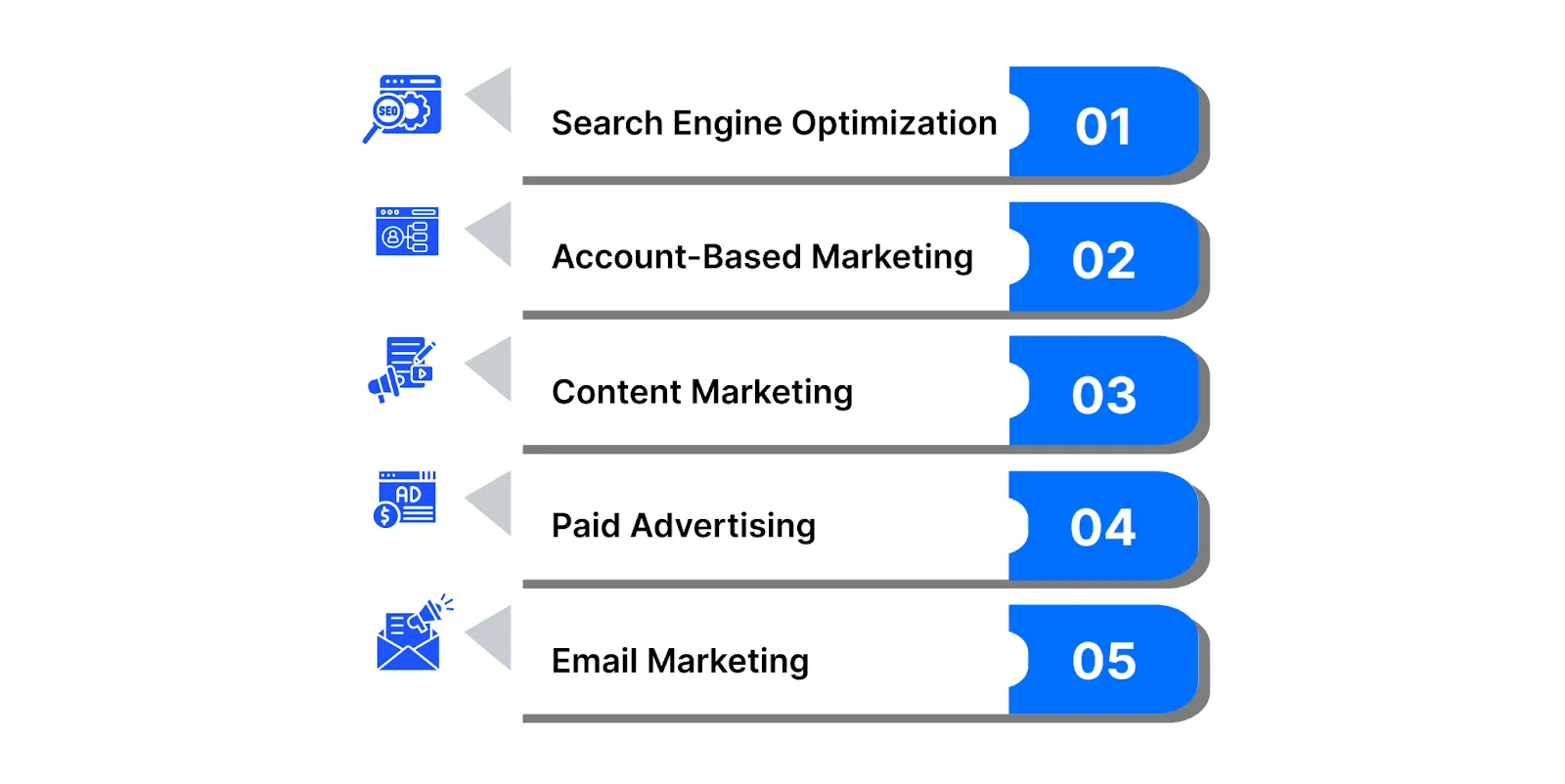
Digital marketing helps you stay visible throughout that journey, attract qualified leads, and build trust even before your first sales call.
Let’s walk through five digital strategies that can fuel consistent growth for your manufacturing business:
1. SEO (Search Engine Optimization)
Let’s start with the foundation: SEO. This isn’t just a buzzword; it’s what determines whether your company shows up when buyers search for products you manufacture.
Think about your potential customer: a purchasing manager looking for a rubber gasket supplier, or an engineer searching for custom injection molding services. They type these terms into Google. If your site doesn't appear near the top of the search results, you may not even get considered.
Effective SEO for plastics and rubber manufacturing involves:
- Keyword Research: Identify what your buyers are searching for. Terms like “custom rubber molding services,” “plastic extrusion supplier,” or “thermoplastic components manufacturer” may be highly relevant.
- On-Page Optimization: Strategically place keywords into your page titles, meta descriptions, URLs, headers, and content while keeping it natural and informative.
- Technical SEO: Your website should load fast, be fully mobile-friendly, and have proper security (HTTPS), as search engines reward technically sound websites.
- Content Creation: Develop in-depth, helpful content that answers common questions and provides solutions related to your products and services.
- Link Building: Earn quality backlinks from trusted industry directories, partners, or associations to build domain authority.
- Local SEO: Optimize your Google Business Profile to capture searches in your geographic region, which is essential for manufacturers with local or regional operations.
Turn Searches Into Real Calls
People already need what you offer. Show up clearly when they go looking.
Claim My Google Business Profile


The result? Consistent, qualified traffic from buyers actively searching for exactly what you offer.
1. Account-Based Marketing (ABM)
Not all leads are equal. In B2B manufacturing, a few large contracts can make a major difference. That’s where Account-Based Marketing (ABM) shines.
ABM is a highly focused approach where your marketing and sales teams work together to target a short list of ideal, high-value companies. Instead of casting a wide net, you’re fishing with a spear.
Here’s how it works:
- Identify Ideal Accounts: Use data from existing clients, sales records, and market research to pinpoint companies that would be a perfect fit.
- Build Personalized Campaigns: Craft highly customized marketing messages that directly address each target company’s specific needs, pain points, and product requirements.
- Sales-Marketing Alignment: Ensure your sales and marketing teams are fully aligned, sharing information and coordinating outreach to these key accounts.
- Leverage CRM and Analytics: Use CRM systems and data-driven tools to track buyer behavior, engagement levels, and decision-maker activity.
For plastics and rubber manufacturers, ABM helps you land long-term, bulk purchase clients such as:
- Automotive OEMs
- Electronics manufacturers
- Medical device companies
- Large distributors
ABM improves resource efficiency, shortens sales cycles, and often delivers higher ROI compared to traditional lead generation.
2. Content Marketing
Buyers want to work with manufacturers who demonstrate expertise, and content marketing helps you do exactly that.
By creating educational, industry-specific content, you not only attract potential customers but also position your company as a trusted authority. This is especially important in plastics and rubber manufacturing, where buyers may need to understand complex processes, material choices, and production capabilities.
Types of content that work:
- Product & Process Blog Posts: Explain manufacturing processes like injection molding, extrusion, thermoforming, or custom compounding. Compare materials like PVC vs. polypropylene or silicone.
- Technical Articles: Discuss compliance standards, certifications, material properties, and evolving regulations relevant to plastics and rubber manufacturing.
- How-To Guides & Whitepapers: Help purchasing teams evaluate material choices, process options, or quality assurance factors when sourcing parts.
- Videos: Provide visual insights into your manufacturing plant, machinery, or quality control processes to demonstrate expertise and scale.
- Product Comparisons: Create honest, detailed comparisons between product types, materials, or manufacturing methods to simplify the buyer’s decision-making.
This type of content serves multiple purposes:
- Improves your SEO rankings.
- Builds buyer trust during their research phase.
- Generates leads through calls-to-action, downloadable resources, and inquiry forms.
3. Paid Advertising (PPC)
While SEO and content build long-term growth, paid advertising gives you instant visibility, particularly for highly targeted search terms.
Pay-per-click (PPC) platforms like Google Ads, LinkedIn Ads, and even Facebook Ads (for local B2B audiences) can be extremely effective for plastics and rubber manufacturers.
How PPC works for your business:
- Google Search Ads: Appear at the top of search results when buyers search for services like “plastic injection molding supplier” or “custom rubber components.”
- Display Ads: Use visual banner ads that appear across websites visited by your target industries or accounts.
- LinkedIn Ads: Reach B2B decision-makers such as purchasing managers, operations heads, or procurement teams by job title, industry, or company size.
- Retargeting Ads: Re-engage visitors who previously viewed your website but didn’t submit an inquiry, keeping your business top-of-mind.
PPC allows you to:
- Capture active buyers who are ready to purchase.
- Promote seasonal offers, new products, or certifications.
- Test messaging and offers quickly before scaling efforts.
To maximize ROI, it’s critical to continuously monitor ad performance, track conversions, and refine targeting based on real results.
Turn Your Expertise Into Content Buyers Trust
We can create clear, technical content that explains your processes, materials, and capabilities in a way buyers understand. It builds trust, boosts SEO, and brings in serious enquiries.
Build My Content Strategy
4. Email Marketing
Many manufacturing sales cycles take months. That’s why email marketing is so effective — it allows you to stay in front of your leads while they move through the decision-making process.
Email marketing helps you:
- Nurture Prospects: Provide helpful resources, case studies, and product updates that guide prospects toward a purchase.
- Maintain Relationships: Stay connected with past customers who may need future orders or additional products.
- Announce Updates: Inform your audience about new certifications, expanded capabilities, or equipment investments.
- Personalize Messaging: Segment your email lists by industry, location, or client type to send relevant content.
Some practical email campaign ideas include:
- Monthly industry newsletters.
- New product launch announcements.
- Case studies showing successful client projects.
- Educational series explaining manufacturing processes or material selection.
Be sure to use a proper email platform that allows list segmentation, automation, and performance tracking. And of course, respect privacy regulations — only email recipients who have opted in to receive your content.
Best Tips to Strengthen Your Strategy
Influencer Marketing for Industry Credibility
In manufacturing, influencers aren’t necessarily social media celebrities. Instead, they’re respected industry experts, trade association leaders, or technical consultants who hold credibility with your target audience. Partnering with these voices can help expand your brand reach and build trust quickly.
Google Business Profile Optimization for Local Search
Don’t overlook local SEO, even if you serve a national or international market. Claim and optimize your Google Business Profile with:
- Accurate contact information.
- Service categories.
- High-quality photos.
- Customer reviews.
- Regular updates and posts.
This helps you rank better in local search results and improves your online authority.
Make Your Business Easy to Find on Google
We’ll set up and clean up your Google Business Profile so buyers see the right details, photos, and updates the moment they search for you.
Improve My Local Search Presence
Unique Challenges and Solutions in Plastics & Rubber Manufacturing Marketing
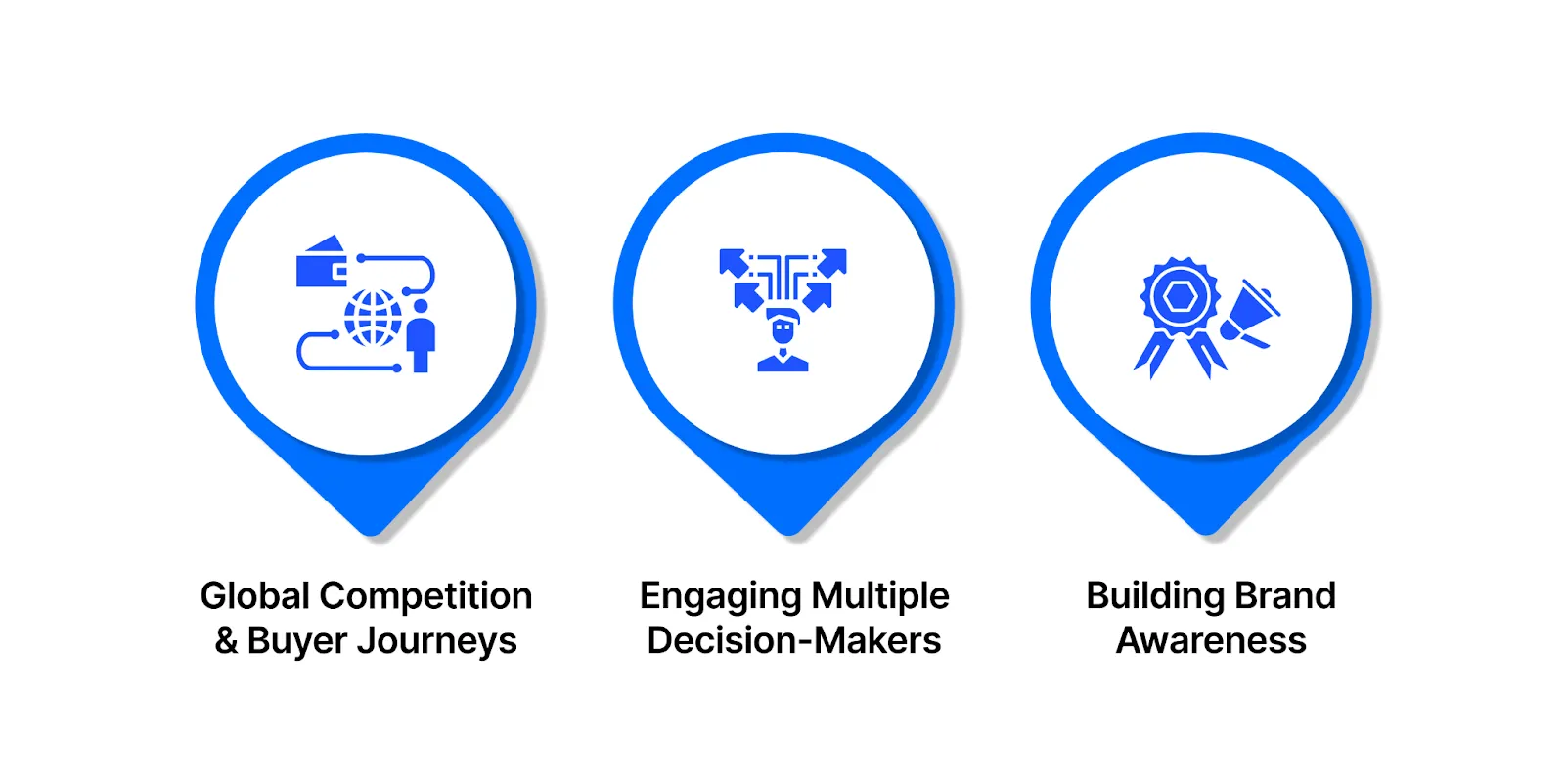
Digital marketing for plastics and rubber manufacturing brings a unique set of obstacles. Understanding these challenges is the first step toward developing strategies that actually work in the real-world B2B manufacturing environment.
Addressing Global Competition and Complex Buyer Journeys
Buyers today can access global suppliers, leading to longer, more complex research processes. To stand out, capture attention early with valuable content, clear service explanations, and strong digital visibility.
Reaching Multiple Decision-Makers in the Sales Process
Sales in manufacturing involve many decision-makers, like engineers, procurement, operations, finance, and executives. Your marketing must address their concerns around cost, quality, compliance, and ROI, offering tailored content for each.
Overcoming Limited Brand Recognition
Specialized manufacturers often have limited recognition outside their current base. Consistent digital marketing boosts visibility and establishes authority, helping you reach potential buyers even if they haven’t heard of your brand before.
By addressing these challenges head-on, your marketing doesn’t just attract attention; it earns trust across complex, global supply chains.
Showcasing Capabilities and Enhancing Online Presence
You may have state-of-the-art manufacturing capabilities, but if your website doesn't reflect them clearly, you lose potential business before conversations even start.
Here’s what you can do best:
1. Translating Physical Capabilities into Digital Content
Use your website to visually and verbally demonstrate your expertise. Showcase your machinery, processes, certifications, and project capabilities through detailed service pages, factory tour videos, high-quality photos, and technical resources that make complex information easy to digest.
2. Strategies for Multilingual Content and Regional Pages
If you serve international markets, create region-specific pages with localized content. Offering content in multiple languages, adjusted to local regulations, measurements, and industry standards, helps you connect more effectively with global buyers.
3. Importance of Clear Brand Positioning
Buyers must immediately understand who you serve, what you produce, and why you’re the better choice. A clear brand message helps differentiate you from competitors and removes hesitation from buyers unfamiliar with your company.
A strong digital presence translates your factory floor into an online sales asset that speaks directly to the buyers you're trying to reach.
Wrapping Up
Today, it’s no longer enough to simply have the best capabilities; your market needs to find you, trust you, and engage with you at the right moment. Digital marketing is not a side project; it’s the system that drives your business forward every single day.
When executed correctly, these strategies don't just drive short-term leads — they create ongoing pipelines of high-value opportunities, stronger customer relationships, and long-term revenue growth.
At Gushwork, we’ve helped businesses achieve 38X growth in organic visitors within a year, with search impressions growing 68X — simply by aligning content with how real buyers search and make decisions.
The opportunity is right in front of you. If you're ready to position your manufacturing business for consistent, compounding growth, Gushwork can help you build the digital engine that powers it. Let’s get started — book a call today!
.webp)
Digital Marketing
Jun 19, 2025
5 mins
12 Best Digital Marketing Strategies for Crane Manufacturing Services
Batul Beawarwala
TL;DR
For crane and heavy equipment services, digital marketing is essential for standing out in a competitive landscape. Key strategies include:
- SEO: Improve visibility by targeting industry-specific and location-based keywords.
- PPC: Use paid ads to quickly attract high-quality leads.
- Social Media: Engage with audiences through platforms like LinkedIn, Facebook, and Instagram.
- Content Marketing: Provide educational and informative content to build trust.
- Local SEO: Optimize for local searches and create a strong Google Business Profile.
- Email Marketing: Nurture relationships through personalized campaigns.
- Paid Ads: Capture immediate leads and refine with continuous optimization.
If you’re running a business in heavy equipment or crane services, you already know how much this industry matters. Whether it’s helping to build high-rises, bridges, roads, or supporting massive industrial projects, your work quite literally builds the world around us.
But here’s the harsh truth: even if you have the best cranes, loaders, excavators, or the most experienced operators, none of that matters if your potential customers don’t know you exist. In this day and age, visibility is everything.
In fact, studies show that only 0.63% of Google searchers click on results from the second page. If you’re not ranking on page one, you’re almost invisible to potential customers.
The competition is growing. Buyers now do most of their research online before making a decision. And if you're not showing up where they're looking, you're missing out on contracts, partnerships, and long-term business growth.
This blog will walk you through proven digital marketing strategies designed specifically for crane service companies. We won’t leave you with vague tips; you’ll get clear, actionable advice you can start using today.
Understanding the Crane Services Industry

The heavy equipment and crane services industry touches many sectors: construction, mining, infrastructure, transportation, oil & gas, and more. Companies supply everything from massive tower cranes for urban skyscrapers to excavators digging pipelines to bulldozers shaping new highways.
But this industry has its challenges:
- High capital costs: The equipment is expensive to purchase, operate, and maintain.
- Long product cycles: Unlike consumer goods, sales cycles can take months or years.
- Strict regulations: Safety, environmental, and zoning regulations are becoming more complex.
- Tough competition: New companies enter the market while established players fight for the same projects.
At the same time, digital technologies are transforming how projects are planned and executed. From GPS-controlled machinery to autonomous equipment and telematics, the industry is evolving. Your marketing strategy must evolve as well.
The High Stakes of Ignoring Marketing
Let’s be clear for a second. If you’re not marketing your services, you're essentially invisible. Buyers expect you to have a strong digital presence. No website? No reviews? No visible online content? You won’t even make their shortlist.
Without strong marketing:
- Your visibility drops
- Your lead pipeline dries up
- Competitors grab your potential customers
- You lose out on large, long-term contracts
And the worst part? Your equipment might sit idle even when projects are happening all around you, simply because nobody knows you are available.
12 Best Digital Marketing Strategies for Crane Manufacturing Services
The right marketing strategies help you build trust, highlight your expertise, and consistently generate qualified leads.
Below are 12 proven digital marketing strategies you can apply to grow your crane manufacturing business:
1. Build Trust by Knowing Your Audience and Crafting Your Message
To build trust, understand what matters to your audience. In crane services, clients seek reliability and expertise for complex, high-stakes projects. Your message should reassure them of your ability to deliver safely and professionally.
Key things your audience values:
- Safety: Demonstrate your safety certifications, compliance, and records.
- Reliability: Show your history of on-time project completion without breakdowns.
- Efficiency: Explain how your processes prevent costly downtime.
- Experience: Highlight past projects, industries served, and specialized skills.
Use your website, ads, and content to:
- Display certifications, licenses, and insurance.
- Share detailed case studies of successful projects.
- Feature customer testimonials with specific outcomes.
- Emphasize safety training and operator expertise.
2. Develop a Strong Brand Identity with Storytelling
Storytelling allows you to bring your brand to life by showing prospects how you solve real-world challenges. Instead of just listing services, share stories that help clients visualize your team in action, managing complex projects successfully under pressure.
Ways to use storytelling:
- Share stories of how you completed lifts under tight timelines or harsh conditions.
- Explain how your maintenance protocols have kept projects running smoothly.
- Highlight complex or unusual jobs that showcase your expertise.
Content formats to use:
- Time-lapse videos of projects from setup to completion.
- Operator interviews explaining how challenges were overcome.
- Behind-the-scenes videos of safety checks and equipment prep.
- Photo galleries showing project scale and precision.
3. Build a High-Performing Website
Your website is often your first impression, and in this industry, first impressions matter. A professional, modern, and informative website builds immediate trust and shows you take your business as seriously as your clients take their projects.
Must-have website features:
- Clear, detailed service descriptions and equipment lists.
- Certifications, safety records, and insurance information.
- A project gallery or portfolio showcasing past work.
- Easy-to-use contact forms for quote requests.
- Client testimonials and case studies.
Technical essentials:
- Mobile optimization for easy browsing on phones.
- Fast load times to reduce visitor drop-off.
- SSL security for visitor trust and SEO.
- Regular updates with fresh content to keep it relevant.
4. Use SEO to Get Found by Buyers
When potential clients search for heavy equipment or crane services, they typically use search engines to find providers. Search Engine Optimization (SEO) helps you show up in those searches, bringing targeted traffic directly to your website. Unlike paid ads, SEO creates long-term visibility without paying for every visitor.
Key SEO steps:
- Research and target industry-specific, location-based keywords.
- Optimize website titles, meta descriptions, and on-page content.
- Create blog content answering common customer questions.
- Earn backlinks from trusted construction or industry sites.
- Keep local business listings accurate and updated.
Effective SEO ensures that your business appears when potential customers search terms like:
- "Crane rental near me"
- "Heavy equipment contractors in [city]"
- "High-rise crane services"
5. Educate Your Audience Through Content Marketing
Content marketing allows you to educate your target audience and build trust even before they’re ready to hire you. In the heavy equipment industry, decision-makers often spend weeks or months researching potential partners.
Content topics to create:
- How to choose the right crane for specific projects.
- Equipment safety standards and certifications explained.
- Tips to reduce downtime and prevent costly delays.
- Common mistakes to avoid in crane operations.
Here are some content formats you can use:
- Blog posts explaining industry challenges and solutions.
- Downloadable checklists or safety guides.
- Educational videos demonstrating your equipment and processes.
- Infographics simplify complex industry topics.
6. Leverage Social Proof with Testimonials, Reviews, and Case Studies
Potential clients feel more confident hiring you when they see that others have had positive experiences. Social proof builds trust by showing that your company has delivered results for others, especially on similar projects or industries.
Ways to gather and showcase social proof:
- Request testimonials after every successful project.
- Publish detailed case studies explaining project challenges and outcomes.
- Encourage clients to leave reviews on Google and industry directories.
- Feature video testimonials from satisfied clients on your website.
Social proof shortens decision-making time by reducing buyer hesitation and proving you’ve done the work before.
7. Engage Actively on Social Media Platforms
Social media isn’t just for casual sharing; it’s a powerful tool for visibility, relationship-building, and branding even in B2B industries like heavy equipment. Your potential clients, project managers, contractors, and developers are active on these platforms and pay attention to what companies share.
Best platforms for your industry:
- LinkedIn: For connecting with business clients and partners.
- Facebook: For local engagement and promoting services.
- Instagram: For sharing visual content like crane setups and large lifts.
- YouTube: For project videos, safety demonstrations, and behind-the-scenes footage.
What to post regularly:
- Photos and videos of active projects.
- Educational content explaining processes or safety measures.
- Team spotlights and operator interviews.
- Industry news or project announcements.
8. Use Paid Advertising for Immediate Leads
While SEO and organic efforts take time, paid advertising allows you to reach your audience quickly. If done correctly, it can bring in high-quality leads who are actively searching for your services right now.
Effective ad platforms:
- Google Ads: Capture search traffic from people already looking for services.
- LinkedIn Ads: Reach B2B decision-makers in construction and development.
- Facebook Ads: Promote specific services or projects to a local audience.
Best practices for paid ads:
- Target specific keywords and geographic regions.
- Use strong visuals that demonstrate your capabilities.
- Include clear calls to action like “Request a Quote” or “Schedule a Consultation.”
- Continuously monitor and optimize ad performance to maximize ROI.
9. Build Long-Term Relationships with Email Marketing
In this industry, many sales happen after weeks or months of research and relationship-building. Email marketing helps you stay top-of-mind with prospects and nurture leads over time by delivering helpful information directly to their inbox.
Effective email campaigns:
- Share new project completions or major milestones.
- Provide equipment maintenance reminders or safety tips.
- Announce new service offerings or equipment upgrades.
- Send seasonal check-ins to maintain relationships with past clients.
Segmentation tips:
- Divide lists by audience type: contractors, developers, municipalities, and industrial clients.
- Personalize emails based on location, project type, or previous interactions.
- Include clear calls-to-action for follow-up consultations.
10. Form Local Partnerships and Get Involved in the Community
Sometimes, strong local relationships can create more business opportunities than national marketing campaigns. Building partnerships within your local business community helps you generate steady referrals and long-term contracts.
Ways to build strong partnerships:
- Collaborate with local contractors, architects, and real estate developers.
- Join trade associations or regional construction networks.
- Sponsor local events, trade shows, or charitable causes.
- Attend municipal or industry meetings to connect directly with decision-makers.
Partnerships help position your business as a trusted, go-to service provider within your region and often lead to repeat work.
11. Focus on Design Consistency and Professional Branding
Everything your company presents—online or offline—reflects your level of professionalism. Consistent, high-quality design across your website, proposals, advertisements, and social media shows prospects that you pay attention to details, both in marketing and on the job site.
Design elements to maintain:
- Use a consistent color palette, logo, and fonts across materials.
- Keep social media posts polished and visually appealing.
- Ensure proposals and bid documents look professional and easy to read.
- Use project photos and high-quality visuals wherever possible.
12. Track and Measure All Your Marketing Efforts
Without tracking, you’ll never know what’s working and where to improve. Digital marketing gives you access to detailed performance data that helps you make smarter decisions and continuously optimize your campaigns for better results.
What to track:
- Website traffic and lead conversions.
- Search engine rankings and keyword performance.
- Ad performance (clicks, impressions, cost per lead).
- Social media engagement rates.
- Email open and click-through rates.
- ROI across all paid and organic campaigns.
Use tools like Google Analytics, Google Search Console, CRM systems, and platform-specific ad managers to monitor these metrics. Regularly review your data to refine your targeting, messaging, and budgets to ensure you’re getting the best possible return on your marketing investment.
Wrapping Up
Heavy equipment and crane services aren’t just about machinery; they’re about trust, safety, and the ability to deliver complex projects without compromise. These days, companies that stand out aren’t always the ones with the biggest fleets, but the ones who consistently stay visible, build relationships, and position themselves as trusted experts.
By applying these digital marketing strategies, you go beyond simple promotion. You build a brand that earns client confidence, wins referrals, and stays top-of-mind when major contracts are on the table.
The impact of focused digital marketing is real.
See What Digital Marketing Can Do for You
Digital Marketing
Jun 19, 2025
5 mins
Most Ceramic Manufacturing Websites Skip At Least Two Of These 10 Basic SEO Steps…That Mistake Kills Rankings
Batul Beawarwala
Most ceramic manufacturers have a similar problem. You rely on trade shows, dealer networks, or word-of-mouth to drive sales, while their online presence barely brings in serious buyers.
A lot of the ceramic industry marketing focuses only on product categories. It rarely explains the things that matter during real purchase decisions: compliance, durability, order capacity, and delivery timelines. As a result, the buyers who need those details the most never reach your business.
The real goal of SEO is to help the right people find you and see why your products fit their needs.
This guide is for manufacturers tired of attracting generic traffic and ready to focus on SEO strategies that attract buyers who understand your products and are ready to engage.
How Buyers Actually Search for You?
Buyers don’t start their search with brand names. They start with what they need right now.
Here are a few real examples of how they search:
- An architect types “anti-slip ceramic tiles for commercial kitchens”.
- A dealer searches “vitrified tiles 600x1200 matte finish supplier”.
- A contractor might look for “ISO-certified ceramic tile manufacturers in Detroit”.
Each of these is what SEO professionals call a long-tail keyword. It’s a detailed phrase that shows clear buying intent. When your website content includes those phrases, naturally, inside product descriptions, headings, and meta titles, Google can connect your business to those exact searches.
How Manufacturers Go Wrong here?
They use broad terms like “high-quality tiles” or “leading ceramic manufacturer.” Those don’t match how real buyers search, so the right people never find them.
Put the same words your buyers use on your website. Once your pages reflect the way they search, the right people can finally find you instead of landing on competitors with weaker capability but better clarity.
Gushwork can map the exact terms your buyers search for and build your SEO around them, so your website starts bringing in the right enquiries.
1. Structure the Site with Keyword Groups and Page Structure
Effective site architecture for ceramic manufacturers revolves around structuring your content in a way that mirrors both your product offerings and how buyers search for them. Here’s how you can break down your pages:
- Material Hubs: These act as category pages for your core ceramic products. You could group products by their material type, such as porcelain, quarry, sanitary ware, and technical ceramics.
These hubs are essential for ranking in broader search queries and making your product categories more accessible.
- Finish / Size / Application Pages: These pages are optimized for specific customer needs, such as slip-resistant R11 tiles, matte finish bathroom ceramics, or 12x24 porcelain floor tiles.
These pages will help capture high-intent searches for customers looking for very specific product attributes.
- Spec Sheets & Compliance Pages: Regulatory compliance is a huge factor in the ceramic industry. Pages dedicated to ANSI, ASTM, ISO, and BIS certifications improve SEO and build credibility and trust.
- Dealer, Distributor, and Regional Market Pages: Create dedicated pages for dealers and distributors based on region, as this helps in local SEO and helps you serve B2B buyers more effectively.
Additionally, these pages can highlight key partnerships, driving local trust and expanding your market reach.
- Case Studies & Learning Resources: Case studies can showcase your ceramic products in real-world applications, enhancing trust and conversion rates.
Educational content like how-to guides, maintenance instructions, or tips for architects and designers can also drive organic traffic and engage your audience.
2. How to Organize Your Site for Growth?
A website built for scalability, crawlability, and speed is key for ceramic manufacturers with large product catalogs. Here's what you need:
- Flat, Crawlable URLs: Make sure your product pages are easy for search engines to find. Flat URLs like /ceramic-tiles/12x24-matte-porcelain are preferred over deeply nested directories.
- Smart Canonicals: Prevent duplicate content issues, especially for products that come in multiple sizes or finishes. Canonical tags ensure Google knows which page to index and show in search results.
- Index-Worthy Product Categories: Keep your product categories clean, logical, and user-friendly. Use structured categories that mirror your buyer's journey, this ensures your site scales easily as you add more products.
Want Your Product Pages to Rank the Right Way?
We can structure your site so Google understands every category, size, and finish you offer and buyers can find them without digging.
Organize My Site for SEO
3. Build Strong Product and Collection Pages
To turn your product pages into lead-generating machines, use schema-driven templates for every collection and product series.
These templates ensure your pages are both user- and search engine-friendly.
Key Elements to Include:
- Schema Markup: Implement JSON-LD for Product, Offer, and AggregateRating to improve visibility in search results and enhance rich snippets.
- Specs & Certificates: Provide clear product specifications (size, material, compliance) and downloadable test certificates and installation guides.
- BIM/CAD Files: Offer BIM and CAD files for architects and designers to integrate your products into their projects.
- Alt-Tagged Galleries: Ensure your images are alt-tagged with keywords for better ranking in image search.
4. Make Your Catalogs and PDFs Search-Friendly
To optimize your ceramic product catalog and PDFs for search engines, focus on crawlability, load speed, and metadata:
Separate XML Sitemaps
Use separate XML sitemaps for products and resources (e.g., PDFs) to ensure search engines prioritize key product pages and properly index resources without slowing down your site’s crawl efficiency.
Text-Based PDFs with Canonical Links
Ensure text-based PDFs (not image-based) for better crawling. Include canonical HTML links in PDFs to link back to the main product pages, avoiding duplicate content issues and enhancing SEO.
CDN Optimization for Global Reach
Utilize a Content Delivery Network (CDN) to improve site speed and ensure quick access to product images and PDFs, regardless of where your customers are located. This helps provide a smoother experience globally.
By focusing on these key technical aspects, you improve the performance and SEO of your product catalog and resources, making them easier to find and faster to access for both users and search engines.
5. How Better Visuals Help You Win Specs?
Optimizing visual content is key to boosting both user engagement and SEO performance in the ceramic industry. High-quality visuals help users and search engines understand your products better, driving conversions.
Descriptive Image Names
Use keyword-rich filenames for your images, such as “porcelain-tile-12x24-matte-gray.jpg”, to help search engines index them properly.
This simple step improves your chances of ranking in image search results and enhances your overall SEO.
Room Visualizer for Kitchen and Bath Applications
Add a room visualizer tool that allows users to see your tiles in real-life settings like kitchens or bathrooms. This increases engagement and attracts long-tail traffic from search queries like “bathroom tile visualizer.”
AR Previews for Designers
Provide AR previews that let designers visualize your tiles in their own projects. This immersive experience boosts confidence in your products and helps designers make faster decisions.
With these strategies, you can optimize your visuals for both search engines and your target audience, improving both rankings and conversions.
6. Create Content Buyers Save and Revisit
Attracting architects and designers requires content that goes beyond product descriptions. Your content should serve as a resource that they rely on for accurate, technical, and practical information.
Here's how to craft content that keeps them coming back:
- Technical Explainers: Provide detailed content on R-ratings, DCOF, and EN/ISO standards. These technical details are essential for architects when selecting tiles that meet safety, durability, and regulatory standards.
This will help you rank for compliance-related search terms and position your brand as a trusted resource.
- Application Guides: Create guides for using your products in commercial and industrial spaces (e.g., hospitals, shopping malls).
These guides show real-world applications and help architects envision your products in their designs.
- Case Studies with Spec Sheets and BOQs: Share detailed case studies of completed projects with spec sheets and BOQs (Bills of Quantities).
This builds trust and provides architects with the technical details they need to specify your products in their projects.
- White Papers for Industrial Ceramics and OEM Buyers: Produce white papers focusing on the industrial ceramic market or OEM buyers. These documents provide deep insights into industry trends, helping position your brand as an authority.
7. How to Improve Visibility for Your Locations?
For ceramic manufacturers with showrooms or distribution centers, Local SEO is essential to increase visibility and attract local customers. Here’s how to optimize your Google Business Profile (GBP) and maintain a strong local presence:
1. Optimize Google Business Profile (GBP) for Each Location
Each showroom or distribution center should have its own Google Business Profile for local search and Google Maps visibility. Ensure:
- Accurate NAP (name, address, phone)
- Relevant business categories (e.g., "Ceramic Tile Supplier")
- Updated business hours and product listings
Make Each Location Easy for Buyers to Find
We’ll set up and optimize your Google Business Profiles so every showroom and distribution point appears clearly on Maps and local search.
Fix My Local SEO
2. Maintain Consistent NAP Across Listings
Ensure your NAP details are consistent across all platforms (website, social media, directories). Inconsistencies can harm your local SEO rankings.
3. Add Photos, Q&A, and Product Posts
- Upload high-quality photos of your showroom and products.
- Engage with customers through the Q&A section.
- Regularly update your product posts to showcase offers and new arrivals.
8. List Your Products on Important Marketplaces
Expanding your reach beyond your website to key industry marketplaces and directories is a smart way to attract more B2B leads and increase visibility.
These platforms, like ThomasNet, Build.com, and Houzz Pro, provide a powerful avenue to connect with potential buyers who may not discover your products on your website alone.
Here’s how to optimize your presence across these platforms:
Optimize Listings on Major Directories
Each listing on B2B directories should be thoroughly optimized:
- Ensure your product titles, images, and specifications are aligned with your website’s product pages. Consistency between your listings and your main site improves brand recognition and search rankings across multiple platforms.
- Include detailed descriptions, features, and product specs to provide a complete picture of what you offer. Buyers are more likely to trust listings with full information.
Maintain Consistent Product Information
Consistency is key when syndicating across directories:
- Use identical product names and dimensions (e.g., “12x24 Porcelain Floor Tile – R11 Slip-Resistant”) across all platforms. This avoids confusion and helps reinforce your product identity across multiple touchpoints, making it easier for customers to find you.
- Avoid variations in your product descriptions to prevent duplicate content issues, which could negatively impact your SEO rankings.
Track Referral Traffic & Quote Requests
Don’t just list your products; measure how well your directory listings are performing:
- Track referral traffic from each directory to understand which platforms are sending the most visitors to your website.
- Monitor quote requests and lead generation activity to see which directory listings are converting the best. This helps you focus your efforts on the most effective platforms and continuously refine your strategy.
9. Earning Trusted Mentions for Your Brand
Building authority through link earning is a powerful strategy for improving your SEO and driving qualified traffic to your site. Here’s how to do it effectively:
Features in Architecture & Design Magazines
Being featured in top design magazines or industry publications (like Architectural Digest) helps earn valuable backlinks that increase credibility and visibility among architects and designers.
Partnerships with U.S. Tile Associations
Collaborate with associations like the CTDA, NTCA, or TCNA. These partnerships offer high-quality backlinks, boost brand recognition, and connect you with a broader audience of industry professionals.
Supplier Collaborations & Case Studies
Showcase successful projects where your products are used. Collaborate with contractors and suppliers to publish case studies with spec sheets and BOQs, ensuring that they link back to your site.
10. What to Track to Understand Your Results
Track the metrics that matter most to optimize your growth:
- Leads & Sample Orders: Track qualified leads and sample orders to measure conversion intent and sales funnel performance.
- Spec Downloads & Dealer Sign-Ups: Monitor spec sheet downloads and dealer sign-ups to gauge interest and expand your distribution network.
- Organic Traffic from Architects & B2B Buyers: Analyze organic traffic from high-value decision-makers like architects and B2B buyers to assess your SEO strategy’s effectiveness.
- Keyword Visibility for Compliance & Product Terms: Track keyword rankings for niche terms like ANSI compliance and R11 slip resistance to gauge authority and trust.
See All Your Leads in One Place
We’ll build a clean dashboard that tracks enquiries, sample requests, spec downloads, and dealer sign-ups without any extra effort from your team.
Set Up My Lead Dashboard
Your First 90 Days of Action
A well-structured plan is key to turning your SEO and link-building efforts into real growth.
Here’s a breakdown of a 90-day execution plan to ensure your efforts are aligned, effective, and measurable:
- Weeks 1-3:
- Audit your site crawl/index to ensure technical SEO is set up for success.
- Define keyword clusters for each product category and location.
- Fix any template or content gaps on your product pages to ensure they’re ready for SEO and link-building.
- Weeks 4-6:
- Add schema markup for each product page.
- Optimize images for SEO and improve Google Business Profiles (GBPs) for your dealers and showrooms.
- Begin publishing spec explainers and case studies showcasing successful projects using your ceramics.
- Weeks 7-9:
- Publish case studies, including BOQs and spec sheets, to strengthen your backlink profile.
- Focus on outreach for backlinks, connect with trade publications, suppliers, and associations for guest posts and mentions.
- Weeks 10-12:
- Optimize listings across marketplaces like ThomasNet and Houzz Pro.
- Begin link syndication on directories, ensuring your product specs, images, and titles are consistent across all platforms.
Turn Your SEO Into a Revenue Engine
A well-structured SEO strategy can elevate your ceramic manufacturing site from just a digital presence to a 24/7 lead-generating powerhouse.
By optimizing your site for architects, builders, and global dealers, you’ll ensure that they’re actively seeking your products when they're ready to buy.
- SEO is about converting that traffic into valuable leads.
- A targeted, data-driven approach is key to attracting the right decision-makers for your products.
- Optimizing for compliance, specifications, and visuals enhances your credibility and reach.
Struggling to keep your lead generation and SEO efforts running smoothly, without the necessary resources to scale efficiently?
Ready to operationalize this playbook, without adding headcount?
Gushwork helps manufacturers templatize SEO ops, ship pages faster, and turn specs into leads with measurable ROI.
Book A Consultation
FAQs
Q1. Why is SEO important for ceramic manufacturers?
A1. SEO helps ceramic manufacturers increase their online visibility, attract high-quality leads, and drive traffic to their website. By optimizing for relevant keywords, compliance standards, and product specifications, you ensure that potential customers find your products when they're actively searching.
Q2. How can keyword optimization improve my ceramic product pages?
A2. By optimizing your ceramic product pages with relevant keywords, you increase the likelihood of appearing in search results. Keywords like "porcelain tiles," "R11 slip-resistant," and "ISO compliant" help search engines identify your pages and rank them higher for the right audience.
Q3. What role do product images play in SEO for ceramic manufacturers?
A3. Optimized product images are essential for both user engagement and SEO. By using descriptive image names, ALT tags, and visual SEO tactics, you improve your chances of ranking in image search and creating a better user experience for potential buyers.
Q4. How do I optimize my Google Business Profile for showrooms and dealers?
A4. To optimize your Google Business Profile (GBP), ensure accurate NAP (Name, Address, Phone) information, upload high-quality photos, and maintain up-to-date product posts. Consistency across listings and engaging with customer reviews can boost local SEO, making it easier for nearby customers to find you.
Q5. What’s the benefit of using schema markup for product pages?
A5. Schema markup adds structured data to your product pages, helping search engines better understand your content. This can improve visibility in rich snippets, increasing your chances of standing out in search results, especially for detailed products like tiles with specific features or certifications.
Q6. How can case studies and project documentation improve my SEO?
A6. Case studies and project documentation offer valuable content that can drive targeted traffic. By including spec sheets and BOQs, you provide proof of your products' real-world applications, which helps with both SEO rankings and building trust with architects and contractors.
Q7. How do I track the success of my SEO efforts?
A7. Use tools like Google Analytics to track key metrics such as leads, sample orders, spec downloads, and dealer sign-ups. Monitoring organic traffic from high-value keywords and conversion rates helps you assess the effectiveness of your SEO strategy and make data-driven adjustments.

